Journalist Carlos Alsina has announced a shift in his program Más de uno on Onda Cero, reducing the weight of politics to make room for content on culture, science, and current social affairs. The decision, which renews the format without completely eliminating political debate, has sparked divided reactions among listeners and colleagues in the industry. Some see it as a breath of fresh air, while others believe it abandons the core of daily news coverage.
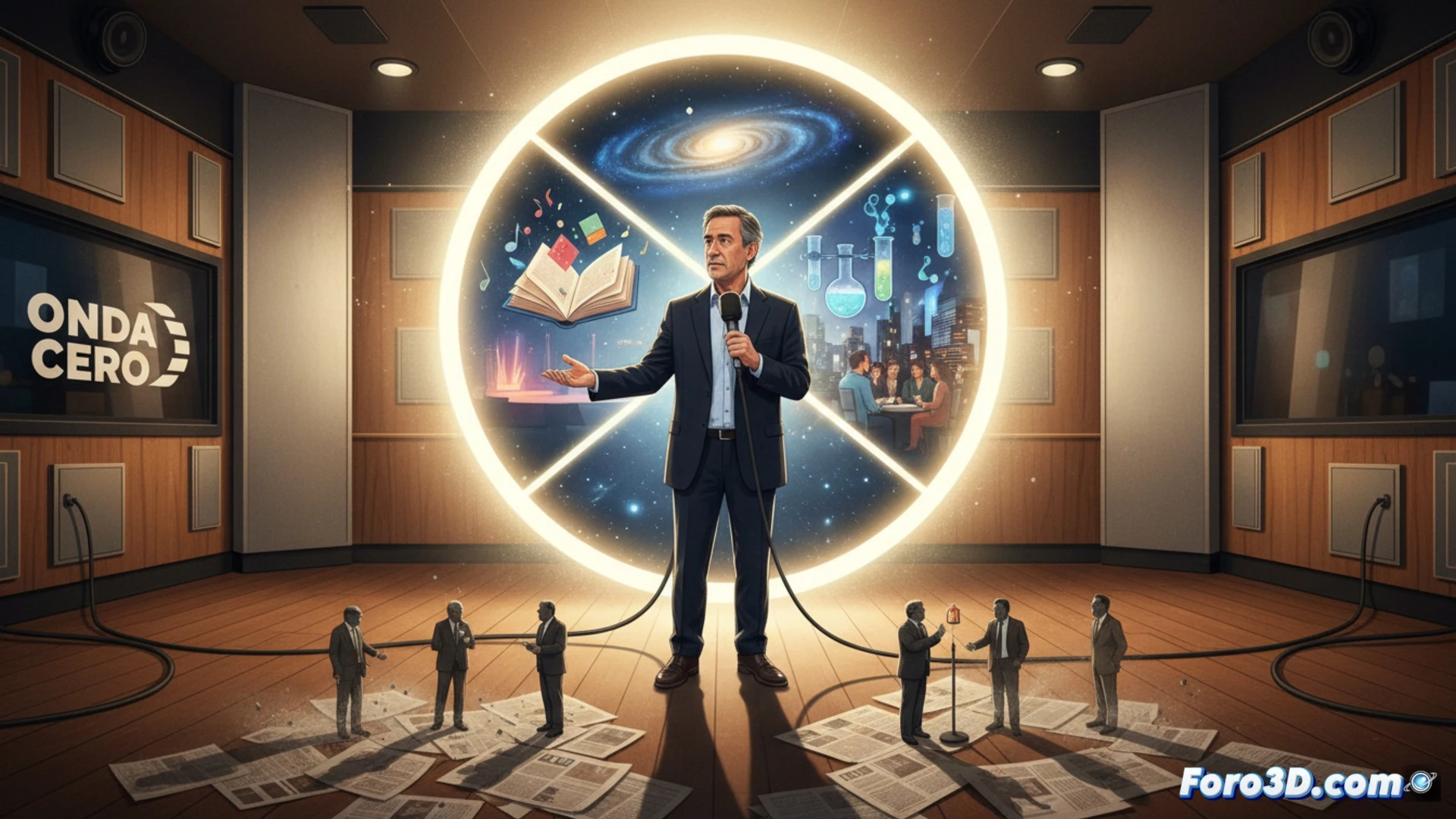
The migration of the radio algorithm towards modular content 🧩
This programming change can be analyzed as an update to the content architecture. Alsina applies a logic of modularity: he reduces the load of a dominant topic (politics) to distribute resources among thematic blocks like science and culture. It is similar to a system that reallocates bandwidth to avoid saturation of a single channel. The technical difficulty lies in maintaining narrative coherence without losing audience, managing the transition as a process of refactoring the schedule rather than a simple patch.
Politics moves to the background of the dial 📻
Alsina's decision is reminiscent of when a user unfollows a friend on social media because they only post political memes. It's not that they delete them, they just mute them for a while. The industry reacts as if he had announced he would read the weather report in Aramaic. Some listeners already fear that the next step will be replacing debates with origami tutorials or cake recipes. Ironies aside, at least the morning talk show will stop sounding like a broken record.