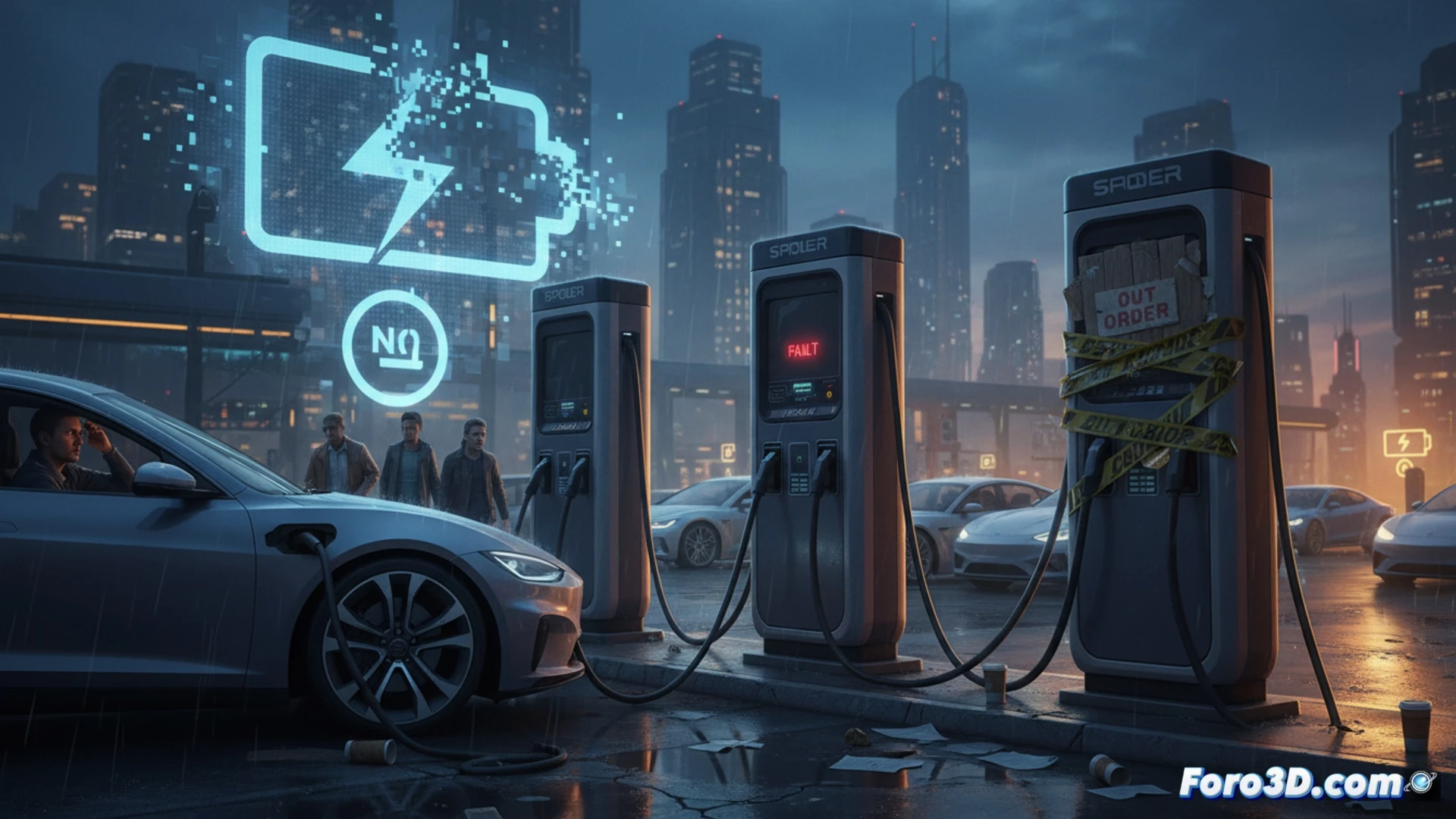
Electric mobility is advancing with millions of vehicles on the streets and thousands of charging points deployed. However, one problem persists: not all of them work. Experts at a recent infrastructure event have warned that investment does not guarantee operability. Range anxiety no longer depends solely on batteries, but on the certainty that, upon arriving at a charger, it will be available and functioning correctly.
Technical diagnosis: dead spots in the charging network 🔌
Charger reliability is the weak link in the chain. Many installed units suffer from connectivity failures, poor maintenance, or incompatibility with certain models. This creates a map of blind spots where the user does not know if they will be able to charge. The technical solution involves predictive maintenance, standardization of protocols, and real-time monitoring. Without these changes, the network will remain a collection of unfulfilled promises.
The ghost charger: you see it, but it doesn't work 👻
It's the new national sport: arriving at a charging point, plugging in the cable, and waiting for the charger to decide if it wants to cooperate. Sometimes the light turns on, sometimes it doesn't. It's like ordering a coffee and having the machine return your change without serving you anything. Manufacturers promise solutions, but in the meantime, drivers develop the patience of a monk and map apps with reviews more dramatic than those of a roadside motel.