The wattage war in mobile phones has led to charging powers that seem more fitting for a household appliance. But beware, 120W doesn't mean charging your phone in 20 minutes consistently. The physics of lithium-ion batteries impose their own rules: the maximum speed is only sustained at the beginning, and after 50% or 80%, the power drops to prevent damage. Not everything that glitters charges the same. ⚡
The power peak and the protection plateau 🔋
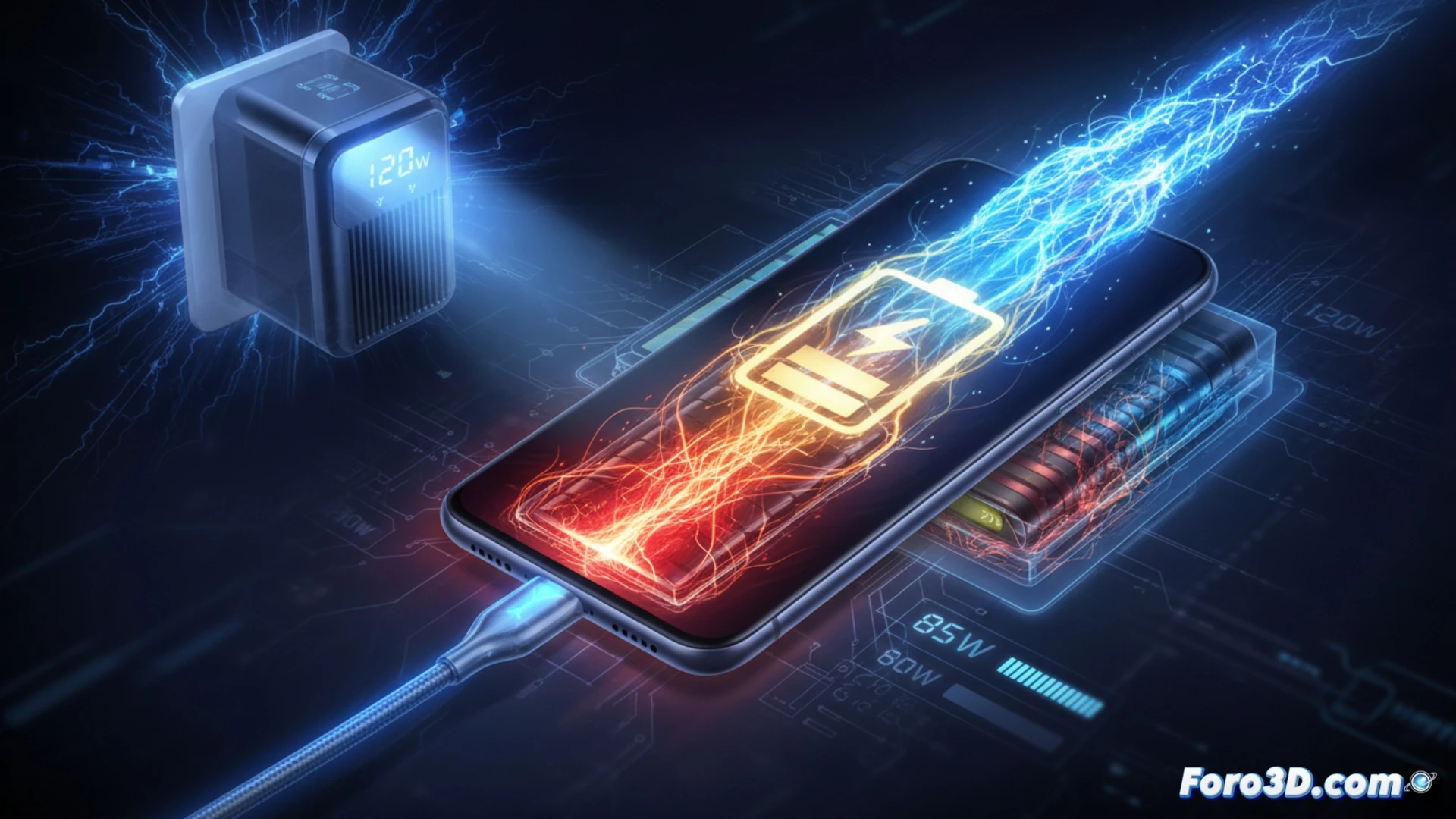
Modern batteries only support high charges in their low range, where internal resistance is lower. Upon reaching 50-60%, the thermal management system reduces the current to control heat and preserve cell lifespan. A 120W charger can deliver that figure for the first few minutes, but then it drops to 60W or less. It's a downward curve, not a straight line. Manufacturers advertise the peak, not the real average of the full charge.
The charger that promises and the battery that cracks 🔥
It's like going to an all-you-can-eat buffet where the waiter serves you lobster for the first minute and then gives you stale bread for the rest of the hour. The phone advertises 120W, but when it reaches 80%, it starts charging as if it's afraid of getting electrocuted. And mind you, if you use a generic 10W charger, the phone takes its time, but at least it doesn't force you to stare at the percentage every five seconds as if it were a tennis match.