The independent studio behind Caravan SandWitch has proven that Unreal Engine 5 is not exclusively reserved for photorealism. Its visual proposal, based on a Solarpunk style with watercolor shaders, demonstrates that the engine's power can adapt to unconventional artistic palettes. This analysis breaks down the lighting and post-processing techniques that achieve a cozy atmosphere within a soft post-apocalyptic context, offering a roadmap for indie developers looking to break away from realism.
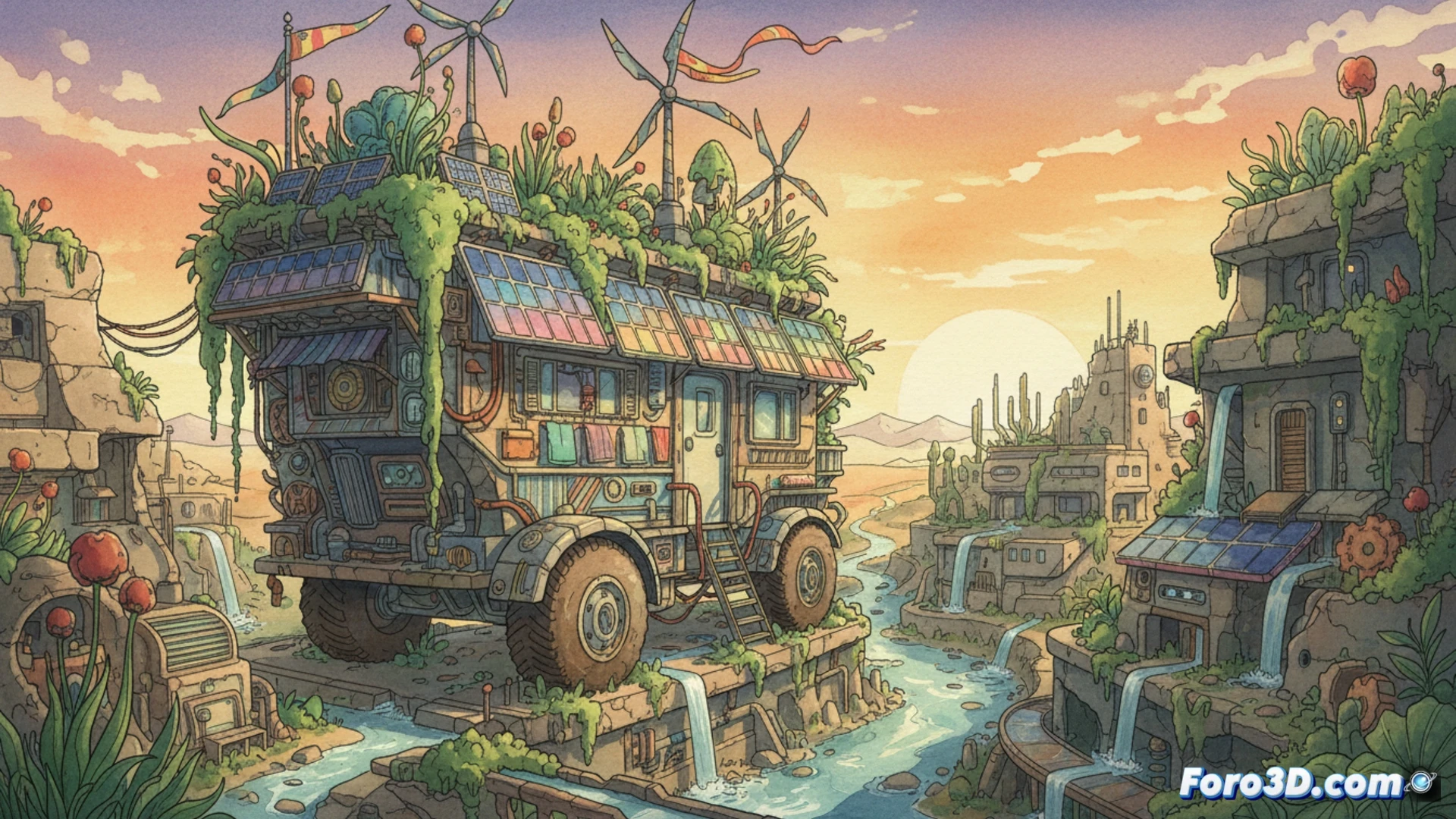
Watercolor shading techniques and warm post-processing in UE5 🎨
To replicate the aesthetic of Caravan SandWitch, the workflow begins in Blender with high-contour, low-polygon models, where edges are manually smoothed. The magic happens in Unreal Engine 5 through custom materials that mimic paper texture and ink dispersion. Procedural noise nodes are used to generate irregular edges and diffuse shading that avoids harsh specular reflections. Constant warm lighting is achieved with a Directional Light at a low color temperature (around 3500K) combined with a pastel-colored Sky Light. Post-processing applies a soft vignette gradient and a slight Gaussian blur at the periphery, eliminating any hard shadows that break the cozy feel. To maintain visual consistency, it is recommended to use UE5's Volumetric Fog system with low density, creating a haze that unifies the landscape without hiding the handcrafted details.
Lessons for indies: Visual consistency over realism 🚀
Caravan SandWitch demonstrates that the success of an indie open world does not depend on graphical fidelity, but on the consistency of its visual language. The use of watercolor shaders is not a technical whim, but a narrative decision that reinforces the idea of a world gently rebuilding after catastrophe. For developers, the key lies in limiting the color palette to earth tones and pastels, and sacrificing realistic lighting for emotional lighting. If your engine is UE5, do not hesitate to disable Lumen for complex shadows and opt for baked static lights with an orange tint. The result will not be a cold post-apocalyptic desert, but a warm canvas where exploration feels like a refuge.
As an indie developer, what technical limitations or specific Unreal Engine 5 workflows did you have to overcome to integrate the watercolor style with dynamic lighting without sacrificing performance in a solar punk open world?
(PS: game jams are like weddings: everyone is happy, no one sleeps, and you end up crying)