The aesthetics of the Baroque not only reside in museums. Directors like Martin Scorsese or Park Chan-wook acknowledge their visual debt to Caravaggio, the master of tenebrism. His contrasts of light and shadow, the rawness of his figures, and the tension in his compositions are replicated today in long takes and cinematography. 17th-century art dialogues with modern narrative without needing subtitles.
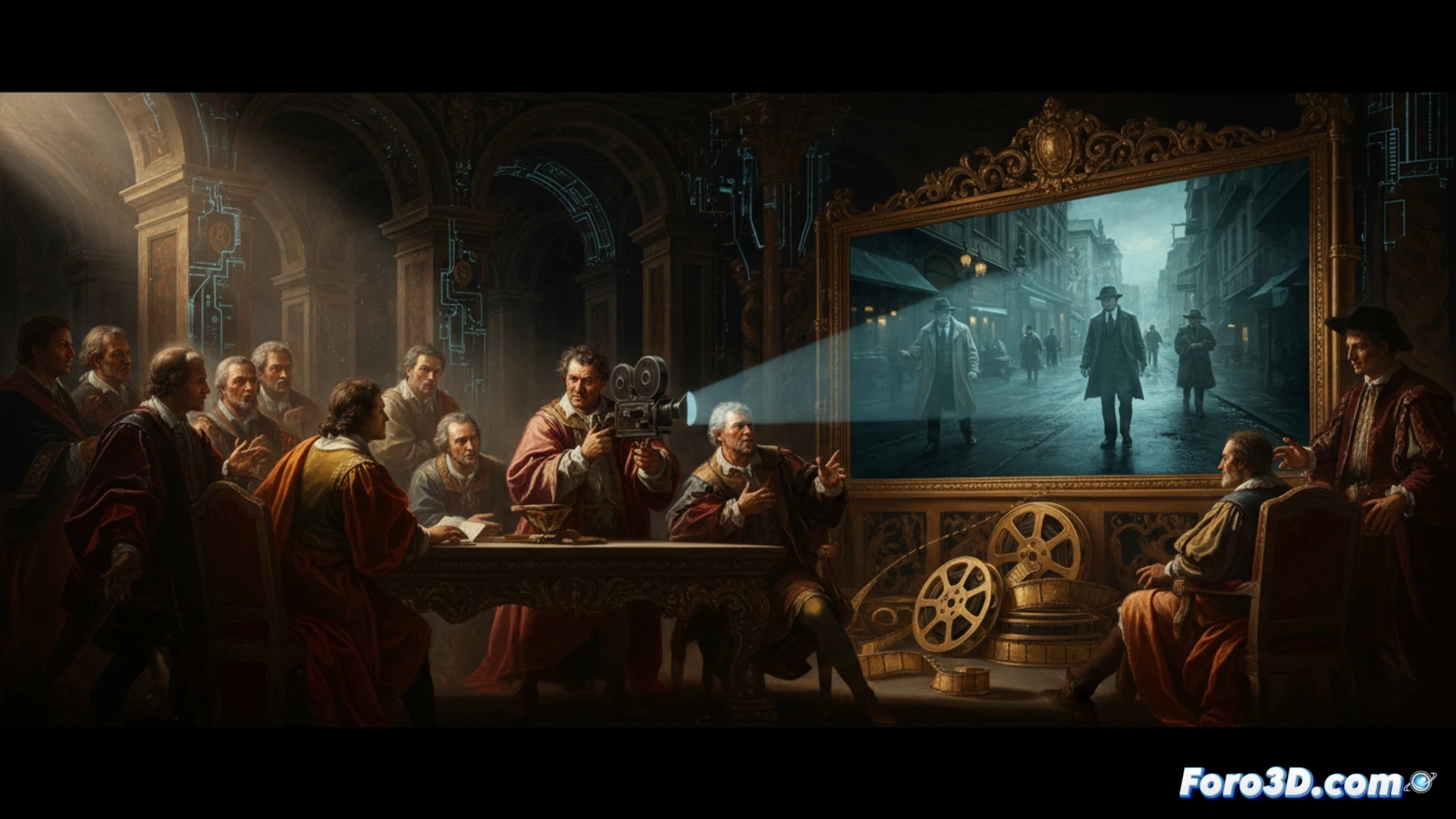
Lighting technique: from oil paint to digital sensor 🎬
Caravaggesque chiaroscuro translates into cinema through hard lights and backlighting. The cinematographer uses point sources (a spotlight, a window) to isolate the subject, just as Caravaggio painted with black backgrounds. In films like The Irishman or Drive, light does not illuminate: it interrogates. The digital sensor captures nuances that oil paint achieved with glazes. The technical difference is the medium; the intention, the same: to create dramatic tension with deep shadows.
What Caravaggio didn't see coming: streaming 📺
If the Lombard painter were to raise his head, he would probably freak out over Netflix. His tortured saints and his virgins with troubled gazes are now series antiheroes. Sure, he took months on a canvas; today a cinematographer adjusts the light in seconds and the viewer sees it in 4K. At least Caravaggio would have one consolation: no one would ask him for a sequel to The Calling of Saint Matthew.