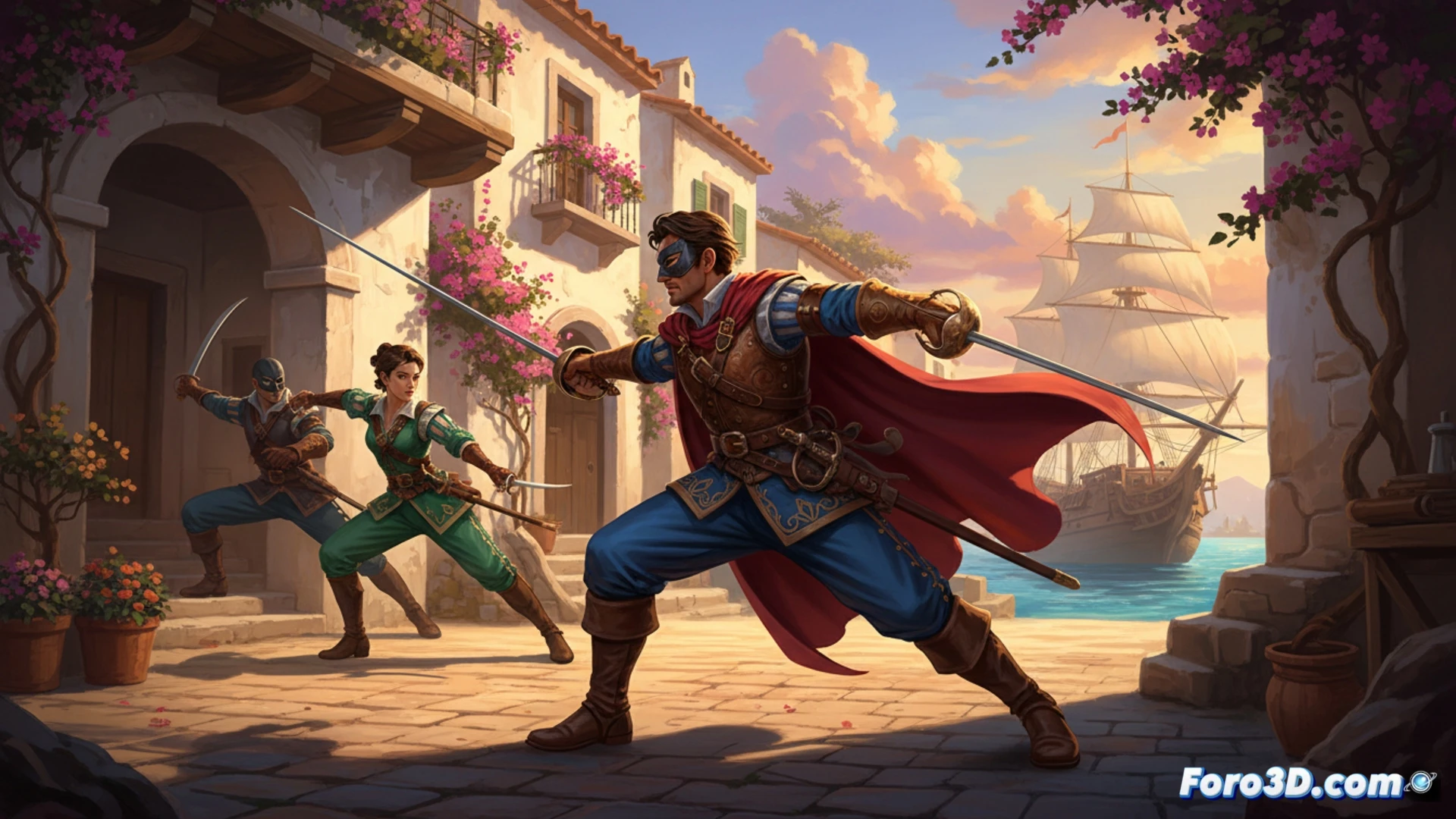
The En Garde! project demonstrates that Unreal Engine 4 is not limited to photorealism. Its rendering engine allows emulating the shading of classic illustrations, combining chromatic saturation with warm, Mediterranean-influenced lighting. This article breaks down the technical workflow between Maya, ZBrush, and Photoshop to achieve that painterly finish.
The NPR Workflow: From ZBrush Sculpting to Toon Shading in UE4 🎨
The process begins with base modeling in Autodesk Maya, where exaggerated proportions typical of the style are defined. Clothing and weapon details are sculpted in ZBrush, prioritizing clean silhouettes over anatomical realism. Flat textures with hard edges and limited palettes are generated in Photoshop, avoiding complex gradients. The key technical leap occurs in Unreal Engine 4: custom shaders (materials with nodes) are implemented, replacing specular highlights with flat cel shading. A Post Process Volume is used to apply a global warm tone, simulating Mediterranean sunset light, and a silhouette outline is added via a post-effect material that mimics the ink lines of adventure books.
Technical Lessons for Independent Developers ⚔️
This approach demonstrates that visual style depends not on budget, but on technical coherence. By limiting the color palette and using NPR shaders in UE4, the rendering cost is significantly reduced, allowing for more populated scenes. For small studios, the lesson is clear: mastering the workflow between Maya, ZBrush, and Photoshop to generate assets with flat color maps, and then leveraging UE4 materials to unify lighting, is the most efficient formula for achieving a strong and recognizable artistic identity.
What lighting and post-processing techniques in Unreal Engine 4 are key to replicating the adventure book aesthetic of En Garde! without resorting to photorealism?
(PS: game jams are like weddings: everyone is happy, nobody sleeps, and you end up crying)