Ukraine and Russia have carried out an exchange of 205 prisoners of war per side, the first step of an agreement that provides for the exchange of 1,000 troops on each side. The operation, mediated by the United Arab Emirates, includes privates, sergeants, and officers captured in Mariupol, Donetsk, Kharkiv, and other sectors of the front. It is the largest exchange in months and offers a respite amid the war.
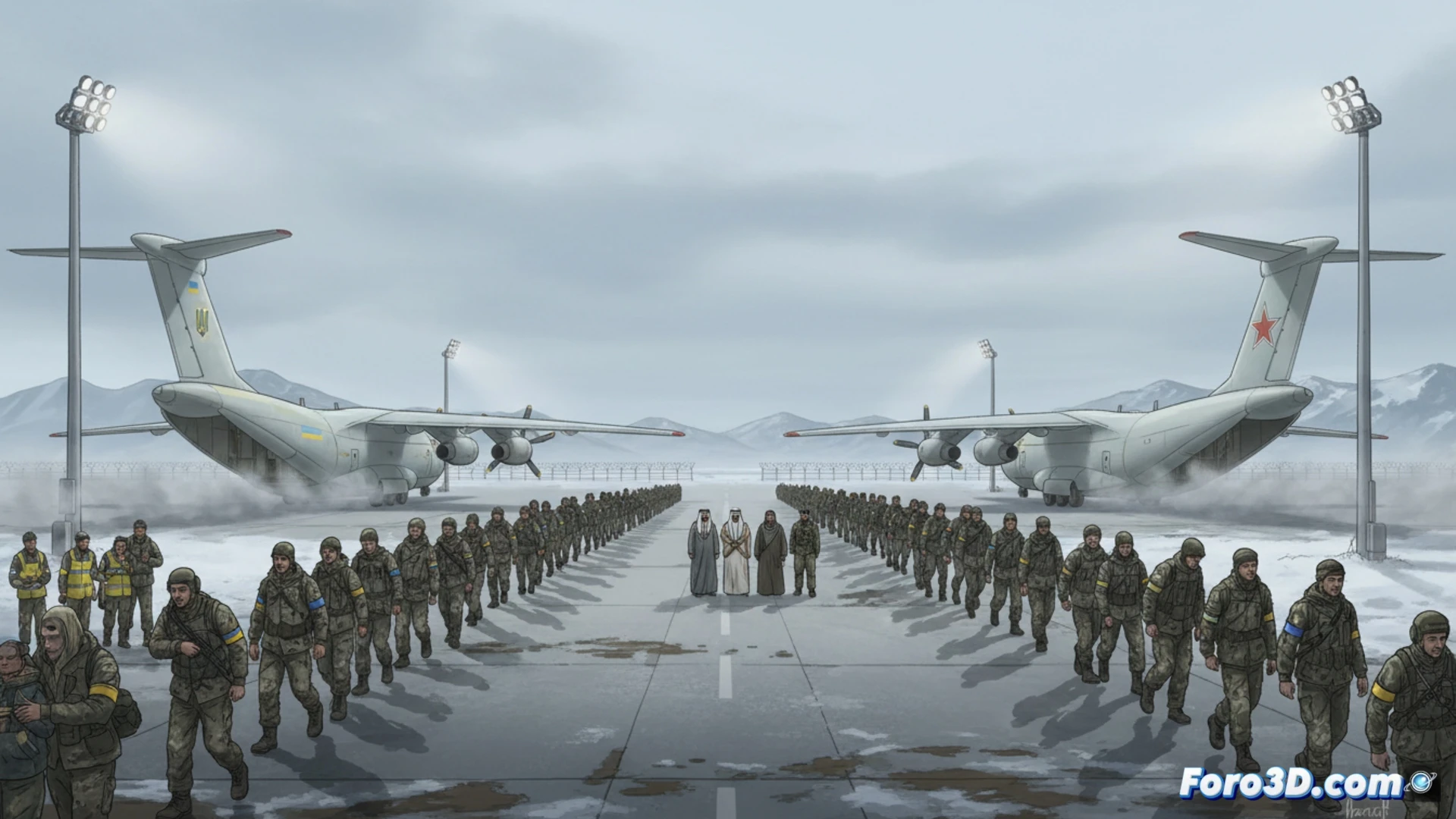
War Logistics: How a Massive Troop Exchange is Managed 🚁
Coordinating an exchange of this magnitude requires biometric identification systems, centralized databases, and field verification protocols. Each prisoner is cross-checked using forensic records and prior interviews to avoid errors. Mediation teams use encrypted messaging apps and surveillance drones to secure the handover point. Logistics include ambulances, armored buses, and medical personnel, all synchronized within time windows of just hours to minimize the risk of crossfire.
1,000 for 1,000: The Black Friday of Prisoners of War 🔄
If the agreement is fulfilled, it will be the largest exchange since World War II, almost like a Black Friday of souls. Picture the scene: two lists of 1,000 names, an Emirati mediator with a megaphone, and a sergeant shouting next! while swapping soldiers like duplicate trading cards. Of course, no returns or size exchanges. At least the 205 from this batch can stop counting the days in the basement and start counting how long it will take them to return to the front.