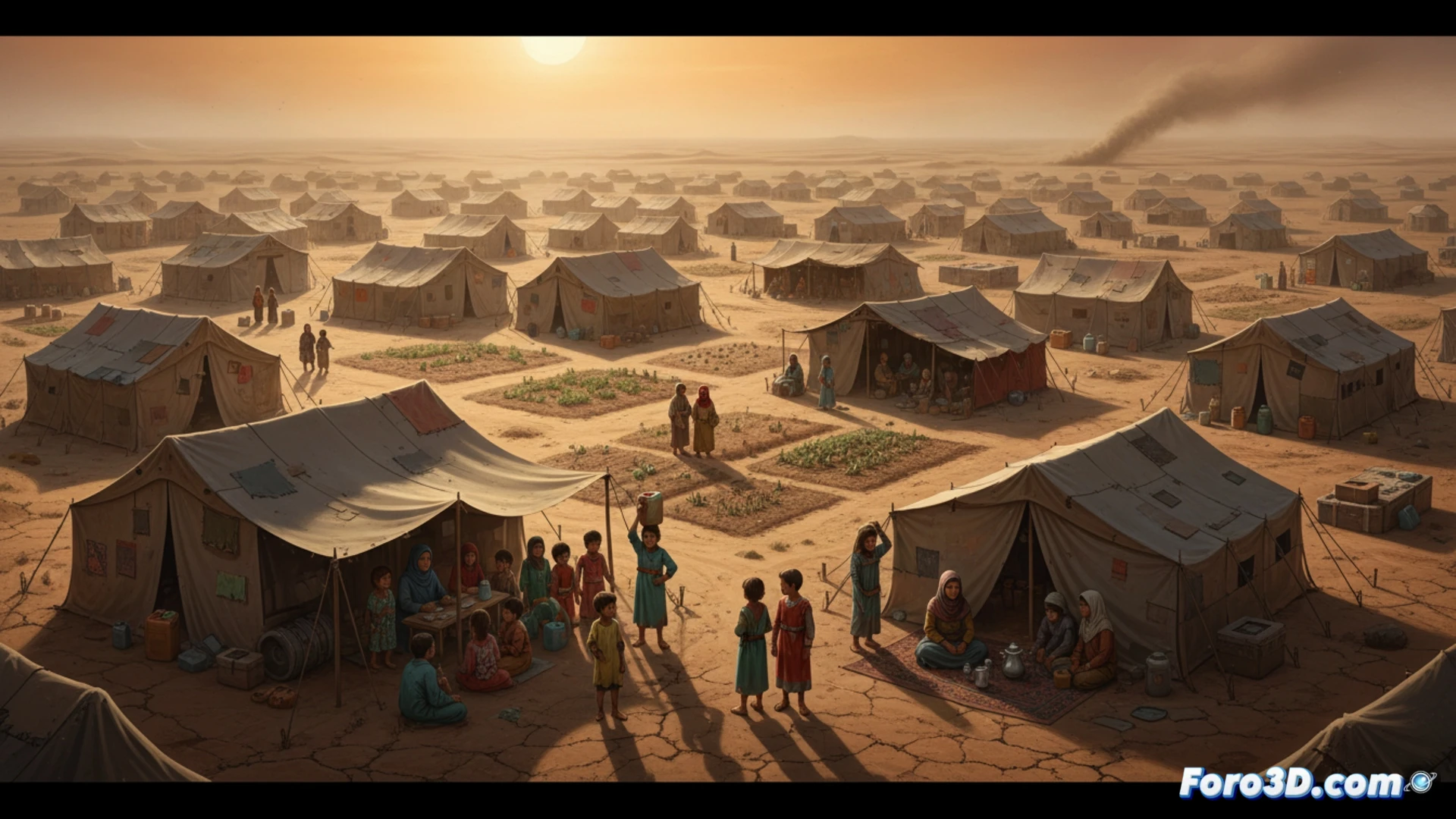
In the Algerian desert, the Sahrawi refugee camps are not simple settlements. They bear the names of the cities their people abandoned after the Moroccan occupation of Western Sahara in 1975: El Aaiún, Smara, Dakhla. Each name is a symbol of resistance and nostalgia, a daily reminder of the lost home. Life there is organized with solidarity, education, and traditions, despite the extreme climate and scarcity of resources.
Connecting exile: technology and networks in the desert 🌐
Despite the harsh conditions, technology has reached the camps. Solar panels power mobile devices and internet access points, allowing refugees to maintain contact with the outside world. Digital training is provided in schools and community centers, using donated computers. These tools facilitate the coordination of humanitarian aid and the dissemination of their cause. However, coverage remains limited and dependence on generators is constant. The digital divide is narrowing, but progress is slow.
Desert wifi: when sand becomes the router 🏜️
Making a video call in the Dakhla camp can be an odyssey. Sand gets into everything, including USB ports. One day you have a signal, the next a dust storm takes the modem away. Young Sahrawis joke that their 4G works best when the wind blows head-on. And if the occupation couldn't break them, neither will a router that overheats at 50 degrees. At least they have patience well trained.