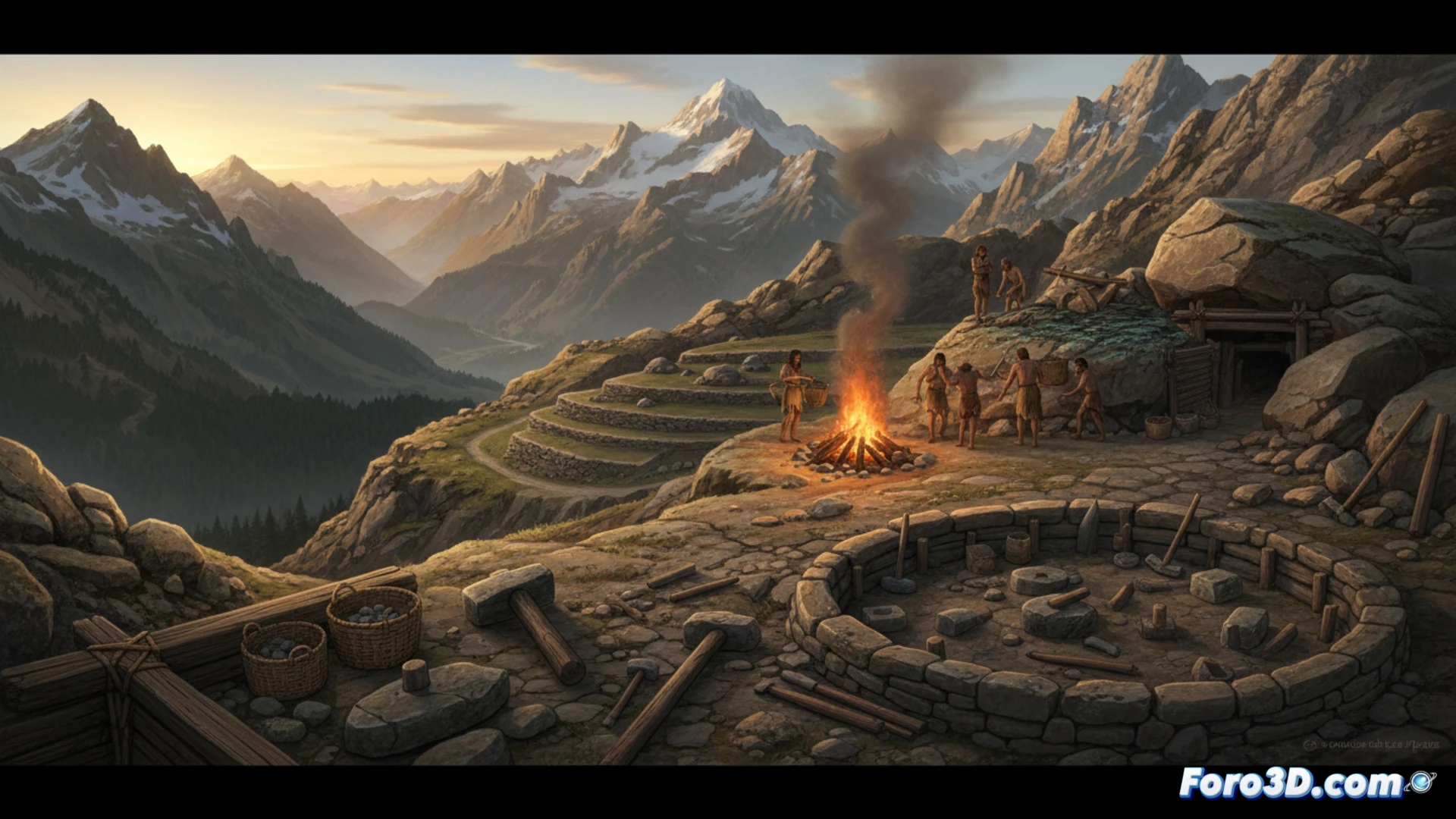
Archaeological research in the Pyrenees has located a possible mining camp about 5,500 years old in a high mountain area. The find includes stone tools and remains of structures pointing to a temporary settlement linked to copper extraction. This discovery indicates that Neolithic communities already exploited mineral resources at high altitudes, challenging the idea that these practices were exclusive to later periods. Analysis of hammers and anvils allows the camp to be dated to the Chalcolithic, a transitional period towards the Bronze Age.
Lithic tools and Chalcolithic extraction techniques 🪨
Experts have identified a set of stone utensils, such as percussion hammers and granite anvils, used to crush and process copper ore. Wear marks suggest intensive use and a direct percussion extraction technique on surface veins. The arrangement of the structures, with dry stone walls and possible smelting areas, indicates a seasonal camp with organized labor. This data allows the reconstruction of mining processes that, despite their antiquity, show practical knowledge of early metallurgy in hard-to-reach areas.
Neolithic neighbors: noisy and without noise complaints 😄
Imagine the scene: 5,500 years ago, in the middle of the Pyrenees, a group of Neolithic neighbors decide to open a copper mine. Without municipal regulations or rest hours, they spend the day hammering stones at 2,000 meters altitude. Meanwhile, the deer and wild boar in the area, without the right to complain about noise pollution, simply move to the next valley over. At least these miners left no plastic waste or lithium batteries. Only stones, a lot of effort, and a camp that, five millennia later, reminds us that hard work has no era.