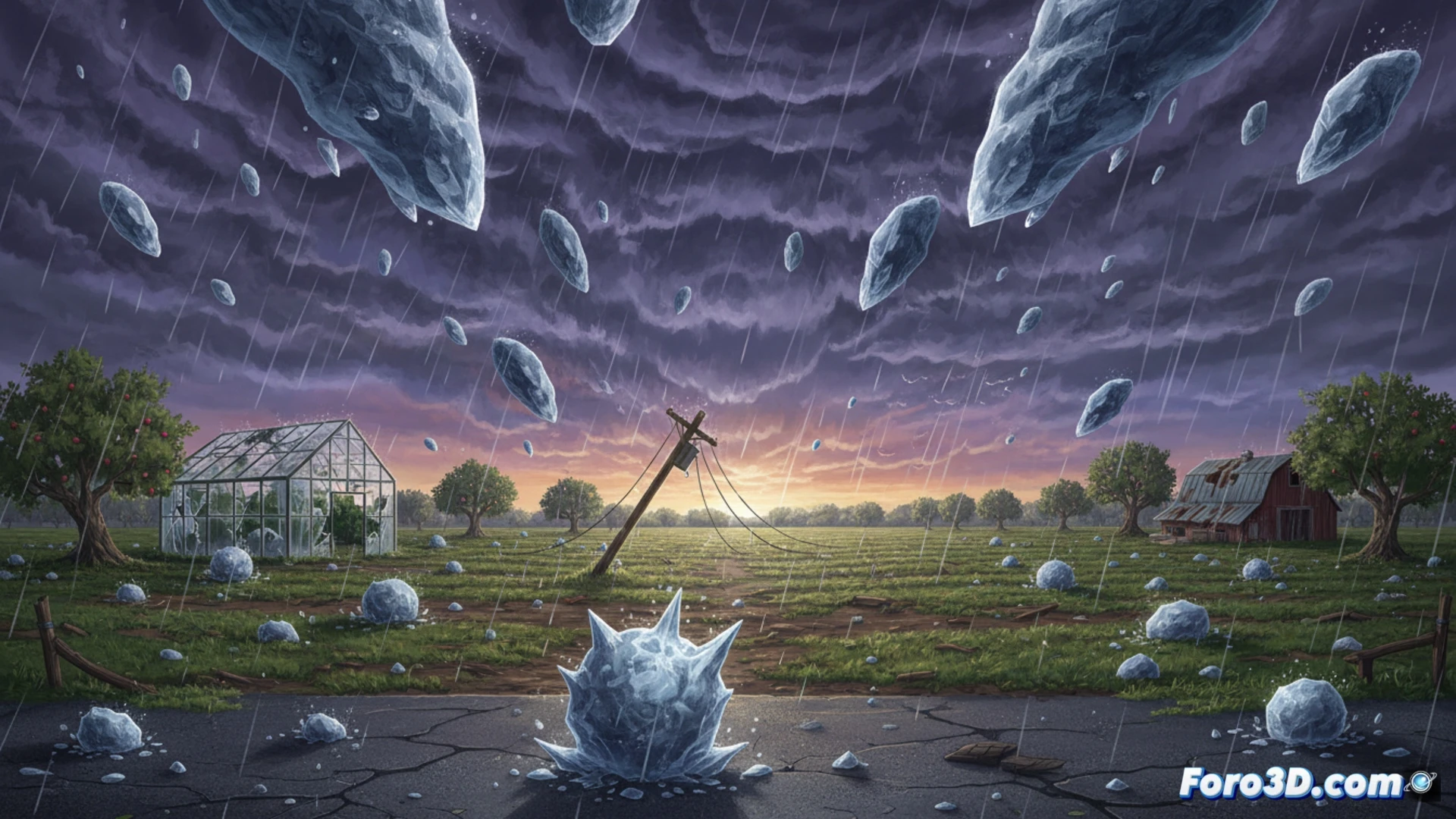
Recent studies reveal a climate paradox: global warming does not multiply hailstorms, but it makes them more violent. As the atmosphere warms, it accumulates more energy and instability. This allows ice crystals to grow larger within clouds, resulting in hailstones of greater size that cause more severe damage to crops and infrastructure.
How extreme weather drives new protection systems 🌩️
Faced with this phenomenon, technology has had to adapt. Prediction systems based on artificial intelligence are being developed, analyzing radar and satellite data to anticipate storm trajectories. In agriculture, more resistant hail nets and seismic cannons that attempt to disrupt crystal formation are being tested. Materials engineering is also advancing to create roofs and solar panels capable of withstanding larger impacts.
Hail now comes with extra size and bad attitude 🧊
Nature has decided that rain, snow, or sunshine were not enough. Now, hail arrives with aspirations of becoming rock. If before a pebble the size of a pea was a nuisance, now one the size of a golf ball can fall on you. Home insurance companies are trembling, and so are car owners. At least, if it hits you on the head, the bump will be spectacular.