The evolution of processors is not always measured in GHz. Advances like shared L3 cache and finer lithographies allow a modern chip to deliver more performance with less heat and electricity than a veteran AMD FX-6300. It's not magic, it's physics and engineering working together so your PC doesn't need a nuclear power plant next to it.
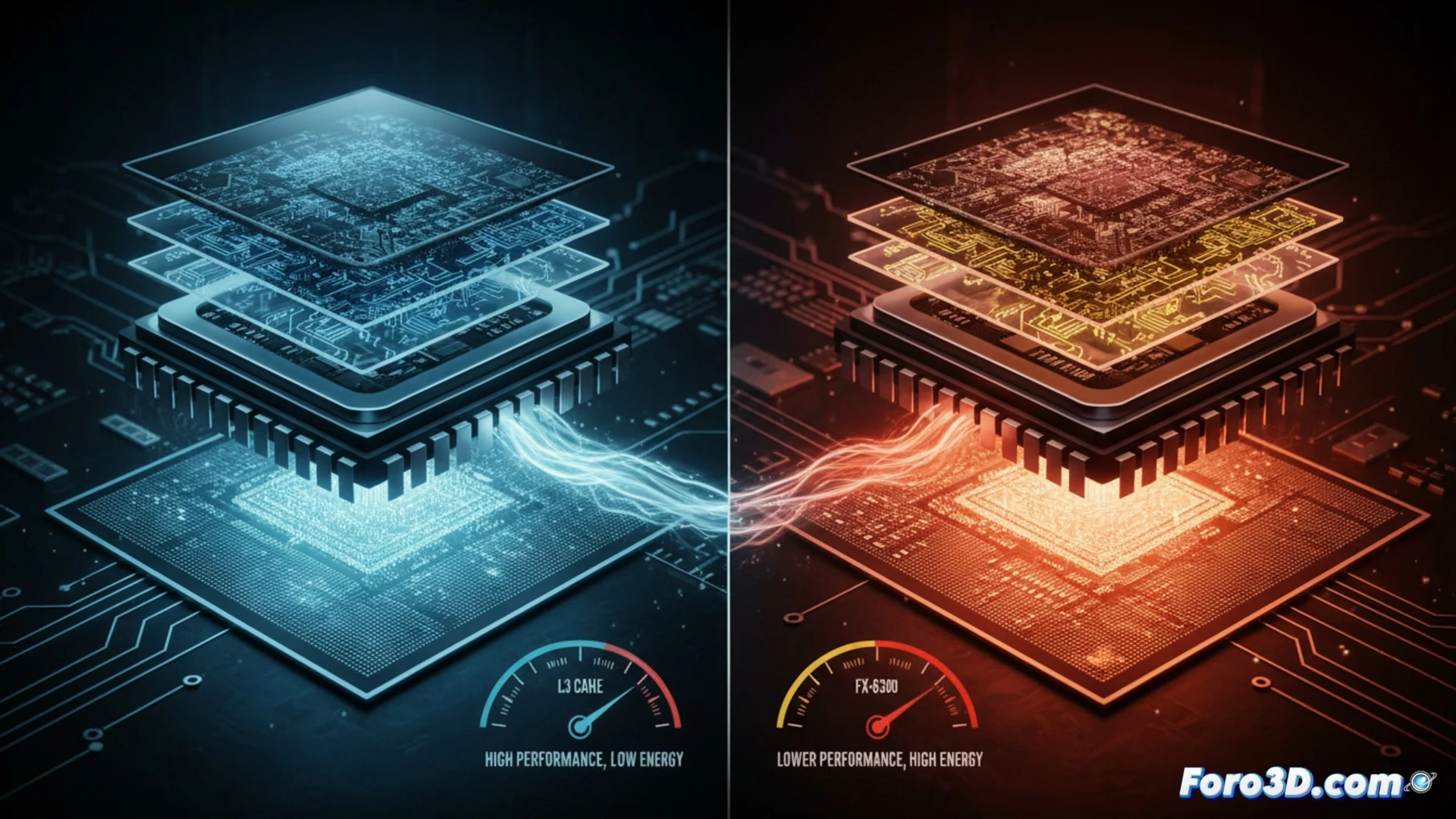
Reduced lithography and unified cache: keys to the generational leap 🔬
When moving from 32 nm to 7 nm or less, transistors shrink and the distance between them shortens, reducing energy losses. The L3 cache, once a luxury, now acts as a fast storage that minimizes trips to RAM. Thus, a 65W Ryzen 5 outperforms a 95W FX-6300 in multitasking, which also heated up like a toaster. Efficiency is not optional: it's the new standard.
The FX-6300: when heating the room was a feature 🔥
Let's remember the FX-6300, that processor that worked as desktop heating in winter. While a modern chip runs tasks without the fan flinching, the old FX forced you to choose between gaming or having the house at 30 degrees. Now the L3 cache does the dirty work and the heatsink gets bored. Fewer watts, more frames: technology advances and our electricity bills thank it.