Lian Li Strimer Plus V2 cables have evolved from being a simple decorative accessory to a functional component for hardware enthusiasts. In the niche of 3D modeling and rendering, where power reliability and professional aesthetics are crucial, these power extension cables offer a high-density ARGB lighting solution that does not compromise airflow integrity or cable management.
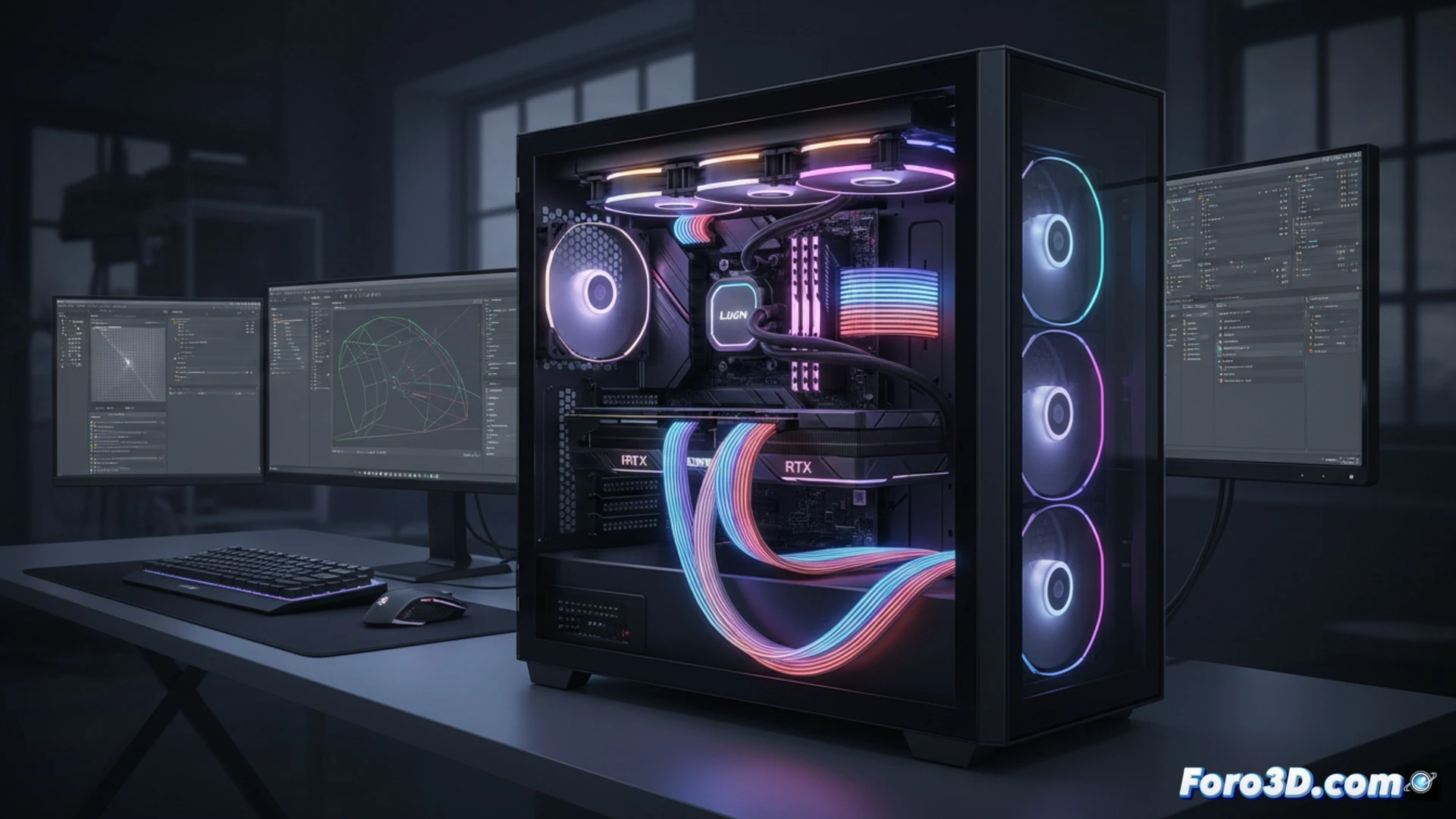
Power management and compatibility with high-wattage power supplies ⚡
For a 3D workstation equipped with a high-end GPU (such as an RTX 4090 or similar) and a high-consumption CPU, the new 12VHPWR connector integrated into the V2 version is essential. This cable supports up to 600W of power, ensuring stable distribution without overheating points. Additionally, its flexible design allows routing cables away from CPU coolers and fan blades, improving airflow inside the case. Compatibility with control software like L-Connect 3 allows synchronizing lighting with rendering workloads, offering visual indications of system status.
Visual customization in professional work environments 🎨
In a 3D modeling environment, PC order and aesthetics are not frivolous; a clean setup reduces distraction and facilitates maintenance. The Strimer Plus V2, with its 120 pixel-addressable LEDs on the 24-pin cable, allows creating lighting effects that integrate with the motherboard's RGB ecosystem (ASUS Aura Sync, MSI Mystic Light, etc.). I recommend configuring soft, static lighting modes to avoid annoying flickering during long rendering sessions, thus maximizing concentration without sacrificing style.
Is it possible to maintain a stable thermal profile on a 3D workstation by integrating Lian Li Strimer V2 cables, or can their ARGB aesthetics increase the internal case temperature by limiting direct airflow over VRMs and RAM?
(PS: Your CPU runs hotter than the Blender vs. Maya debate)