The return of the Black Knight (Dane Whitman) and his mythical Ebony Blade to the forefront of the Marvel universe is not only a narrative event but also a reminder of the ironclad legal control that large corporations exert over their characters. For the 3D modeler, this mystical relic represents a technical challenge, but also a legal trap if the boundaries of intellectual property are not respected. We analyze how the law protects these digital assets. ⚔️
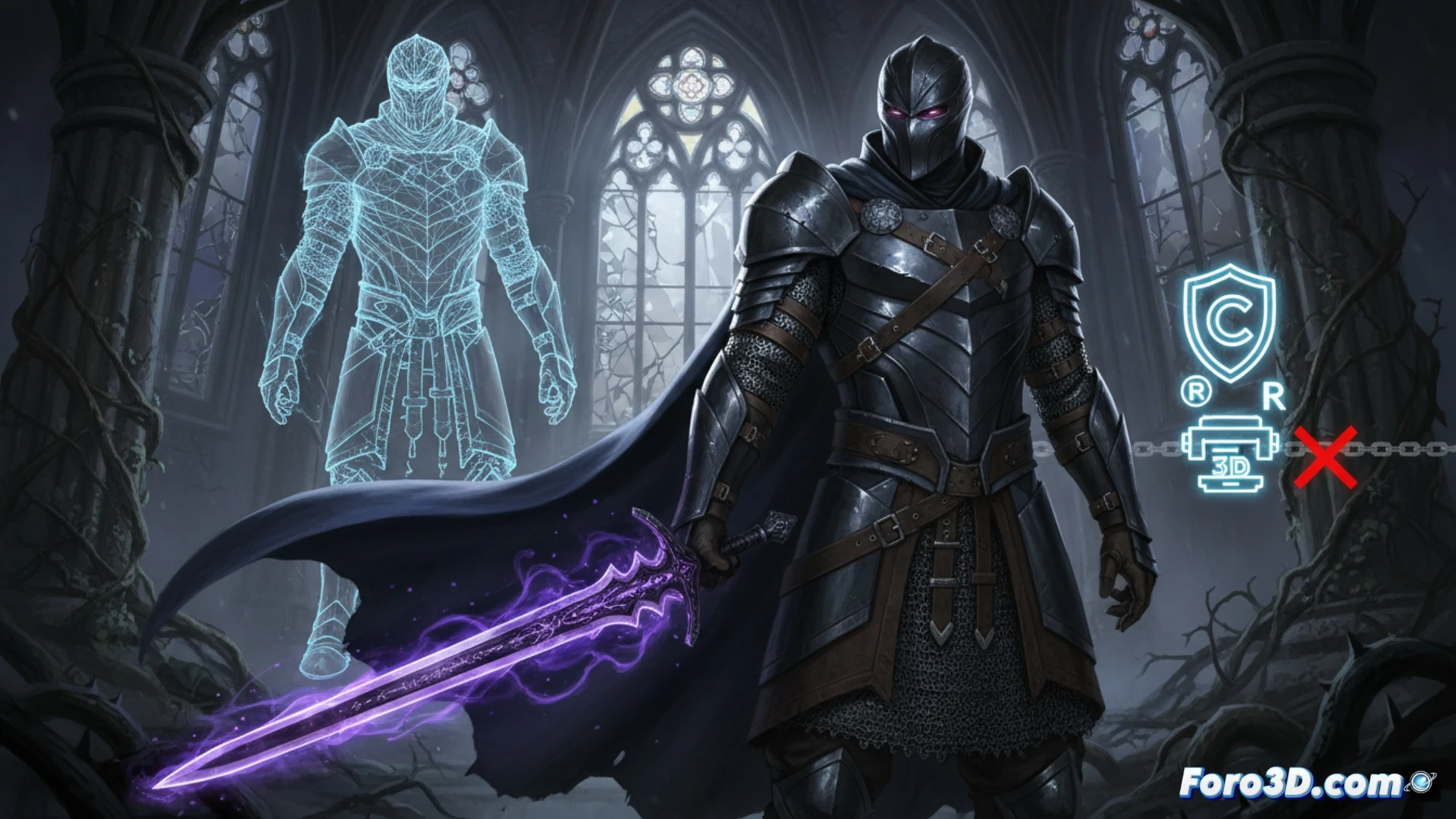
Technical Analysis: Copyright on Comic Book Characters 📜
From a legal standpoint, characters like the Black Knight are considered derivative works protected by copyright and trademark. The Ebony Blade, as a distinctive element, also enjoys protection. For a 3D creator, the line between legal and illegal is defined by use. Modeling an exact replica to sell on platforms like CGTrader or Sketchfab without a license constitutes direct infringement. However, fair use allows certain transformative uses, such as parody, private study, or inclusion in a non-profit academic portfolio. Cases like Warner Bros. v. RDR Books set precedents on how the visual representation of protected characters in new media is judged.
The Bearer's Dilemma: Creation vs. Infringement ⚖️
The greatest risk for the digital artist is the curse of the Ebony Blade: the thirst for fame and recognition. Publishing a hyper-realistic model of the Black Knight on social media without permission can generate notoriety, but also a cease and desist order. The recommendation for creators is clear: if you work with Marvel characters, carry out an original design study inspired by the theme, not a slavish copy. Create your own cursed relic with original lore. This way you avoid litigation and build an ethical and legally sound portfolio.
Do you think AI-generated art NFTs have legal value without copyright protection?