A study reveals that most divers touch coral reefs once every four minutes, and 60% of those contacts are accidental. Overconfidence is a critical factor: 75% of divers believe they are better than average at avoiding impacts, but they touch the reef five times more than they estimate. Seeing wildlife doubles accidental touches, and in heavily visited areas, the accumulated damage is severe.
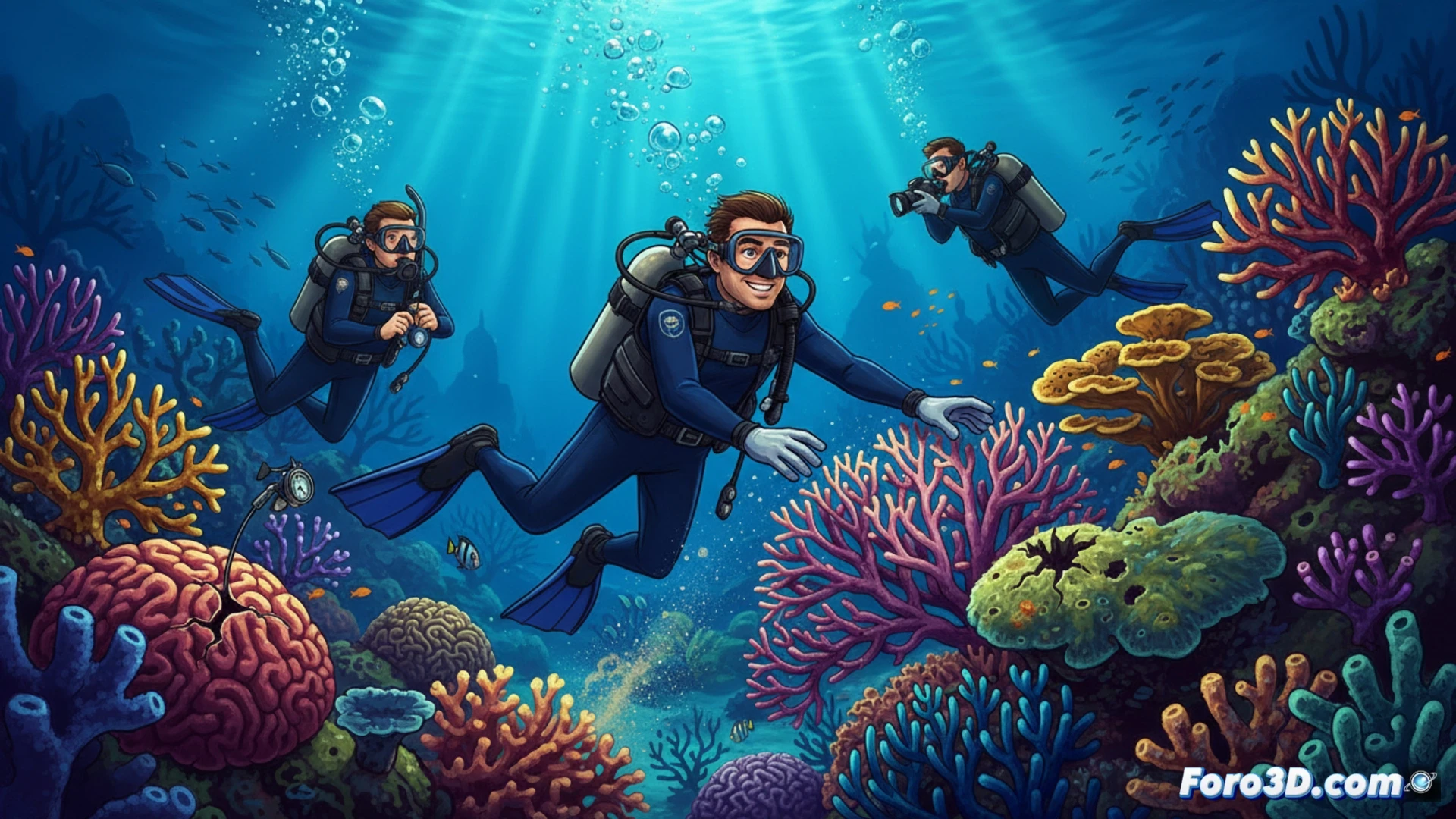
Buoyancy Technology: Sensors and Augmented Reality to Reduce Impact 🤿
The technical solution involves improving training with buoyancy sensors and augmented reality. Devices such as dive computers with depth alarms and accelerometers can alert the diver to sudden movements. Virtual reality systems allow practicing control techniques without risk. 15% of divers never touch the reef, proving that with better regulation and simulation tools, the problem can be corrected. The key is to automate real-time feedback.
The Confident Diver: Thinks They Float Like a Feather, But Weigh Like an Anchor 🐠
The study also reveals that seeing a clownfish triggers clumsiness. The diver, convinced of their mastery, forgets about their fins and lunges to greet the reef. Overconfidence is such that many believe they touch less than a jellyfish, but their fins leave more of a mark than an excavator. If at least half of those contacts were intentional, we could call it vandalism; since they are accidental, we call it diving with ego.