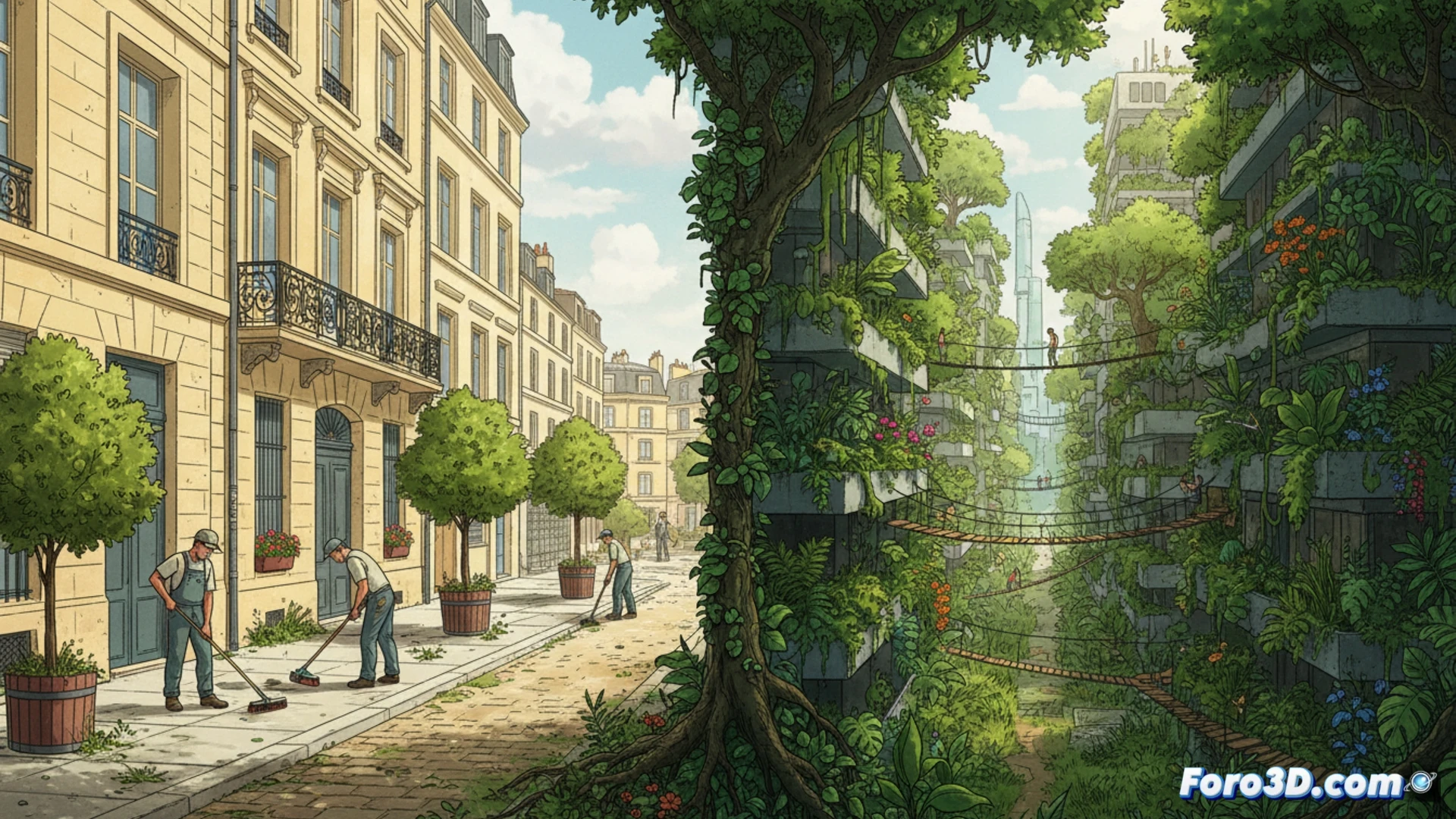
The new city council of Bordeaux has launched a program to weed the sidewalks, aiming for cleaner and more accessible streets. In parallel, Montpellier is considering expanding its first wild district, an area where vegetation grows without human control. This contrast reflects an urban debate about the space wild plants should occupy, between the need for order and the promotion of biodiversity in the city.
Sensors and drones to measure invasive weeds 🌿
The management of spontaneous vegetation now requires technological tools. Bordeaux uses humidity sensors and drones equipped with multispectral cameras to identify invasive species before they clog drains or sidewalks. In Montpellier, GIS mapping systems are used to delimit non-intervention zones, allowing native plants to compete with non-native species. This data helps plan selective pruning and assess the impact on local fauna, such as pollinating insects and urban birds.
The ivy that dreams of being mayor 🌸
While Bordeaux technicians sweat buckets pulling out weeds, in Montpellier the daisies are already requesting a municipal budget to install awnings. Nature, which doesn't understand city council departments, follows its course: the weeds of Bordeaux are campaigning to move to the wild district, where they could live without being bothered by lawnmowers. In the end, the only sure thing is that plants don't pay taxes, but they take up more space than some politicians.