A team of physicists led by Jean-Paul Martischang has discovered that water droplets on a flat soap film perfectly mimic the behavior of merging galaxies. As they coalesce, these droplets take on shapes reminiscent of bridges and spiral arms observed in the cosmos, all because each droplet deforms the film by creating a depression.
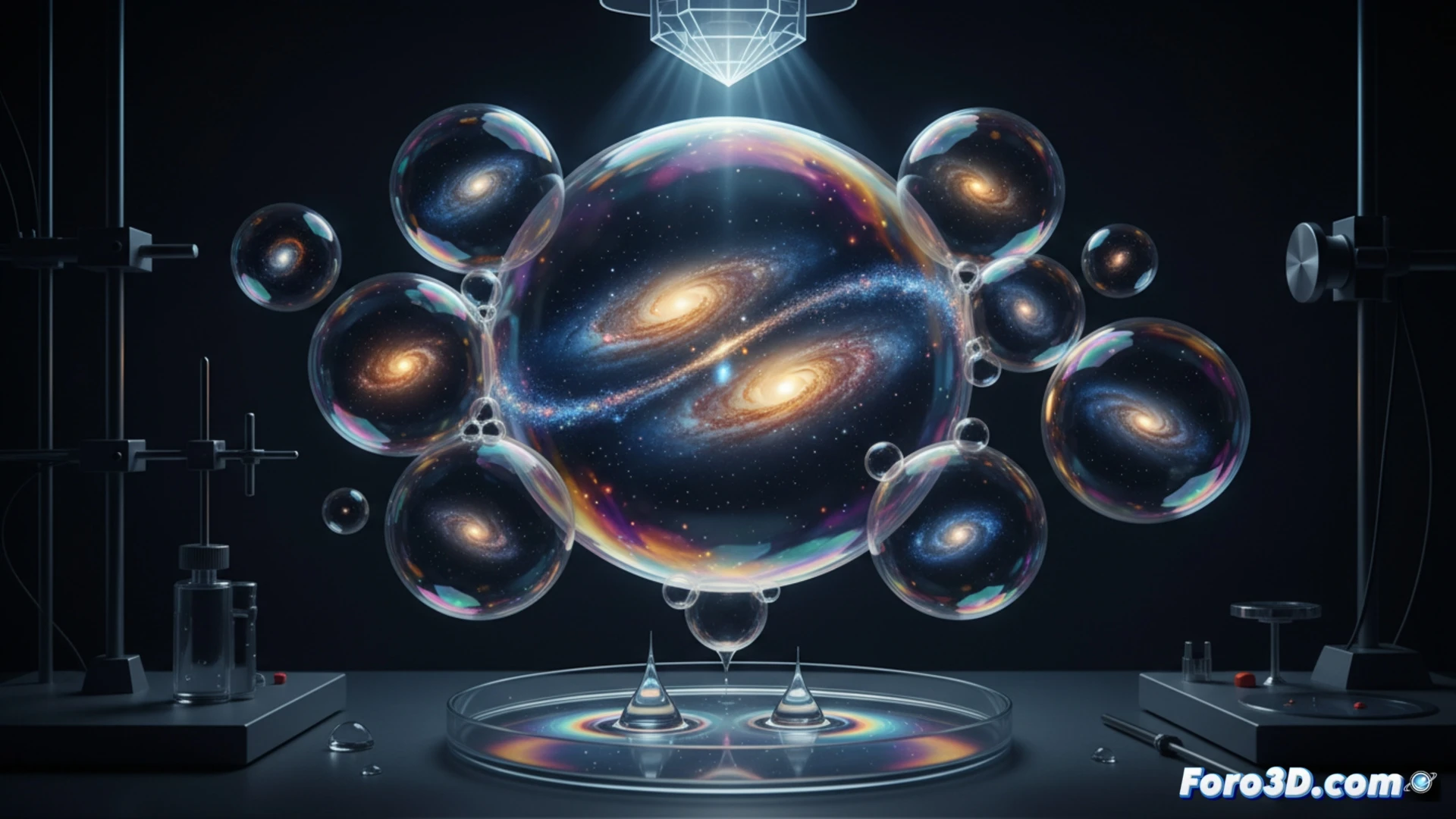
Droplets replicating galactic dynamics at laboratory scale 🌌
The phenomenon is based on each droplet, about a centimeter wide, deforming the soap film by creating a depression that attracts other nearby droplets. As they orbit and merge, the droplets produce structures such as liquid bridges and spiral arms, similar to astronomical images of colliding galaxies. This model allows studying complex merger dynamics without the need for telescopes or heavy computational simulations.
The universe is a soap bubble, but with fewer bubblegum bubbles 🫧
Now it turns out that to understand how galaxies collide, we only need a bubble wand and soapy water. While astronomers struggle with million-euro telescopes, Martischang and his team discover the cosmos with a carnival gadget. Next up will be simulating the Big Bang with a bubblegum balloon. Hopefully, the bubbles don't burst in our faces before the paper is published.