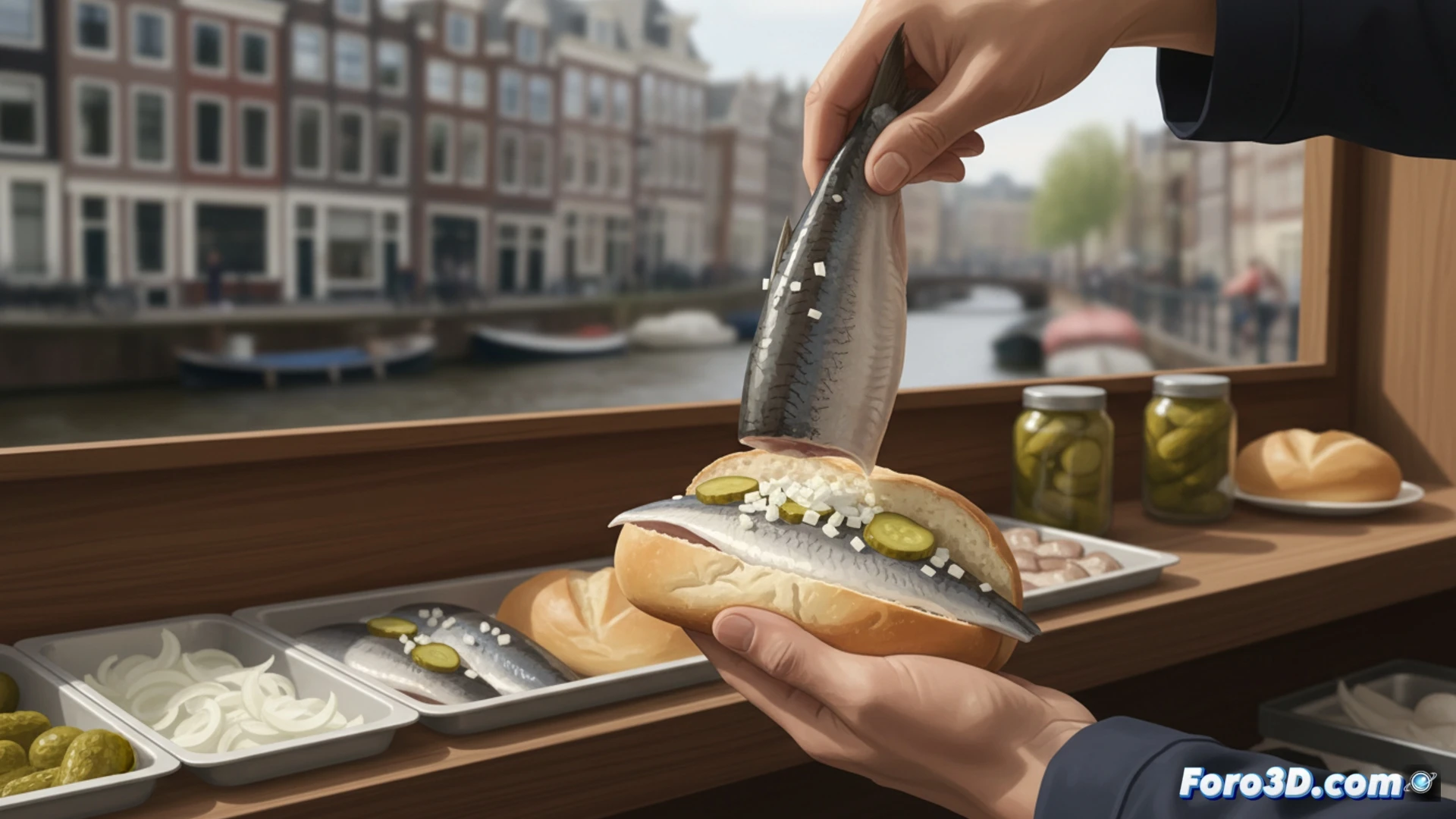
In the markets and streets of the Netherlands, the broodje haring is a classic that never goes out of style. It consists of a raw herring fillet, marinated in brine, served in a white bun with chopped onion and pickles. Its fresh, salty flavor, along with a smooth texture, makes it a direct and unpretentious experience. Locals eat it by holding it by the tail and letting the bite drop into their mouth, a technique that avoids mess and honors tradition.
Herring and the engineering of cold preservation 🧊
Behind this dish lies a precise technical process. After capture, the herrings undergo bleeding and a controlled brine that stops enzymatic action, maintaining firm texture and sea flavor. The cold chain is key: the fish is kept at temperatures between 0 and 2 degrees Celsius from the boat to the street stall. Some stalls use refrigerated display cases with forced ventilation systems to prevent condensation, ensuring the product arrives in optimal condition.
How not to look like a tourist when eating your herring 🐟
If you think biting the bun sideways is a good idea, get ready for a Dutch person to look at you with pity. The official technique is to grab the herring by the tail, tilt your head back, and let the fillet slide into your mouth. It's a move that requires practice, because a miscalculation ends with herring on your shirt and your dignity in tatters. And no, it is not served with mayonnaise or ketchup, no matter how much your creative itch bothers you.