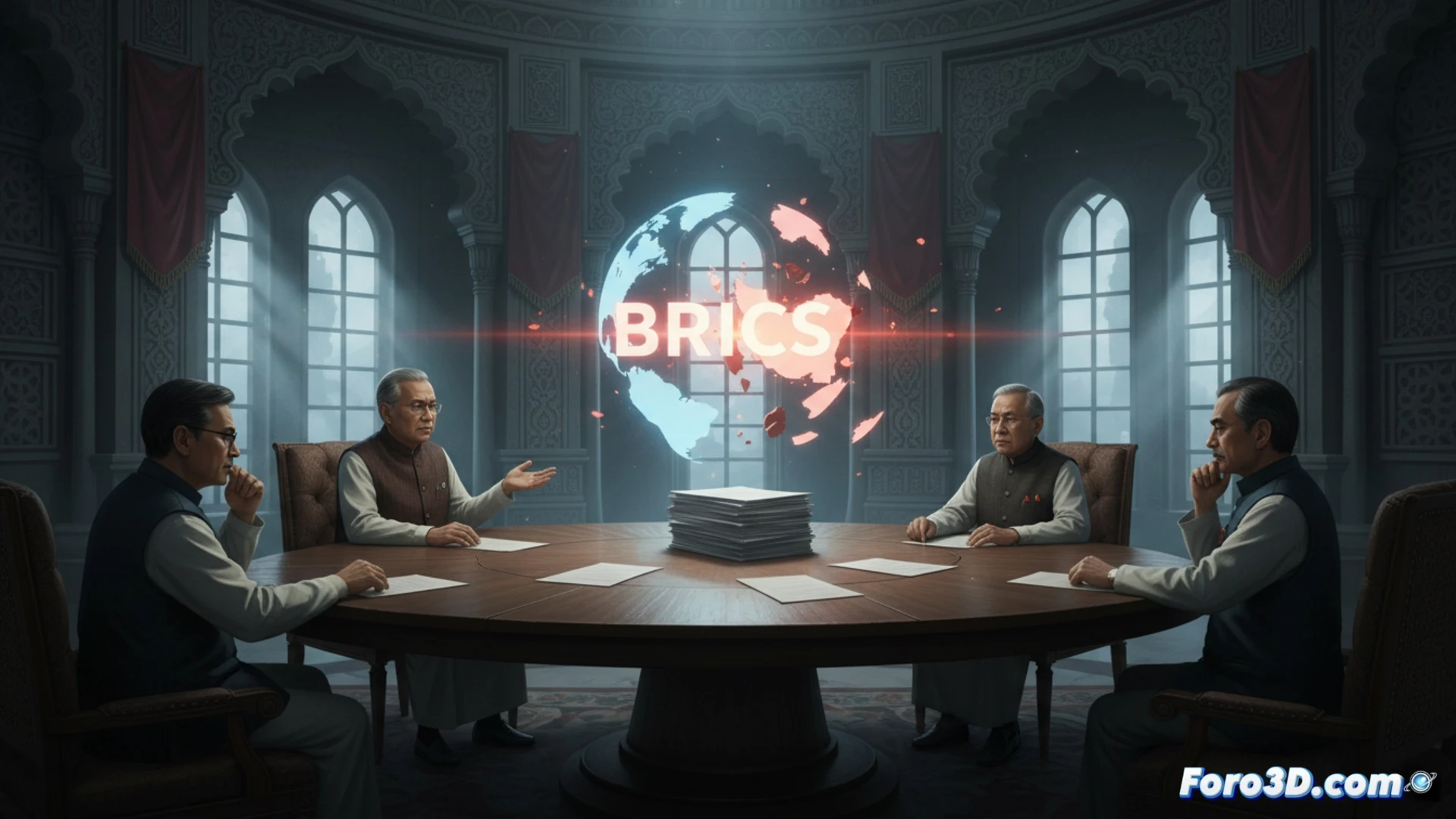
The BRICS foreign ministers meeting in New Delhi ended without a joint declaration, an unusual occurrence reflecting internal divisions. India, as the host, issued a presidential statement that exposed differences among members, particularly between Iran and the UAE. The ongoing conflict in Iran shattered the bloc's usual cohesion.
Blockchain technology: how AI replicates diplomatic cracks 🤖
Artificial intelligence applied to conflict analysis shows patterns similar to these divisions. Natural language processing algorithms detect contradictions in official statements, such as those from this summit. Machine learning systems trained on foreign relations data predict that a lack of consensus in forums like BRICS often escalates into trade tensions. Technology doesn't resolve politics, but it exposes it.
The declaration that wasn't: the art of disagreeing 📄
The foreign ministers arrived in New Delhi with prepared speeches, but left with a simple Indian piece of paper. It seems the only consensus was to disagree. While Iran and the UAE eyed each other sideways, the rest watched the clock. In the end, the presidential statement served to make it clear that, in BRICS, unity is more of a rumor than a diplomatic reality.