New research reveals that forelimb reduction in theropod dinosaurs was not an isolated event, but an evolutionary trend that occurred independently in five distinct lineages. Tyrannosaurids, abelisaurids, carcharodontosaurids, ceratosaurids, and megalosaurids developed smaller forelimbs without being directly related to each other. The phenomenon suggests a common evolutionary pressure: skull size and specialization in hunting replaced the function of the arms.
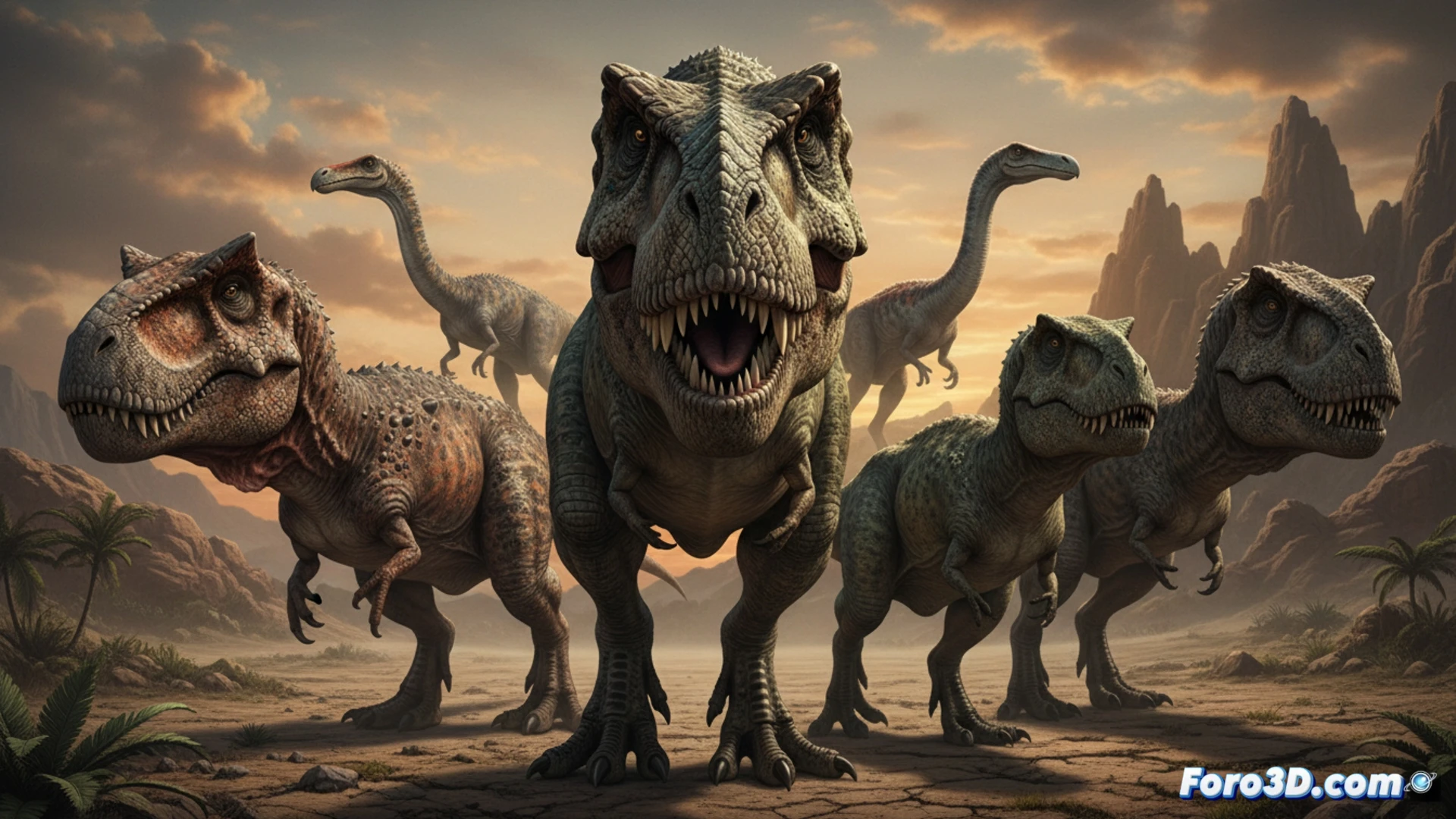
Evolutionary mechanics: how the skull displaced the arms 🦴
Researchers analyzed fossils from multiple species and observed a direct correlation between increased body size and reduction of forelimbs. As these predators grew, their skulls became more robust and specialized for subduing large prey, while the arms lost functionality. This morphological divergence repeated independently in each lineage, indicating that natural selection favored more powerful heads at the expense of limbs that were no longer necessary for hunting or defense.
T-Rex and its T-Rex arms: nature's joke 😂
Nature has a peculiar sense of humor. While the Tyrannosaurus Rex developed a bite capable of crushing bones, its arms were reduced to two appendages as useful as a pair of cocktail tongs in a boxing match. Scientists now confirm that this joke repeated itself in five distinct families. It seems that, for certain predators, having large arms was as unnecessary as carrying an umbrella in a hurricane. Evolution is wise, but it also has its dark humor days.