The Bose Ultra Open Earbuds hit the market with a radical proposition: a clip-on design that attaches to the ear without sealing the ear canal. For the 3D modeling and animation professional, accustomed to long hours with over-ear headphones, this new category of open audio promises to relieve physical fatigue and maintain connection with the environment. But can an open earbud compete in fidelity and latency with traditional closed-back monitors? 🎧
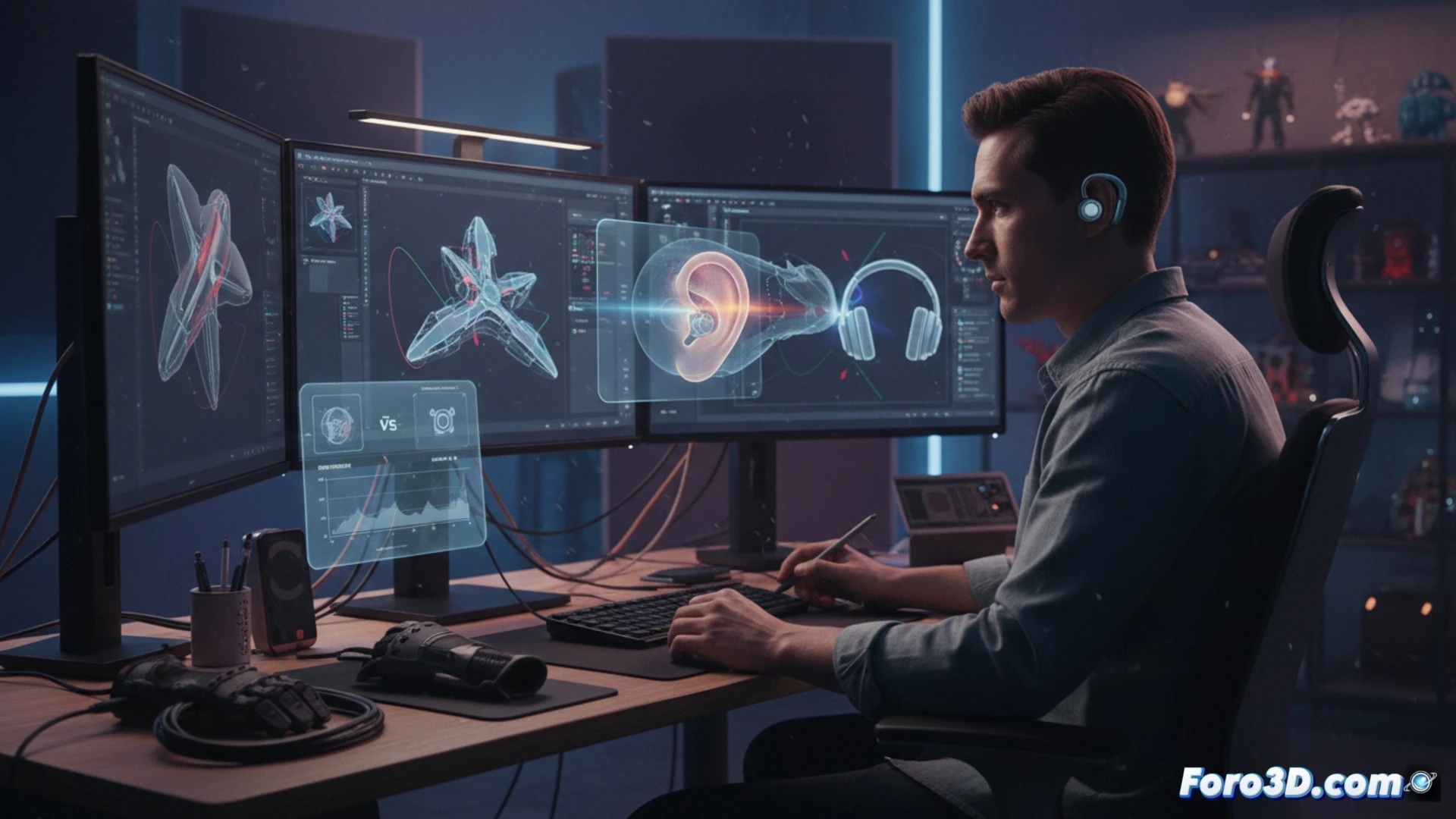
Technical Analysis: Latency, Response, and Isolation in Workflows 🎛️
The big question for a 3D artist is latency. Bose implements its proprietary codec to minimize delay, although being an open format, sound leakage is inevitable. This is not a problem for video editing or reviewing reference tracks, but it is for fine mixing of Foley or effects. The frequency response, according to initial tests, is surprisingly linear for a driver not coupled to the eardrum. However, the real benefit for the shared studio is situational awareness: you can hear a correction from your supervisor without taking off your headphones, something impossible with DT 770s. Comfort is its biggest asset; they weigh just 6 grams and generate no pressure on the outer ear, allowing 8-hour digital sculpting sessions without pain.
Niche Tool or the Future of Monitoring? 🔮
The Bose Ultra Open will not replace closed-back headphones for critical mastering or surround sound work in VR. Their place is in the conceptual design phase, asset review, and real-time communication within the team. If your workflow requires being aware of the phone, colleagues, or your 3D printer while working, these clips are an elegant solution. They are not studio monitors, but they are the best ally to maintain creative flow without isolating yourself from the world.
Can an open audio design with no acoustic isolation, like that of the Bose Ultra Open Earbuds, offer the precision and sonic detail needed to detect subtle mesh collisions or texture errors in a professional 3D studio without sacrificing awareness of the work environment?
(PS: Your CPU heats up more than the Blender vs. Maya debate)