The Bolivian government responds with military threats to legitimate protests over rising fuel prices and land concentration. Instead of addressing the root causes of the conflict, it prioritizes repression over genuine dialogue. Four deaths and a shortage of medicines show that escalating violence is not the solution. It is necessary to reinstate progressive subsidies and halt the law favoring large estates, ensuring the distribution of basic goods.
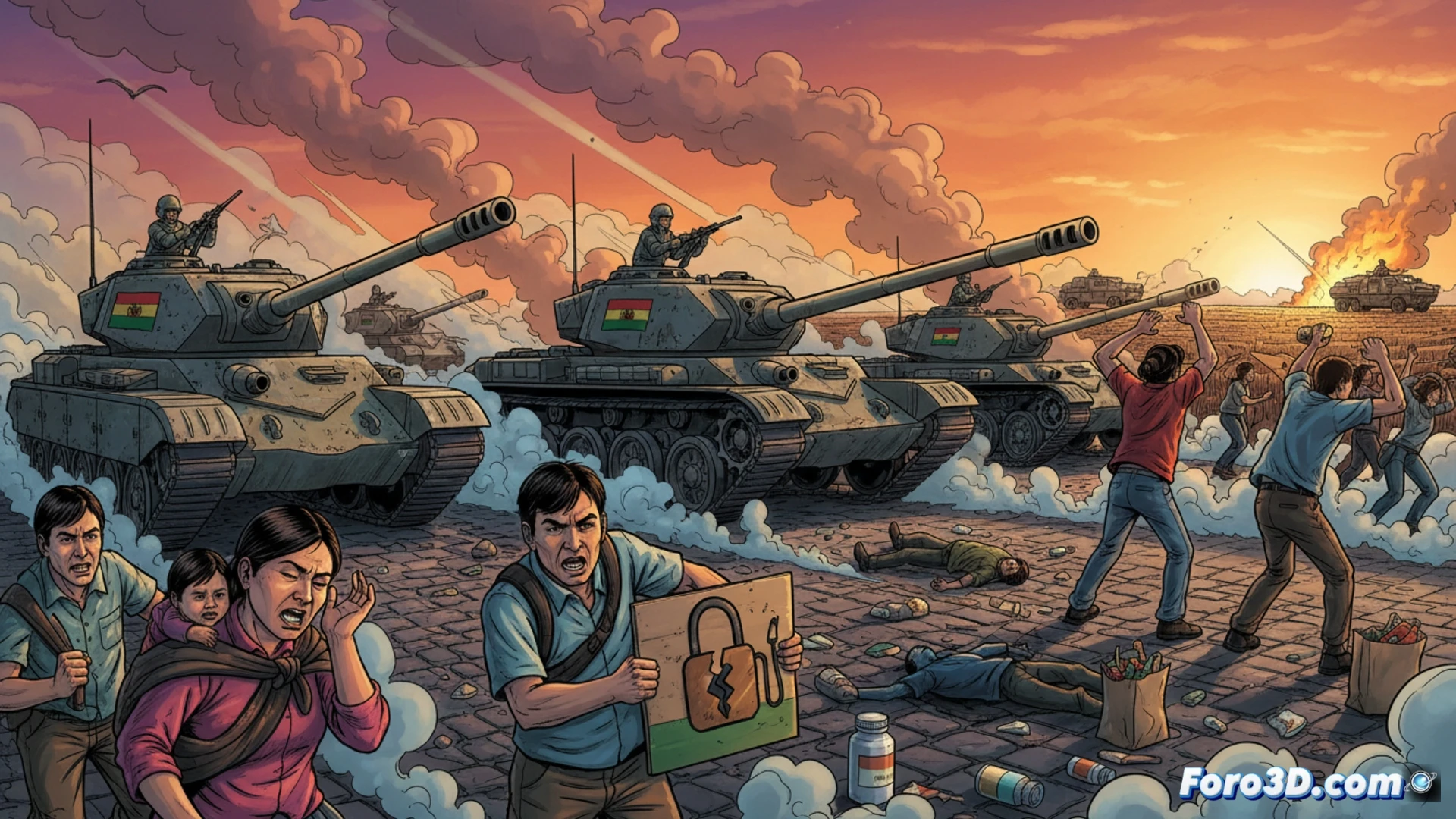
Just energy transition: the technical alternative to tanks ⚡
The concrete solution involves negotiating a just energy transition plan that protects the poorest sectors. This means gradually eliminating universal subsidies, replacing them with targeted direct aid to vulnerable households, and diversifying the energy matrix with decentralized renewable sources. The current model, which maintains artificial prices for fossil fuels, only benefits large transporters and landowners. A progressive system would reduce dependence on imported hydrocarbons and stabilize the domestic market without punishing the population.
Dialogue according to the government: talk too much and get a battalion 😅
It seems in La Paz the recipe for social discontent is simple: if you complain about the price of diesel, we send you a tank so you can see what gasoline really costs. The government discovered it's cheaper to send soldiers than to sit down and negotiate subsidies. Meanwhile, medicines are scarce and large estates keep growing, but hey, at least the soldiers have fuel to get to the protests. That way anyone can believe dialogue works.