Independent studio Squid Shock Studios has released Bo: Path of the Teal Lotus, a Metroidvania that blends Japanese folklore with modern technology. Developed in Unity, the game stands out for its hand-drawn 2.5D art that emulates Ukiyo-e paintings. This article analyzes the artistic pipeline behind its unique aesthetic and how they achieved real-time fluidity.
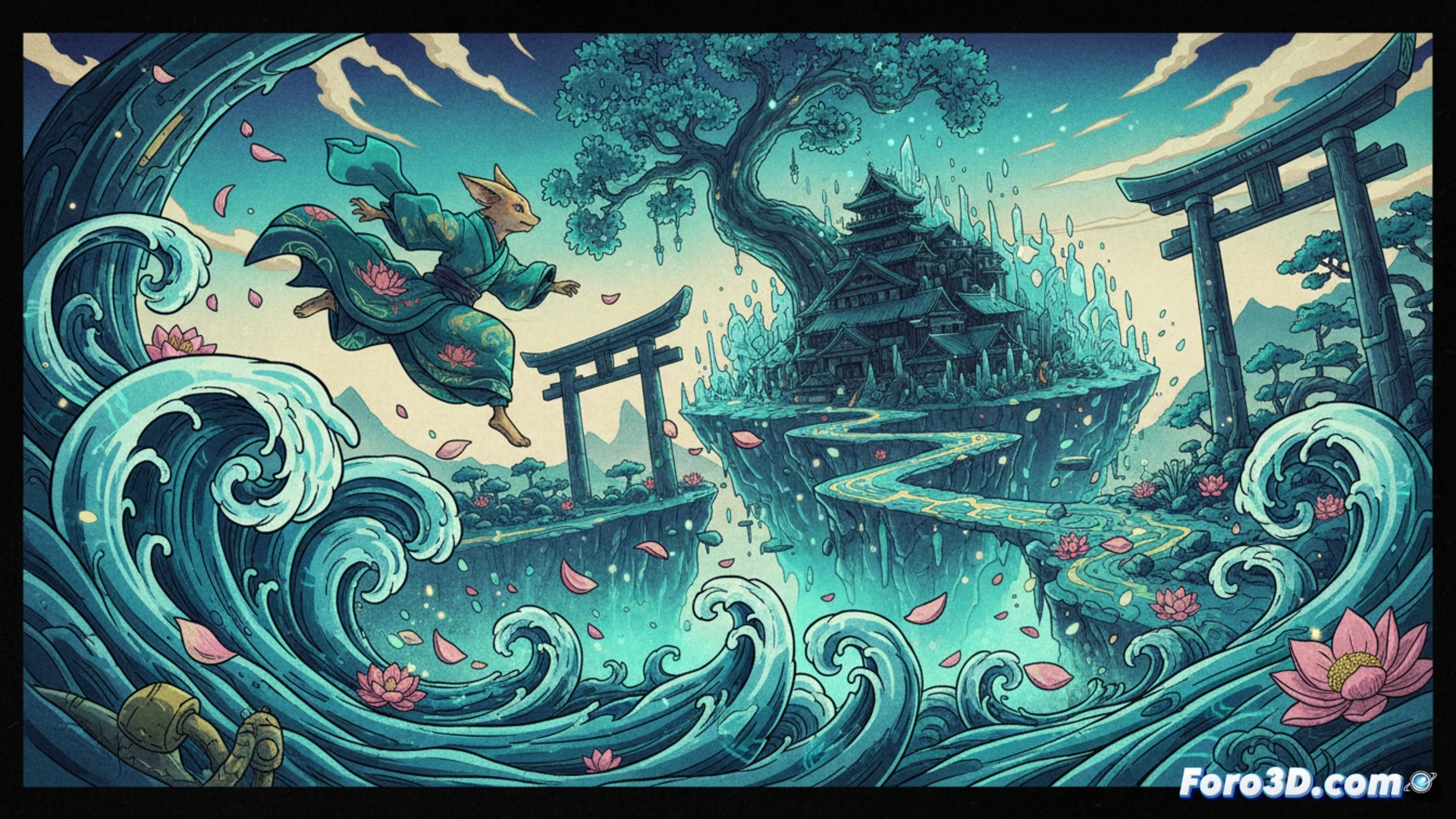
Artistic pipeline: from digital canvas to depth of field 🎨
The creative process began in Photoshop, where each sprite and background was manually illustrated with digital brushes that replicate the texture and fine lines of Ukiyo-e. To integrate these 2D images into a 3D engine like Unity, the team organized the assets into parallax layers. Each layer represents a depth plane, from the background to the foreground. Then, they applied a Depth of Field effect using Unity's Post-Processing system, blurring distant layers to simulate a real camera. The lighting, based on directional lights and point lights, was overlaid onto flat sprites using materials with Shader Graph, achieving dynamic shadows that respect the characters' silhouettes without breaking the pictorial illusion. Optimization was key: sprites were packed into texture atlases and their resolution was reduced without losing the handcrafted stroke, maintaining a stable 60 fps.
Lessons for indie developers: tradition and technology 🎮
Bo demonstrates that 2.5D art does not require an AAA engine. The key lies in a hybrid pipeline: high-quality 2D assets combined with subtle 3D effects. For an indie developer, mastering the balance between artistic fidelity and performance is crucial. Using Photoshop for the base art and Unity for lighting allows for creating immersive worlds without relying on complex 3D models. The lesson is that depth of field and parallax are not just visual tricks, but narrative tools that guide the player's gaze and reinforce the atmosphere of a game based on Japanese mythology.
How did Squid Shock Studios manage to recreate the ukiyo-e aesthetic in a 3D engine like Unity for a 2.5D metroidvania without losing the feeling of a traditional pictorial plane?
(PS: shaders are like mayonnaise: if they break, you start all over again)