The boundary between consumer technology and mental health has blurred with the arrival of the BMind Smart Mirror, a smart mirror that uses computer vision and natural language processing to detect the user's mood. Unlike traditional home assistants, this device not only responds to commands but interprets facial expressions and conversation patterns to offer personalized stress management recommendations and light therapy. This launch raises a crucial question: are we ready for an everyday object to have access to our most intimate emotions?
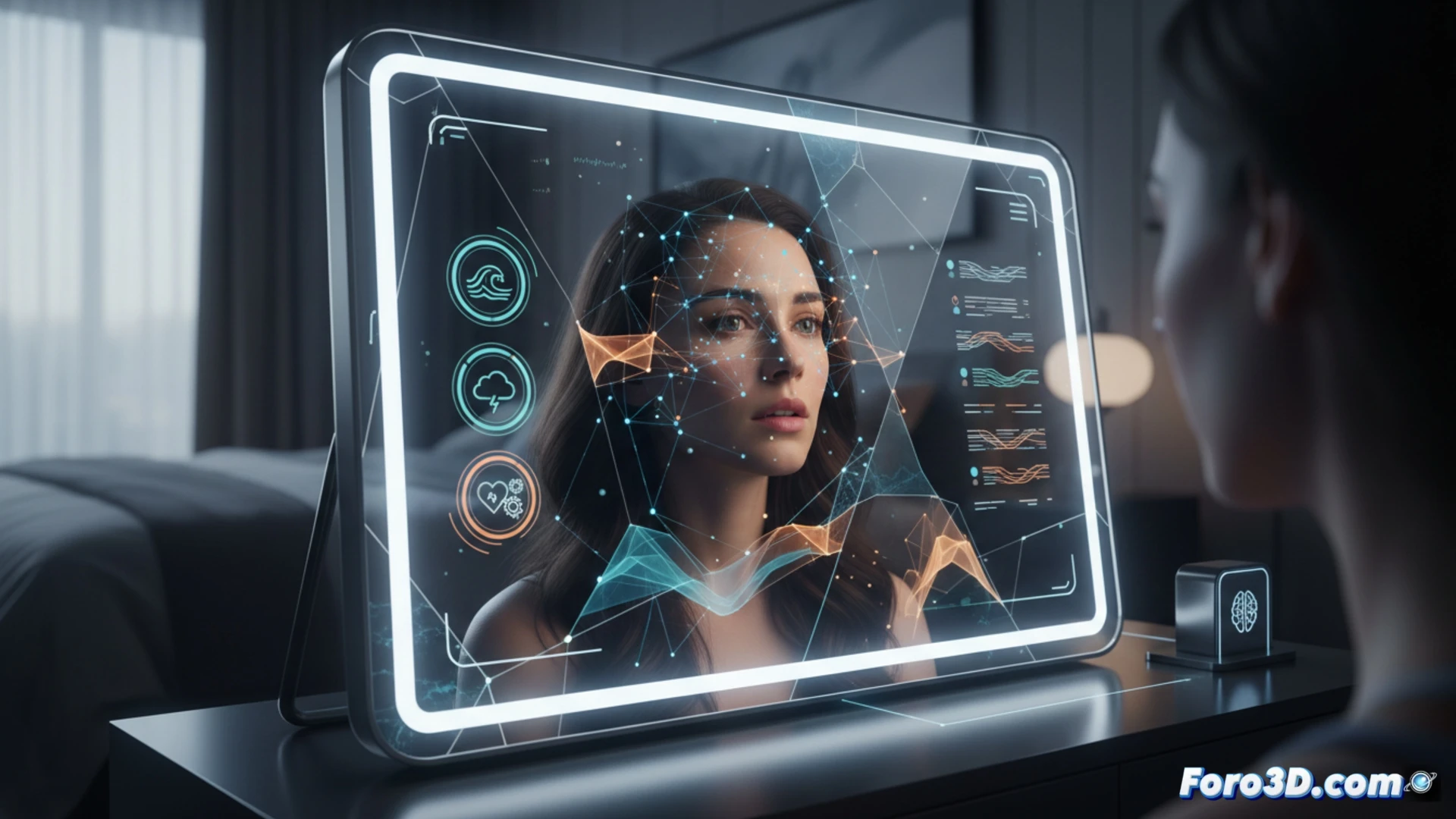
Computer vision and NLP: the hardware of artificial empathy 🧠
Technically, the BMind integrates a high-resolution camera and directional microphones that feed a deep learning model trained to recognize micro-expressions and voice tones. The system classifies emotional states such as anxiety, fatigue, or joy, and cross-references this data with light therapy algorithms that adjust the environment's lighting in real time. The real technical challenge lies in local processing latency: to ensure privacy, facial analysis is performed on an integrated neuromorphic chip, avoiding the cloud. However, critics point out that the accuracy of these systems remains questionable in multicultural contexts or with users on the autism spectrum, where facial expressions do not always correspond to the internal state.
The ethical dilemma of normalizing emotional surveillance ⚖️
Clinical psychologist Dr. Marta Lozano warns that, while the idea of a wellness assistant is appealing, constant monitoring can create a counterproductive paradox: the user may feel observed even in their privacy, increasing the anxiety it aims to combat. Meanwhile, technology ethics expert Sonia Ferrer questions the ownership of the generated biometric data: who is responsible if a pattern of persistent sadness goes undetected or, worse, is misinterpreted? BMind represents a step towards destigmatizing mental health, but it also opens the door to a future where machines decide when we should take a deep breath.
Can artificial intelligence applied to facial analysis in a mirror like the BMind improve mental health without creating emotional dependence or privacy risks for the user?
(PS: trying to ban a nickname on the internet is like trying to cover the sun with a finger... but in digital)