The children's series Bluey has won over households not only for its stories, but for its intelligent use of sound. A mother and sound identity expert analyzes how the music, composed by Joff Bush, becomes a key emotional tool. Each episode doses the soundtrack with intention, demonstrating that audio is not filler, but a narrative pillar that connects with children and adults alike.
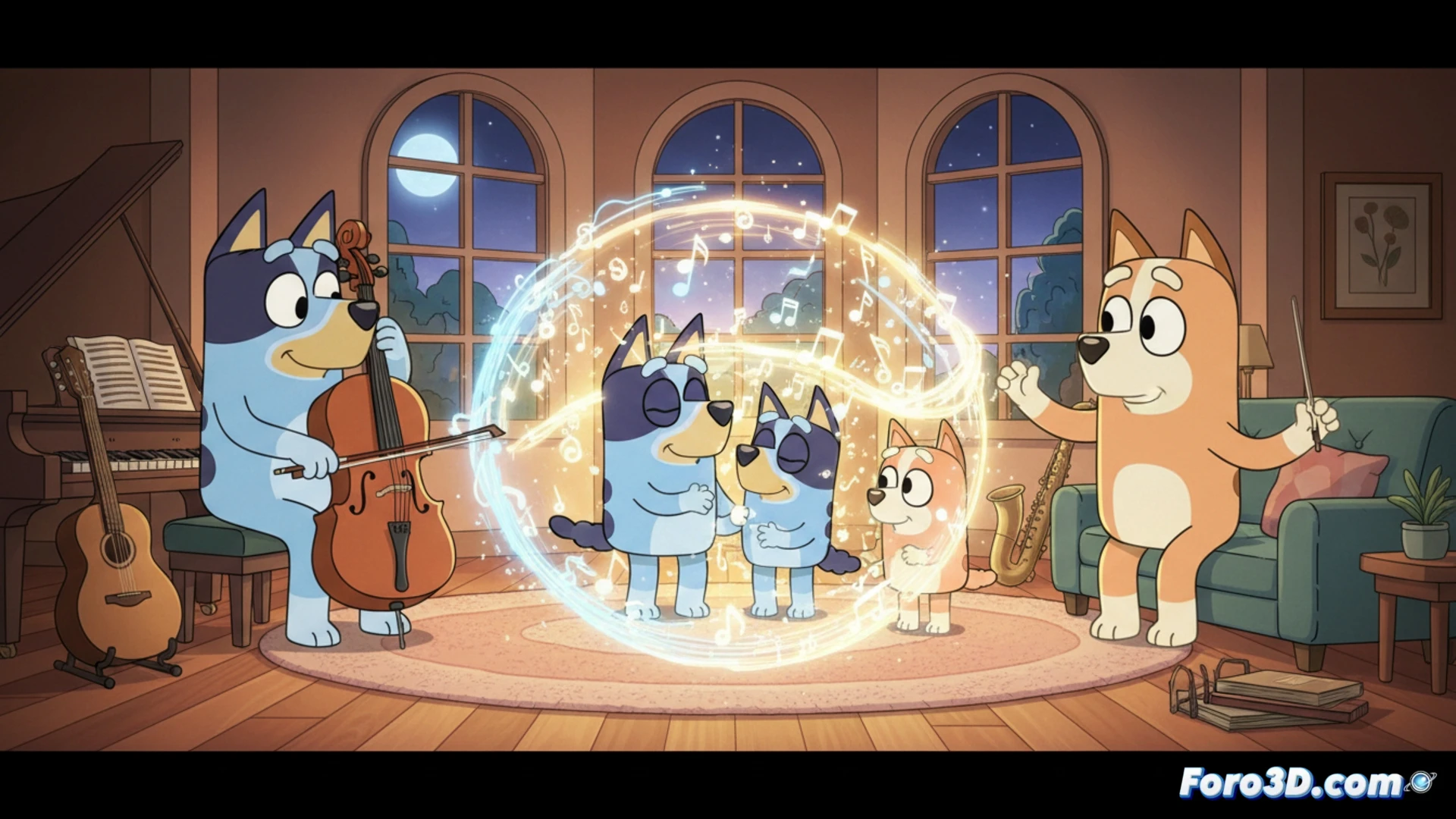
Sound variation: the technical engine of a flexible identity 🎵
Bluey's main theme is reinvented in each episode. It changes rhythm, instrumentation, and tempo to adapt to the action, emotion, or silence. Joff Bush and his team avoid flat repetition, offering arrangements that range from jazz to pop, passing through influences from Beethoven or Mozart. This flexibility demonstrates that an effective sound brand must mutate without losing its essence. It's not about a fixed jingle, but a musical DNA that breathes with the context.
What your brand can learn from a blue dog (and a tired father) 🐾
While many companies pay fortunes for a four-second sound that plays the same everywhere, Bluey shows us that variation works. If your brand used the same tone for a sale ad as for a corporate video, it would be like putting Bluey's lullaby in a scene of her parents fighting. The series reminds us that consistency is not monotony: it's knowing when to play the piano and when to let a whistle do the job.