Haenir Studio has presented Blight: Survival, a cooperative medieval horror title that promises to redefine graphical realism in the genre. Developed entirely in Unreal Engine 5, the game fully leverages Nanite technology to manage billions of polygons without performance loss, achieving architectural and organic environments of astonishing detail. The visceral animations, enhanced by the engine's character control system, aim to convey a constant sense of weight and vulnerability in every melee combat encounter, elevating immersion in a plague-infested world.
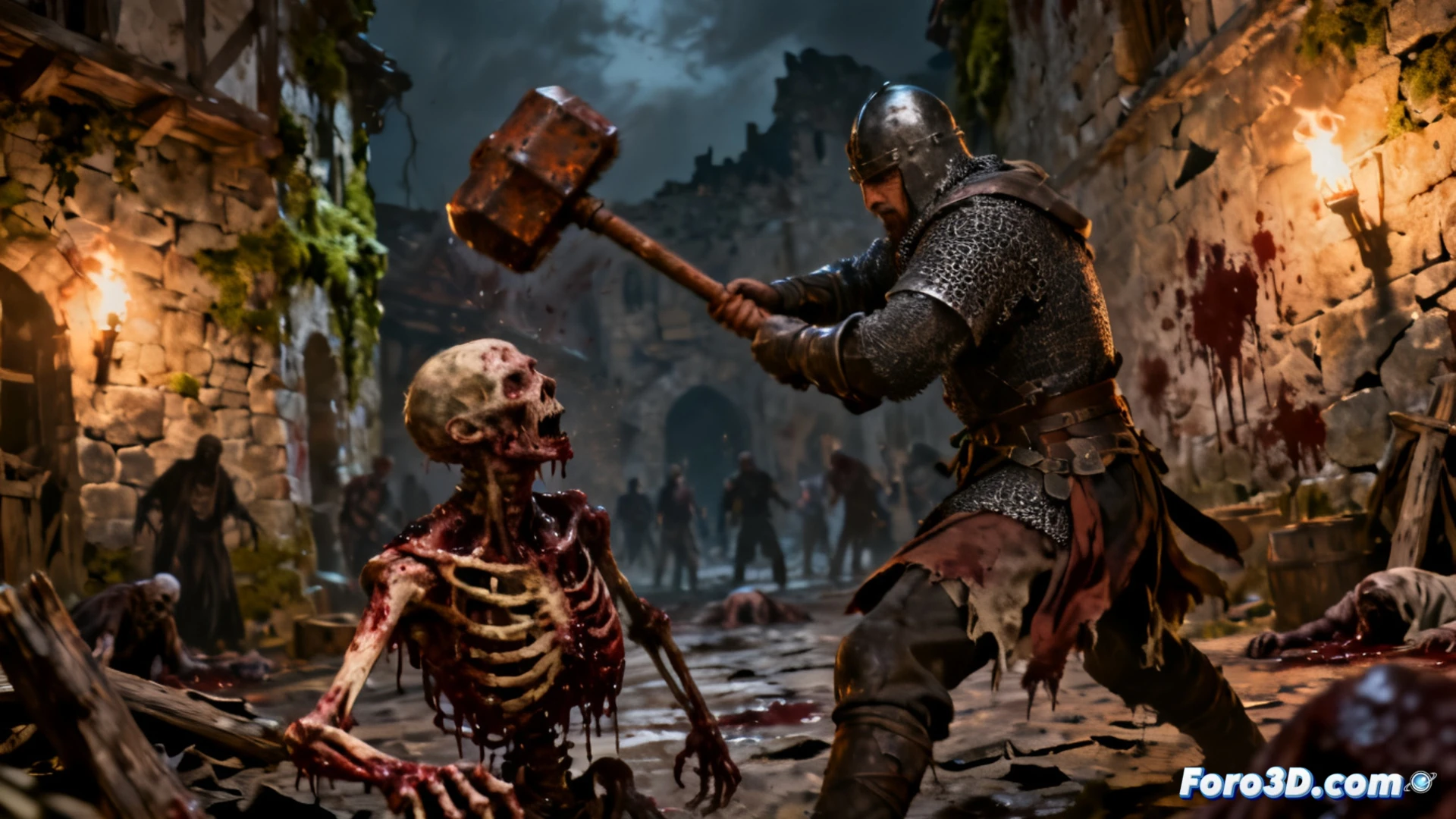
Workflow between ZBrush and Houdini for medieval assets 🛠️
To achieve that level of detail, the team combines two key tools in their pipeline. ZBrush is used for high-polygon sculpting of armor, weapons, and creatures, allowing them to capture every imperfection in metal and the texture of rotting flesh. Subsequently, these models are passed to Houdini, where elements such as ruins, vegetation, and atmospheric effects (fog, blood, and decay particles) are procedurally generated. This hybrid workflow allows artists to maintain artistic control over the main characters while Houdini populates the vast medieval maps with unique assets, optimizing memory and production time.
Cooperative and horror: the technical challenge of shared immersion 🎮
The cooperative focus of Blight: Survival adds a layer of technical complexity, as extreme realism must not sacrifice online gameplay. The use of Nanite and Lumen (dynamic lighting) allows up to four players to explore castles and cursed forests with lighting that reacts in real-time to each user's actions. The synchronization of visceral animations, such as decapitations or executions, requires an optimized network system so that the violence feels equally impactful for all participants, maintaining constant tension without technical interruptions.
Is Blight Survival a turning point for graphical realism in Unreal Engine 5, or do art style and performance remain key limitations for the cooperative medieval horror genre?
(PS: optimizing for mobile is like trying to fit an elephant into a Mini Cooper)