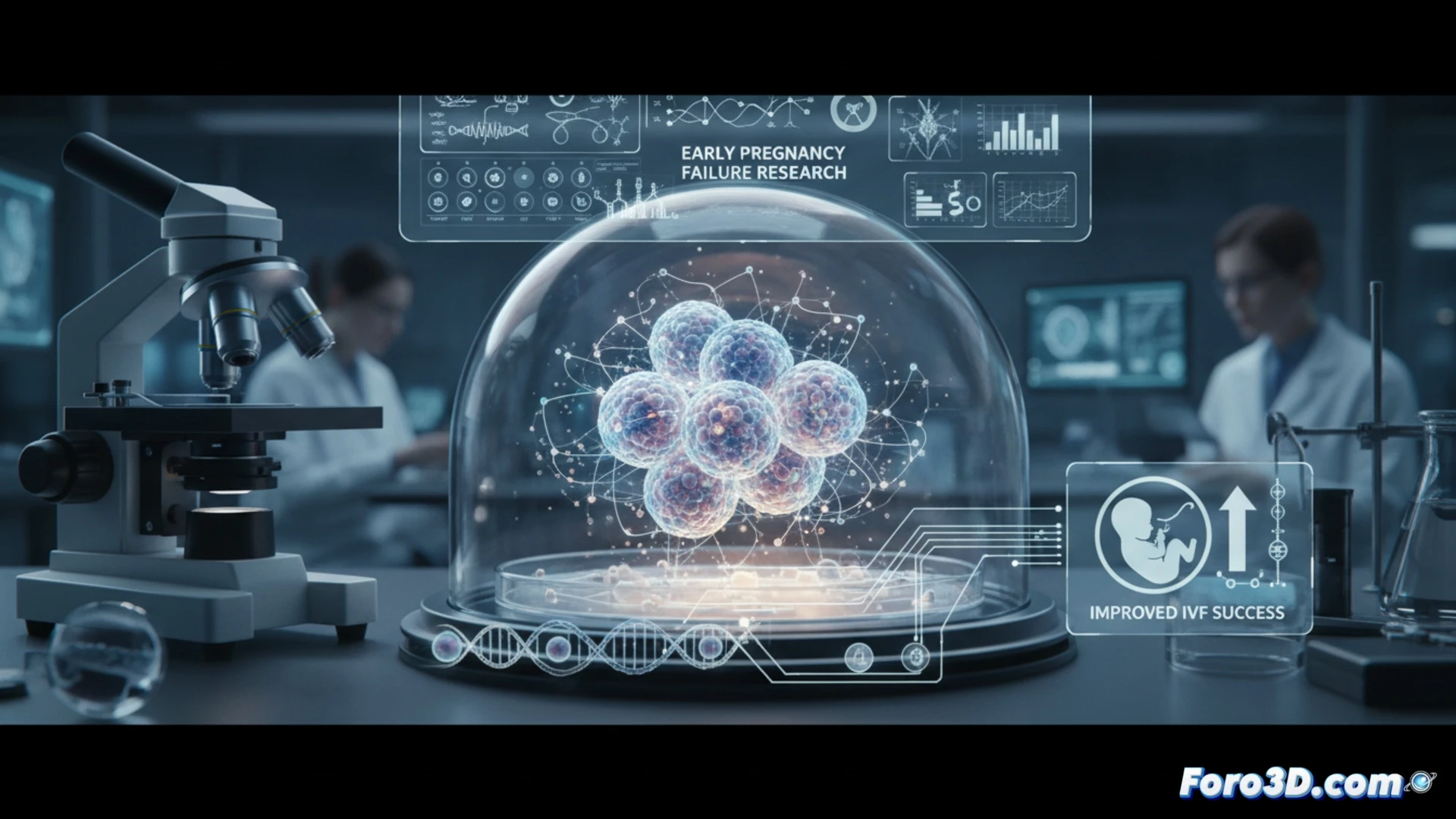
Scientists in Vienna have developed blastoids, models of human embryos created from stem cells without the need for eggs or sperm. The goal is to investigate the earliest days of pregnancy, a stage where nature frequently fails: only one-third of embryos implant successfully, and 60% of in vitro fertilization (IVF) transfers fail. This breakthrough is already providing data to improve treatments and manage serious conditions during gestation.
How blastoids work and their technical limit 🧬
Blastoids replicate the structure of the human blastocyst, the stage prior to implantation in the uterus. By culturing them, researchers can observe in detail the molecular mechanisms of implantation failure and test drugs without using real embryos. The technology allows these models to be maintained for longer, opening the door to studying later stages of development. However, this raises a dilemma: to what extent should an embryo model be considered an embryo. Current regulations set a 14-day limit, but science is pushing to extend it.
The lab embryo that didn't ask for an appointment 🤖
Meanwhile, in IVF clinics, real embryos keep doing their thing: failing to implant as if they had a very busy schedule. Blastoids, on the other hand, sit quietly in a Petri dish, without drama or sperm involved. Now scientists can study failure without having to blame stress, bad luck, or that extra cup of coffee. Perhaps they will soon discover that all embryos needed was a little patience and less social pressure.