Pearl Abyss has demonstrated with DokeV that photorealism is not at odds with cartoon aesthetics. The proprietary BlackSpace Engine is responsible for this feat, applying a shading system based on PBR (Physically Based Rendering) on stylized models. The key lies in how the engine interprets roughness and metalness, allowing a character with exaggerated proportions to reflect light in a believable way, anchoring the visual fantasy to a solid physical foundation.
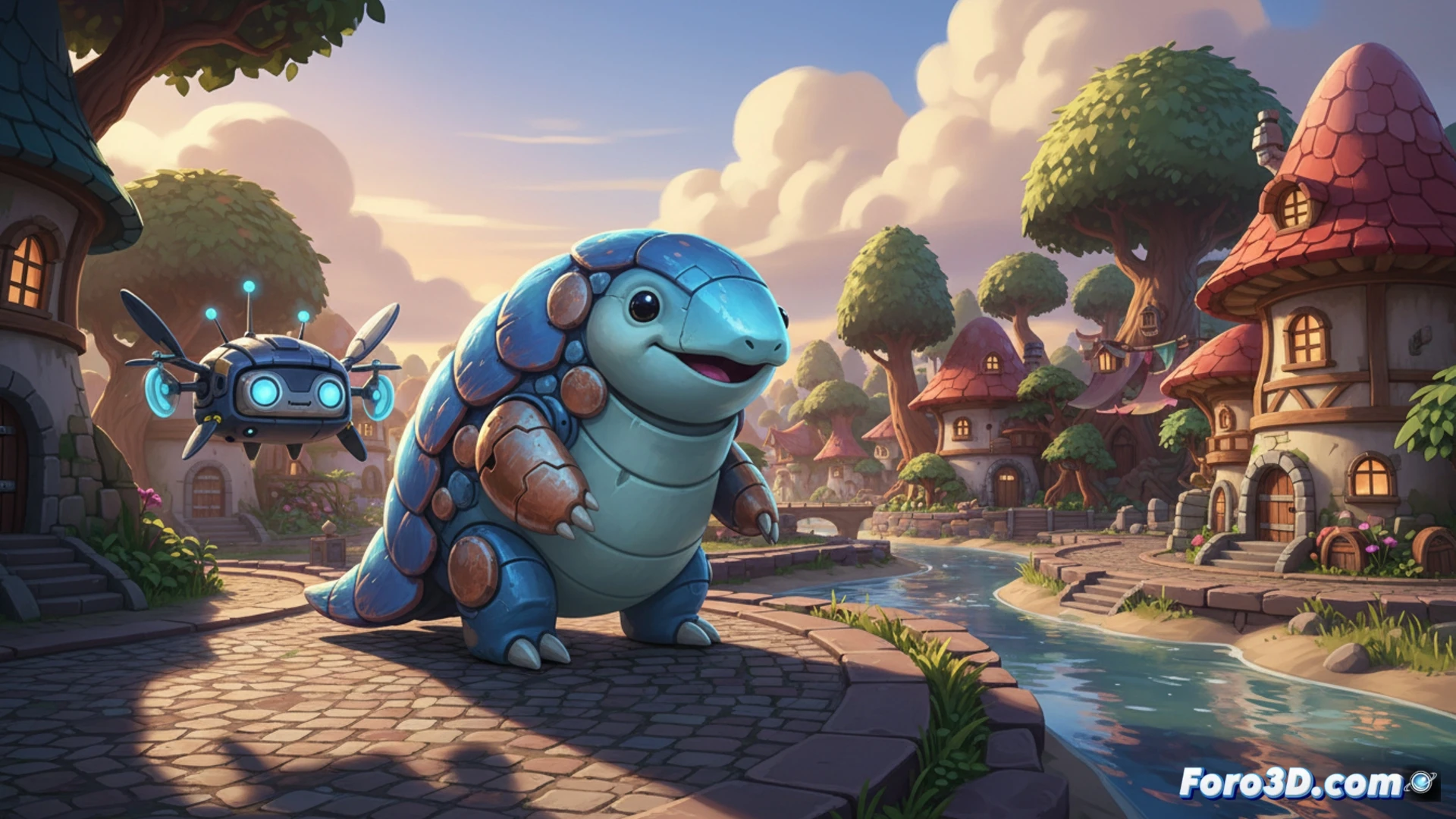
Dynamic lighting and procedural weather: The technical pipeline of BlackSpace 🌦️
The engine employs a real-time global illumination system that simulates light bouncing with unusual precision for an open world of this style. Weather effects are not mere post-processing; they physically alter the reflectance of PBR materials; wet asphalt, for example, dynamically changes its refractive index. In the production pipeline, Autodesk Maya is used as the central station for creating high-polygon assets. These models are exported directly to the BlackSpace Engine, where a system of LODs (Level of Detail) and adaptive tessellation optimizes performance without sacrificing the visual fidelity of the cartoon design.
The challenge of visual coherence in a hybrid engine 🎯
The greatest technical achievement of BlackSpace Engine in DokeV is not just raw power, but coherence. Merging a state-of-the-art lighting system, designed for hyperrealism, with a stylized and exaggerated character design is a shading challenge. Pearl Abyss has resolved this conflict by calibrating the response curves of PBR materials so that vibrant colors do not become plastic under complex lights, thus creating a new visual standard where technology serves art, and not the other way around.
How does BlackSpace Engine balance photorealistic PBR rendering with a cartoon aesthetic without falling into the uncanny valley in DokeV?
(PS: optimizing for mobile is like trying to fit an elephant into a Mini Cooper)