The promise of creating organs on demand, test-tube meat, and laboratory-designed living beings advances relentlessly, disguising as progress what is a genetic Tower of Babel. Humans become designers of their own cage, confusing what is possible with what is right. The mystery of life, which once made us humble before birth and death, is reduced to a soulless engineering problem.
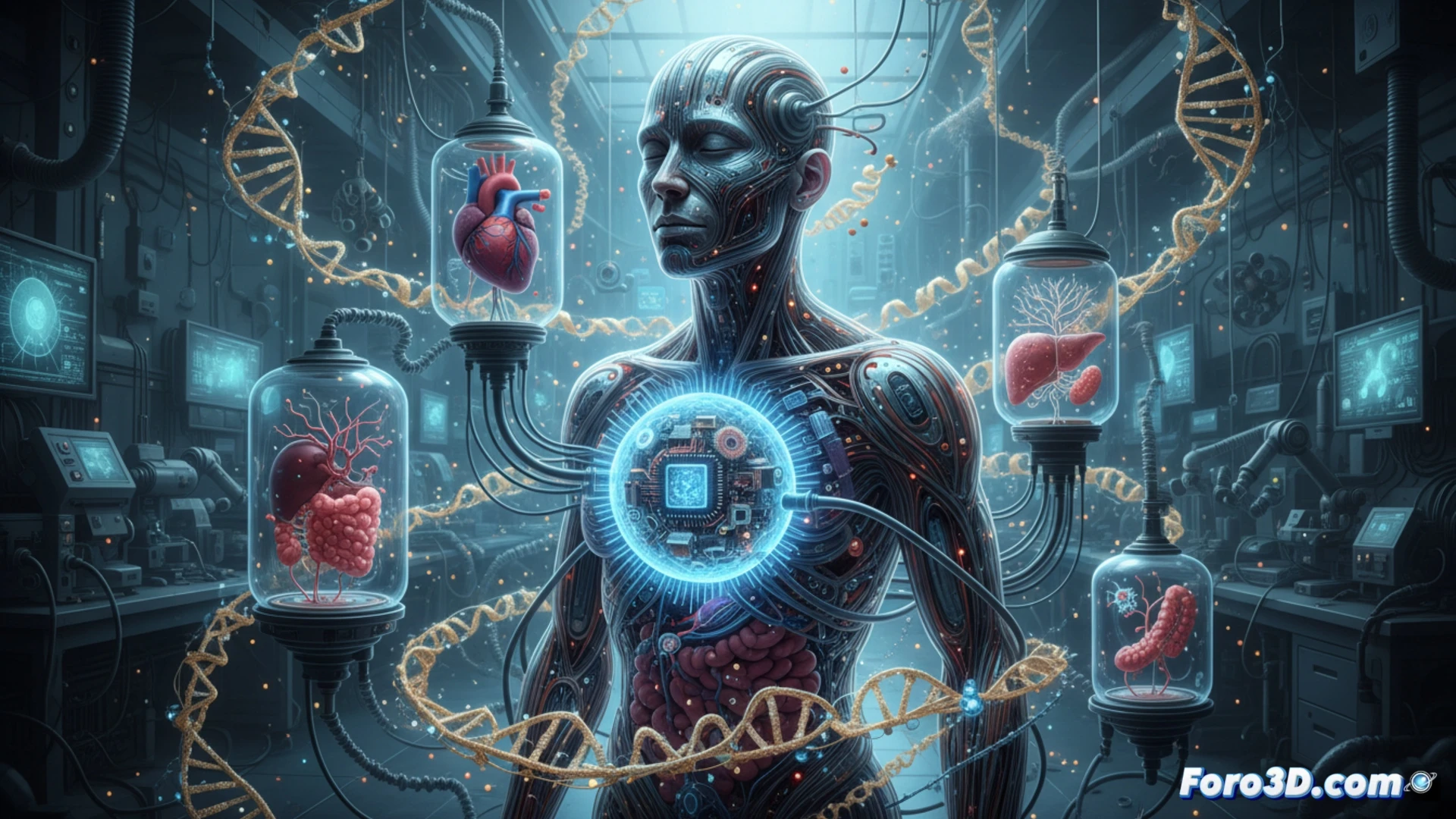
Genetic engineering: from source code to mass production 🧬
Synthetic biology operates like a repair workshop: bacteria are taken, synthetic DNA sequences are inserted into them, and their behavior is programmed as if they were flesh robots. Organoids are grown in Petri dishes, tissues are 3D-printed with bio-ink, and genes are edited with molecular scissors like CRISPR. The result is living systems designed to produce insulin, wood, or even leather, while philosophers ask whether a laboratory-grown heart beats with the same dignity as a natural one.
And then they wonder why the test-tube liver has anxiety 🤖
The funny thing is that, while scientists work hard to program stem cells so they don't become cancerous, the rest of the world wonders if the lab-grown steak will taste like chicken or existential sadness. No one has anticipated that an artificial pancreas might have an identity crisis or that a 3D-printed kidney might demand days off. But hey, at least we now have guilt-free meat and spare organs; we just need them to come with an instruction manual and a return guarantee.