The Biofire Smart Gun introduces a biometric locking system that combines fingerprint and facial recognition to restrict the weapon's use exclusively to the registered owner. This technological advancement raises immediate legal challenges regarding personal data protection, especially under the General Data Protection Regulation (GDPR) in Europe and the California Consumer Privacy Act (CCPA). The manufacturer must ensure that biometric data, considered sensitive, is stored locally on the device and not transmitted to external servers without explicit consent. Any security breach could lead to severe administrative penalties and civil liability lawsuits.
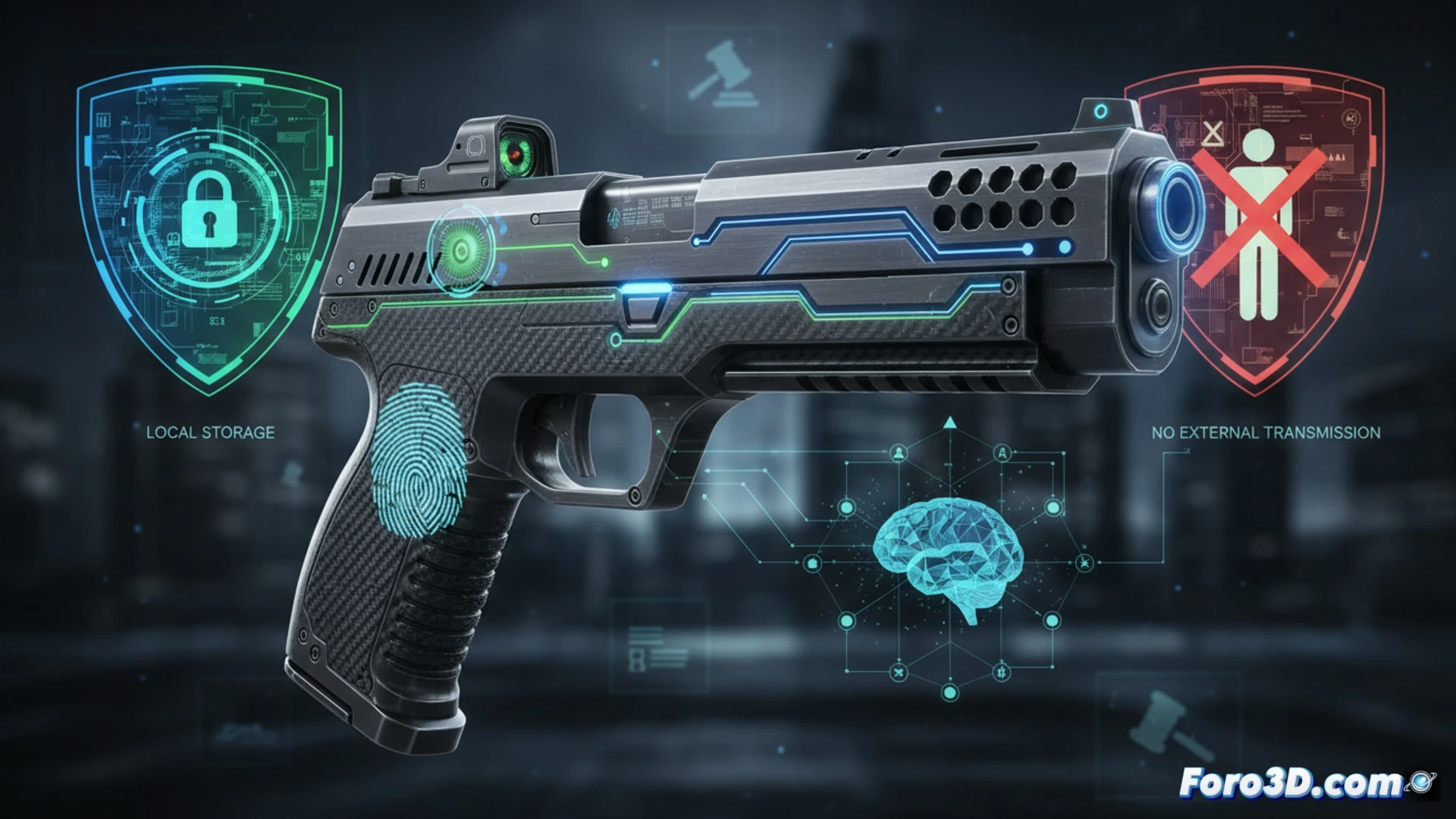
3D simulation of the verification process and regulatory flow diagram 🔐
The verification process begins when the user grips the weapon; a capacitive sensor captures the fingerprint while an infrared camera performs facial recognition. In a 3D simulation, two paths are modeled: if the biometric match is successful, the system unlocks the hammer and allows firing. If it fails, the weapon remains locked and records the failed attempt in an encrypted internal log. The regulatory flow diagram includes three phases: pre-compliance (data protection impact assessment), compliance during use (AES-256 encryption and local storage), and post-compliance (mandatory notification to authorities in case of a breach). The ISO 24745 standard on biometric data management applies as a technical reference.
Compliance risks and legal liability of the manufacturer ⚖️
The main compliance risk is a false positive or negative in authentication. A minor with a similar fingerprint or an identical twin could unlock the weapon, generating criminal liability for the manufacturer due to design negligence. Additionally, if a third party accesses the weapon through an exploit of the facial sensor, the company could face class action lawsuits under the CCPA for unauthorized collection of biometric data. US firearms legislation requires the manufacturer to demonstrate that the system cannot be disabled by malicious software. Biofire must implement a cryptographically signed firmware update process and a physical panic button that disables biometrics in case of a judicial emergency.
How does the biometric locking system of the Biofire Smart Gun impact the legal liability of the owner in the event of unauthorized use of the weapon?
(PS: complying with the law is like modeling in 3D: there is always a polygon (or an article) that you forget)