The technical architect is the professional who spends the most time on site, supervising every construction detail. Their exposure to risks such as falls from heights, impacts from objects, dust, noise, hazardous materials, and the stress of quality control is high. The key question is: how can we anticipate these dangers before they occur? The answer lies in BIM technology and 3D visualization.
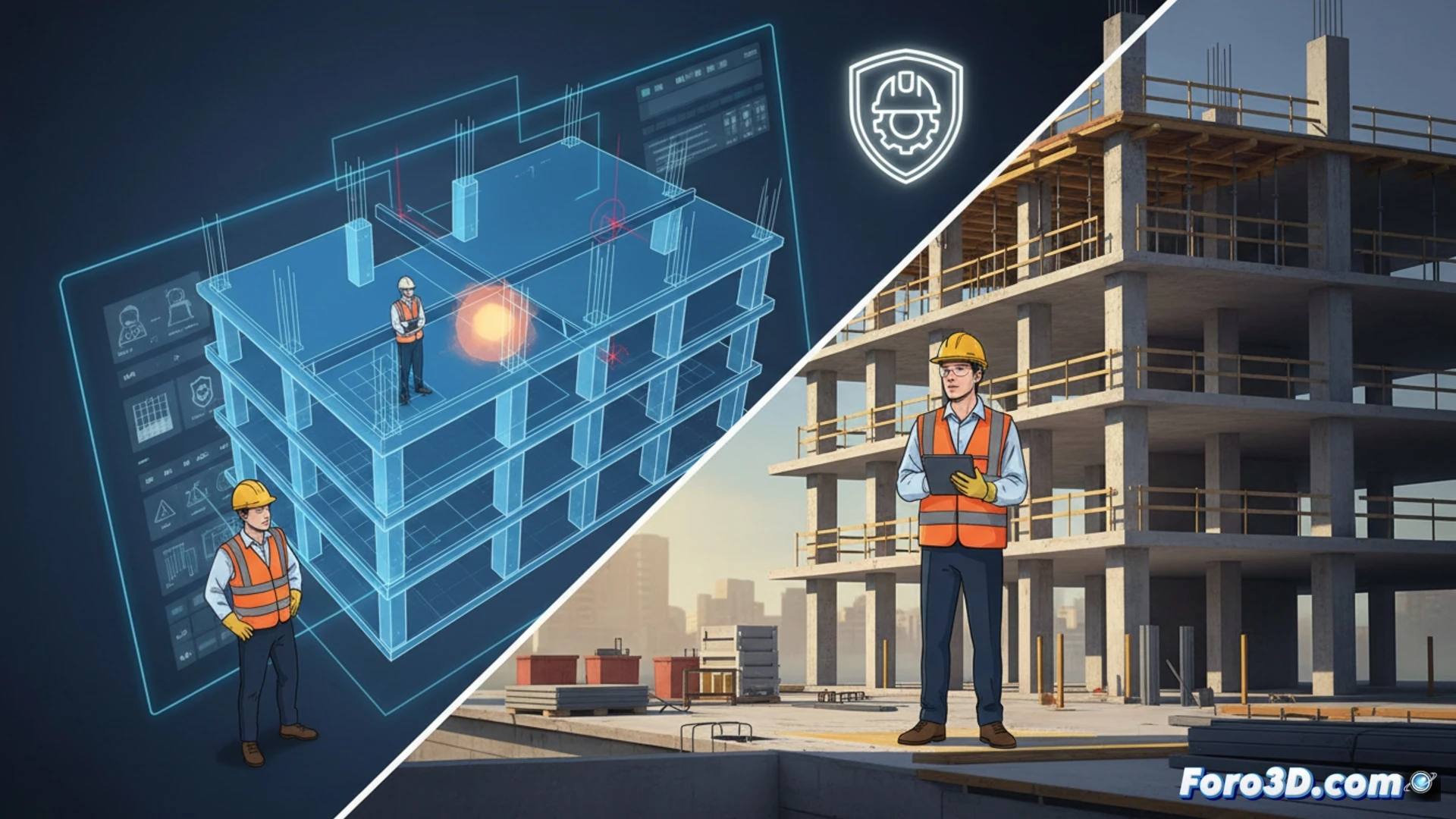
Simulation of risk scenarios using BIM 4D and 5D models 🏗️
The BIM methodology allows integrating the time variable (4D) and cost variable (5D) into the building's digital models. For the technical architect, this means being able to virtually simulate the assembly of scaffolding, the positioning of cranes, or the movement of materials in confined spaces before physically executing them. Using safety analysis plugins, areas of falling objects, machinery blind spots, or noise exposure levels can be identified. Additionally, virtual reality (VR) walkthroughs allow the professional to rehearse their daily work route, detecting obstacles or risks of trips, impacts, and contact with hazardous substances without being physically present.
Beyond the model: an integrated prevention culture 🛡️
Technology is not an end in itself, but a tool to change the mindset on site. By visualizing hazards in 3D before they appear, the technical architect can plan collective protection measures in advance, reducing the stress associated with improvisation. Implementing a BIM workflow focused on safety not only protects their health but also elevates the quality of the project. Prevention becomes another piece of data in the model, as important as geometry or materials.
As a technical architect who supervises the site daily, which specific BIM functionality has been most effective for you in anticipating and preventing occupational risks on the job?
(PS: BIM is like having a building in Excel, but with nice windows.)