The figure of the civil engineer faces a constant paradox: they must oversee on-site safety while their own work exposes them to falls, collisions with machinery, and collapses during site visits. Added to this is the chronic stress from project planning and the effects of sedentary office work. Faced with this scenario, the BIM (Building Information Modeling) methodology emerges not only as a productivity standard but as a proactive prevention system that allows physical hazards to be anticipated before setting foot on the ground.
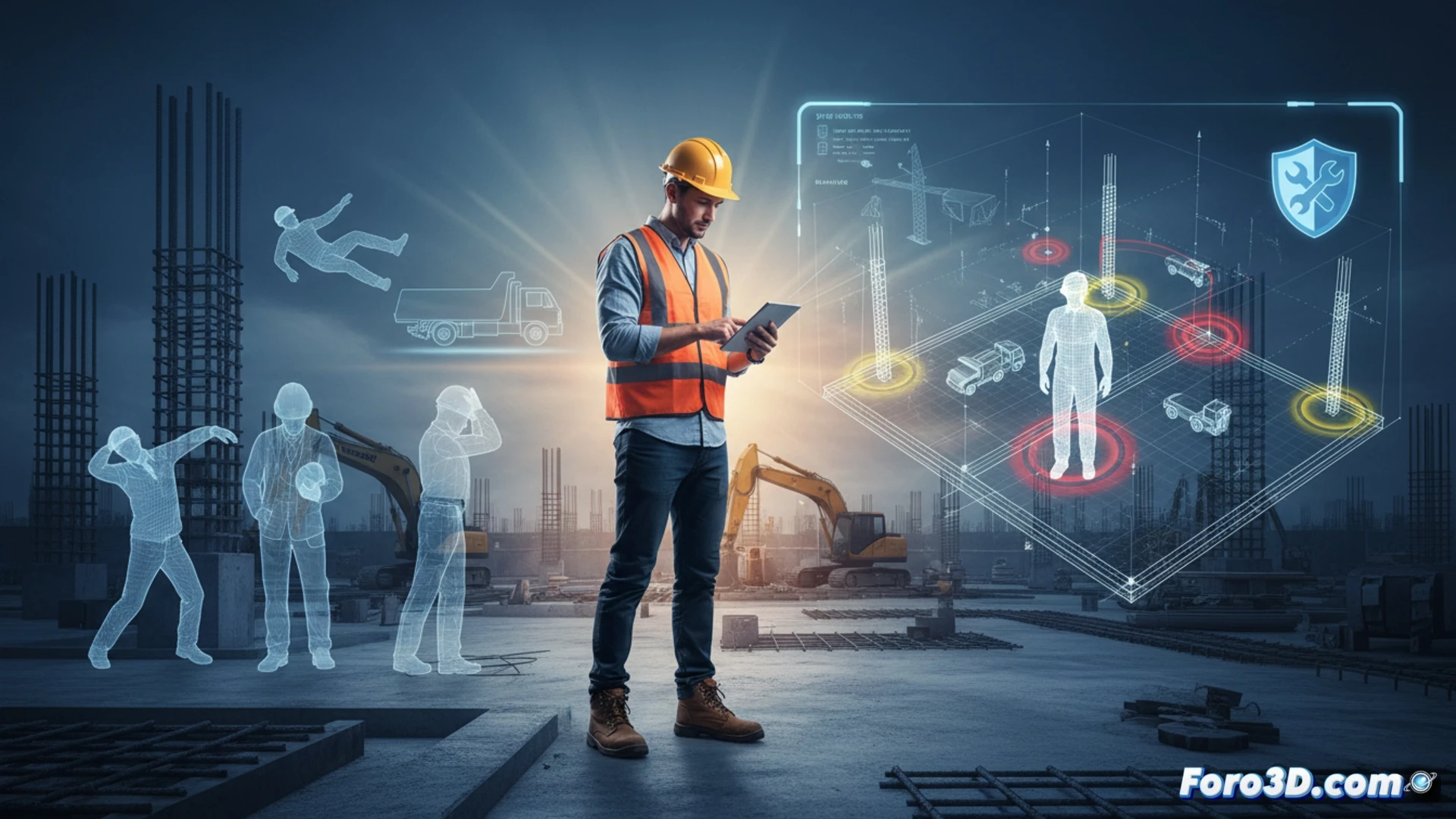
Risk simulation using digital twins and collision detection 🏗️
The implementation of digital twins during the project phase allows the civil engineer to accurately model earthworks and the location of heavy machinery. Through collision analysis in the 3D model, it is possible to identify high-risk areas for collisions or overturns before a single truck is mobilized. Furthermore, simulating safe pedestrian routes within the BIM model helps design protected access points that minimize exposure to falls from heights or slope collapses. This digital planning reduces the uncertainty that generates project stress, as the engineer can validate complex scenarios from their desk.
The end of reactive management in occupational safety 🛡️
Traditionally, on-site safety was managed reactively, with reports issued after an incident. BIM reverses this logic by turning the model into a virtual laboratory where the civil engineer can experiment with risk variables without physical consequences. By integrating data on movements and office hours, the methodology also allows for redesigning workflows to combat sedentary behavior. The question is no longer whether an accident will occur, but whether the digital model has been thorough enough to prevent it.
How can the BIM model integrate the assessment of ergonomic and psychosocial risks for the civil engineer during the on-site supervision phase?
(PS: BIM is like having a building in Excel, but with nice windows.)