3D technology arrives in libraries to transform the management and dissemination of knowledge. A librarian can scan fragile historical objects and offer interactive digital replicas, allowing their study without risk of damage. This expands access to special collections and energizes the service.
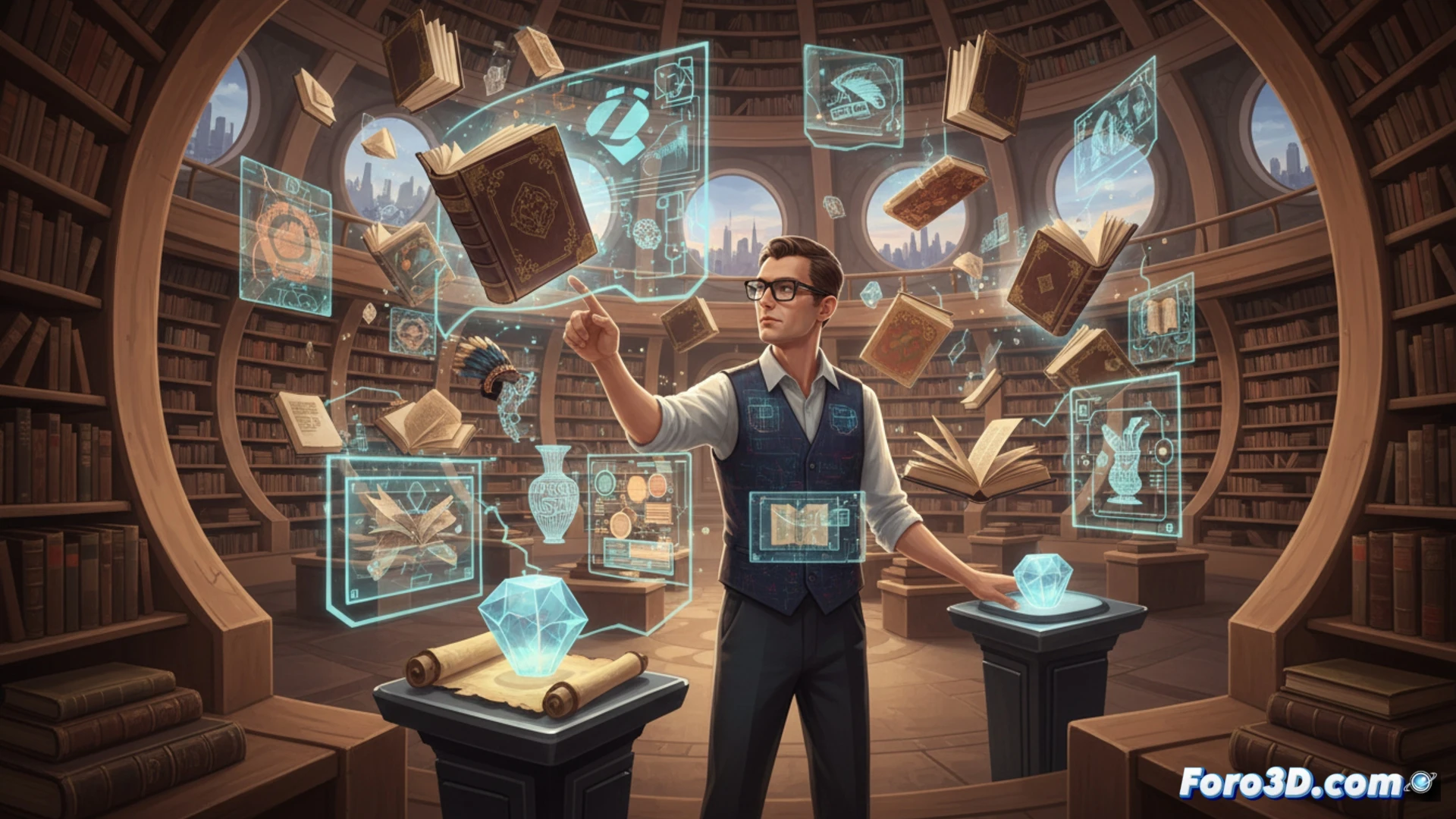
Digitization and modeling to preserve heritage 🏛️
The workflow begins with a 3D scanner like the Einscan Pro HD to capture old books or artifacts. Then, software such as Blender or MeshLab allows cleaning the mesh and optimizing the model. If a physical replica is desired, a 3D printer like the Ultimaker S3 can produce tactile copies. For web visualization, Sketchfab or Three.js is used, allowing remote users to rotate and zoom in on objects. Programs like Autodesk's ReCap Pro assist in converting point clouds into solid models.
When the user asks for a book and you show them a hologram 🦑
Imagine a librarian explaining the Dewey Decimal Classification system while holding a 3D model of a giant squid's brain. The user, confused, only wanted the latest bestseller. The librarian's response: this is more interesting, and besides, it doesn't get stained by coffee. Libraries now compete with museums, but at least the dust on the shelves has gone digital.