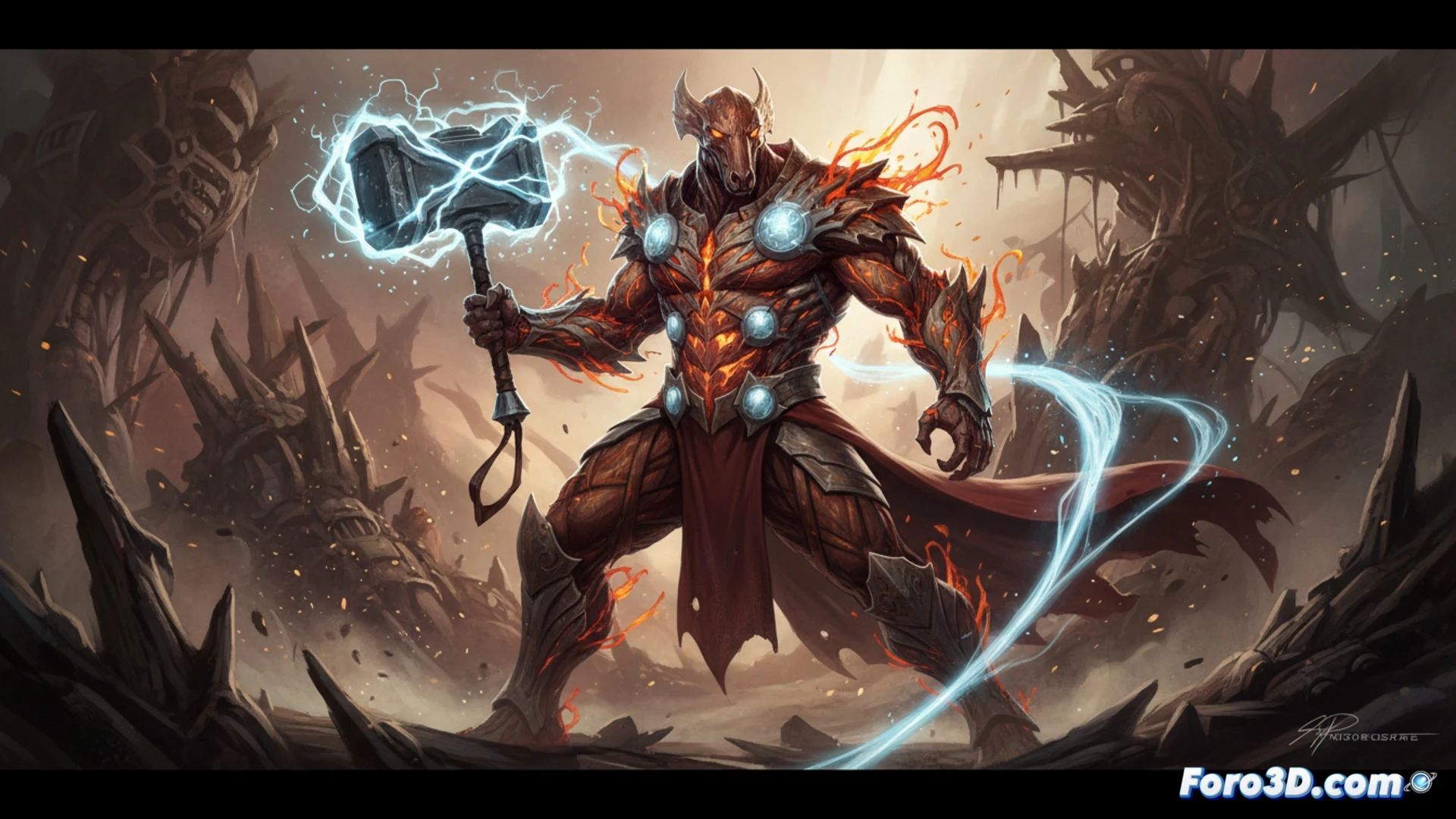
The new era of Beta Ray Bill, penned by Daniel Warren Johnson, bursts forth with an explosive aesthetic where visceral action lines and the organic design of ships and monsters dominate every panel. Beyond the search for a sword, the comic explores the reinvention of the Korbinite warrior. This style, charged with chaotic energy and biomechanical textures, offers an exceptional starting point for 3D modeling oriented towards narratives of resistance and personal growth. ⚡
From Panel to Volume: Organic Modeling Techniques 🎨
To translate Johnson's rawness into three-dimensional space, it is key to prioritize dynamic flow over perfect symmetry. Modeling Beta Ray Bill's armor should avoid polished surfaces; instead, it is recommended to use digital sculpting with brushes that mimic the dry stroke and speed lines of the comic. The cosmic scale is achieved by combining a detailed central character with low-resolution backgrounds that suggest immensity. Textures must include micro-imperfections and wear, using procedural noise to simulate space battle. This approach allows the final piece to convey the same emotional rawness as the original art, turning a fictional figure into a symbol of struggle against adversity.
The Hero as a Symbol of Digital Resistance 🛡️
By reinterpreting an alien warrior in search of his lost glory, 3D art transcends the technical to become a tool of visual activism. Johnson's organic and explosive aesthetic reminds us that identity is built through conflict. Modeling Beta Ray Bill as a fragmented icon, with broken armor and overflowing energy, allows us to tell stories of resilience. In a digital world where image is power, these three-dimensional representations can serve as visual manifestos against oppression, demonstrating that the warrior's strength lies in their ability to reinvent themselves.
How can the organic and visceral aesthetic of Beta Ray Bill in 3D, with its explosive action line, catalyze a visual activism that challenges the narrative limits of digital comics?
(PS: digital political art is like an NFT: everyone talks about it but nobody really knows what it is)