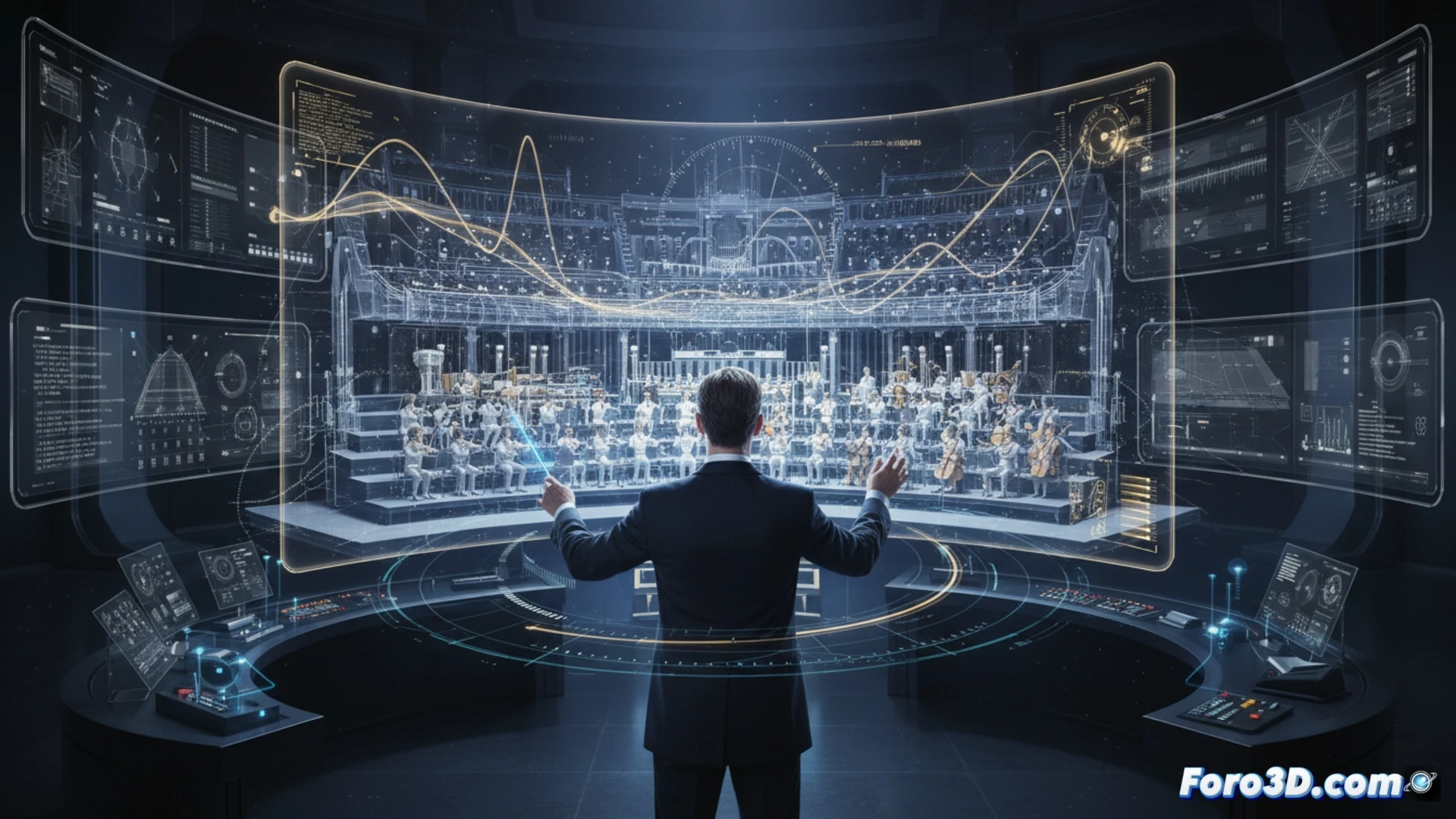
3D technology allows conductors to visualize the spatial arrangement of musicians and rehearse gestures without needing a real orchestra. With virtual models, they can practice synchronizing sections and correct the visibility of each music stand before the actual rehearsal. A concrete example: simulating the acoustics of an empty theater to adjust baton movements according to sound delay.
Virtual layouts and interactive 3D sheet music 🎵
Programs like SoundStage VR or Maestro VR allow the conductor to place musician avatars in a three-dimensional space, assign them instruments, and test group dynamics. The software calculates sound propagation times based on distance, and the conductor can modify the position of each section to optimize the mix. Additionally, tools like Unity with spatial audio plugins are used to create customized scenarios. All of this reduces venue rental costs and avoids the need to gather 80 musicians for a first rehearsal.
When the virtual conductor asks you to repeat measure 47 🎻
The best part about rehearsing with a 3D model is that no musician gives you a dirty look when you ask to repeat the passage for the fifth time. The virtual violinist doesn't complain about a sore shoulder, nor does the percussionist glare at you when you correct their tempo. Sure, it also lacks the emotion of a live performance, but at least you don't have to justify why your entrance gesture looks like a wave to a distant relative. Technology doesn't replace charisma, but at least it doesn't ask for a raise.