Meal replacement shakes are sold as the perfect solution for busy people: complete nutrition in a minute. However, beneath that promise of convenience lies a problematic nutritional profile. They often contain an excess of free sugars and, being liquids, lack the satiety and variety of micronutrients that real solid food provides. We analyze why you shouldn't swap your lunch for a shake.
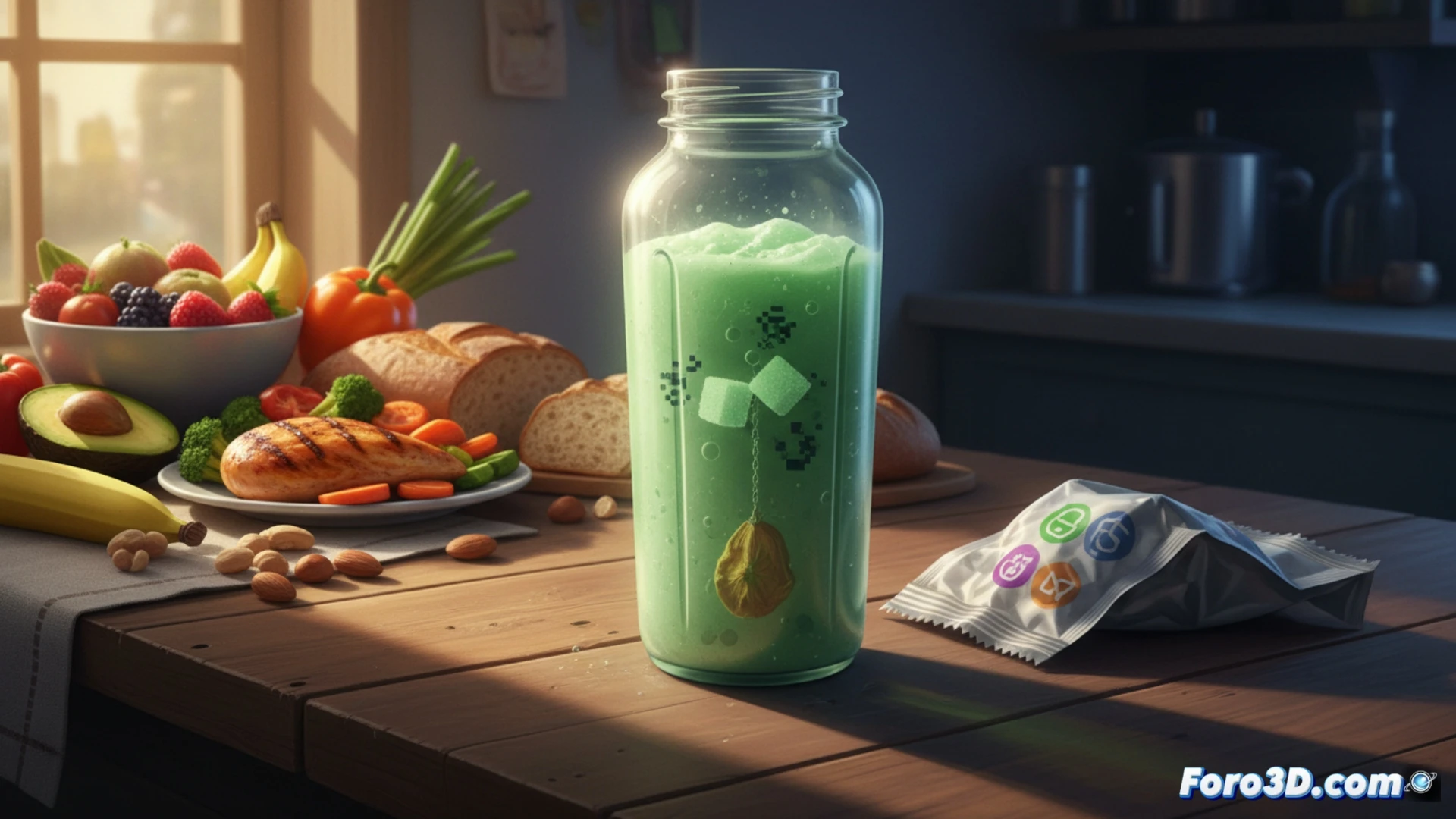
3D Modeling: Nutritional Density Under the Microscope 🥦
To visualize this difference, we propose an interactive 3D infographic comparing a commercial meal replacement shake with a plate of real solid food (chicken, brown rice, and vegetables). We will model both in 3D with cross-sections revealing their internal composition. In the shake, we will see a high concentration of free sugars (represented as red crystals) and a low density of fiber (scarce green fibers). In the solid plate, fiber will appear as a dense network and micronutrients as varied colored dots. An additional animation will simulate digestion: the shake is absorbed quickly, generating a glucose spike, while the solid food releases energy gradually. The user can rotate and explore each option to visually understand these differences.
Liquid Satiety: A Caloric Mirage 🥤
The experience of eating is not just about ingesting nutrients; it involves chewing, texture, and time. Shakes eliminate this process, sending sugars directly into the bloodstream. This causes hunger within a few hours and fosters a cycle of insulin spikes. The 3D infographic not only educates but exposes the marketing trap: what is sold as efficiency is, in reality, a nutritional debt that the body collects dearly. Eating solid food remains the best investment for your health.
If meal replacement shakes are complete nutrition in a minute, why has the 3D printed food industry failed to replicate their efficiency without sacrificing the texture and real value of solid foods?
(PS: modeling an apple in 3D is easy, the hard part is making it not look like a sphere with a red texture)