The Bat Creek Inscription, a small stone slab found in 1889 inside a burial mound in Tennessee, remains one of the most controversial objects in American archaeology. The characters carved on its surface have been interpreted by some epigraphers as 1st-century AD Paleo-Hebrew, which would imply transoceanic contact before Columbus. However, the mainstream academic community considers it a fraud or a misinterpretation. Now, the tools of digital archaeology offer a new way to examine the piece without the biases of traditional observation.
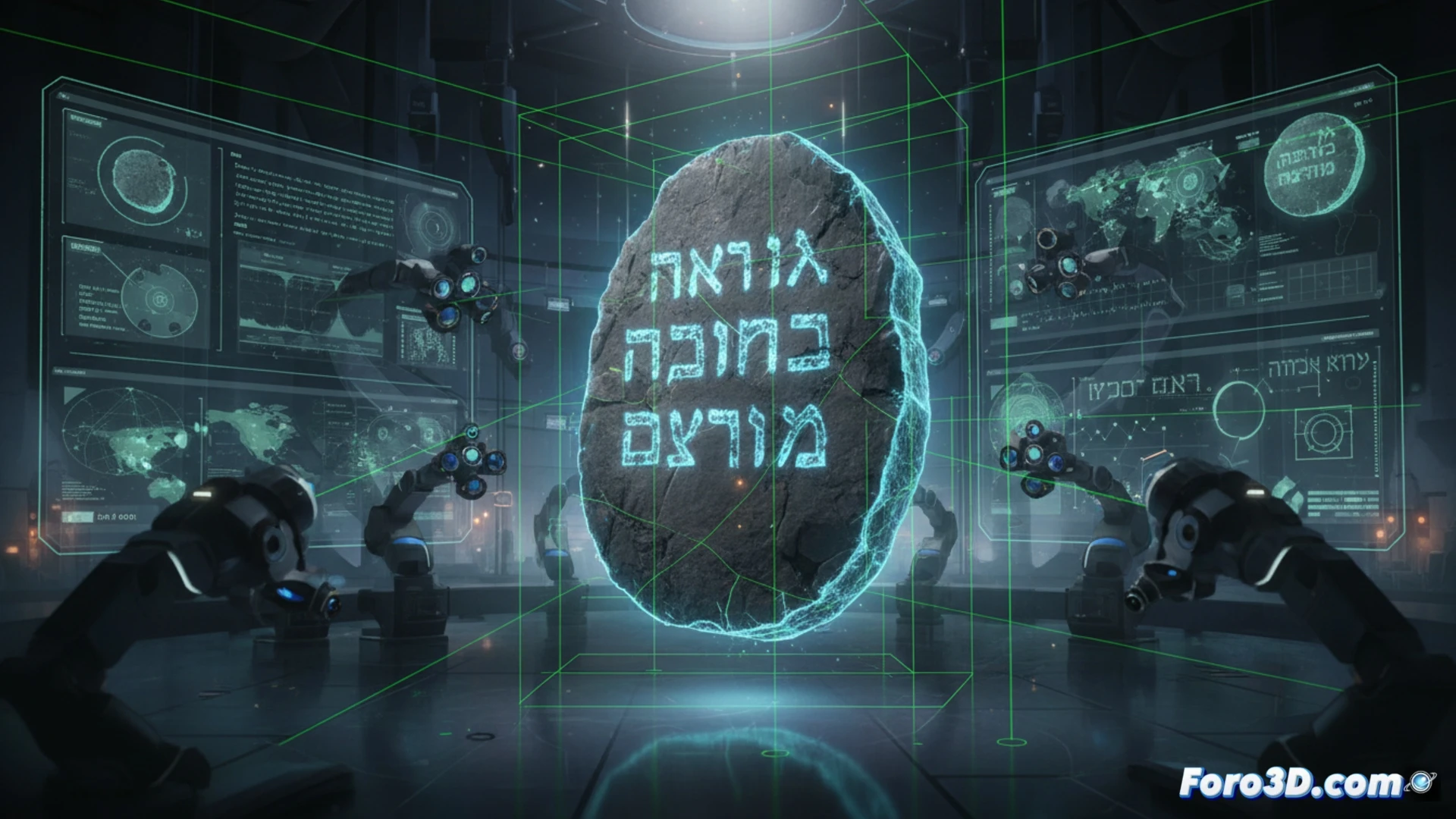
Photogrammetry and virtual epigraphic analysis 🖥️
The digitization of the Bat Creek stone through high-resolution photogrammetry allows for the generation of a 3D model with submillimetric precision. This model, virtually illuminated from multiple angles, reveals details of the depth of the strokes and possible tool marks that a flat photograph hides. Additionally, epigraphic analysis software can compare the morphology of the signs with databases of authentic Paleo-Hebrew inscriptions, calculating statistical similarity indices. The virtual reconstruction of the burial mound where it was found also helps to contextualize the original position of the stone, verifying whether the archaeological stratum matches the proposed dating for the characters.
Authenticity or digital artifact? 🔍
Simulating erosion and wear processes on the 3D model allows testing the hypothesis that the strokes were made with modern tools. If the wear pattern does not correspond to that of the rest of the stone's surface, authenticity is weakened. Digital archaeology does not resolve the debate on its own, but it transforms the controversy into a measurable and reproducible problem. By sharing the 3D model in open repositories, any researcher can repeat the analysis, moving the discussion away from subjective interpretations and closer to data science.
How 3D scanning can resolve the debate over whether the Bat Creek inscription is an authentic Cherokee text or a modern forgery without damaging the original artifact
(PS: and remember: if you can't find a bone, you can always model it yourself)