The Bastl Kalimba is not your average kalimba. Beneath its metal tines lies a synthesis engine that combines physical modeling and FM. Each tine functions as a velocity-sensitive tactile trigger, allowing you to transition from a traditional acoustic sound to synthetic textures like pulses, pads, or drones. An instrument that deceives the eye but not the ear.
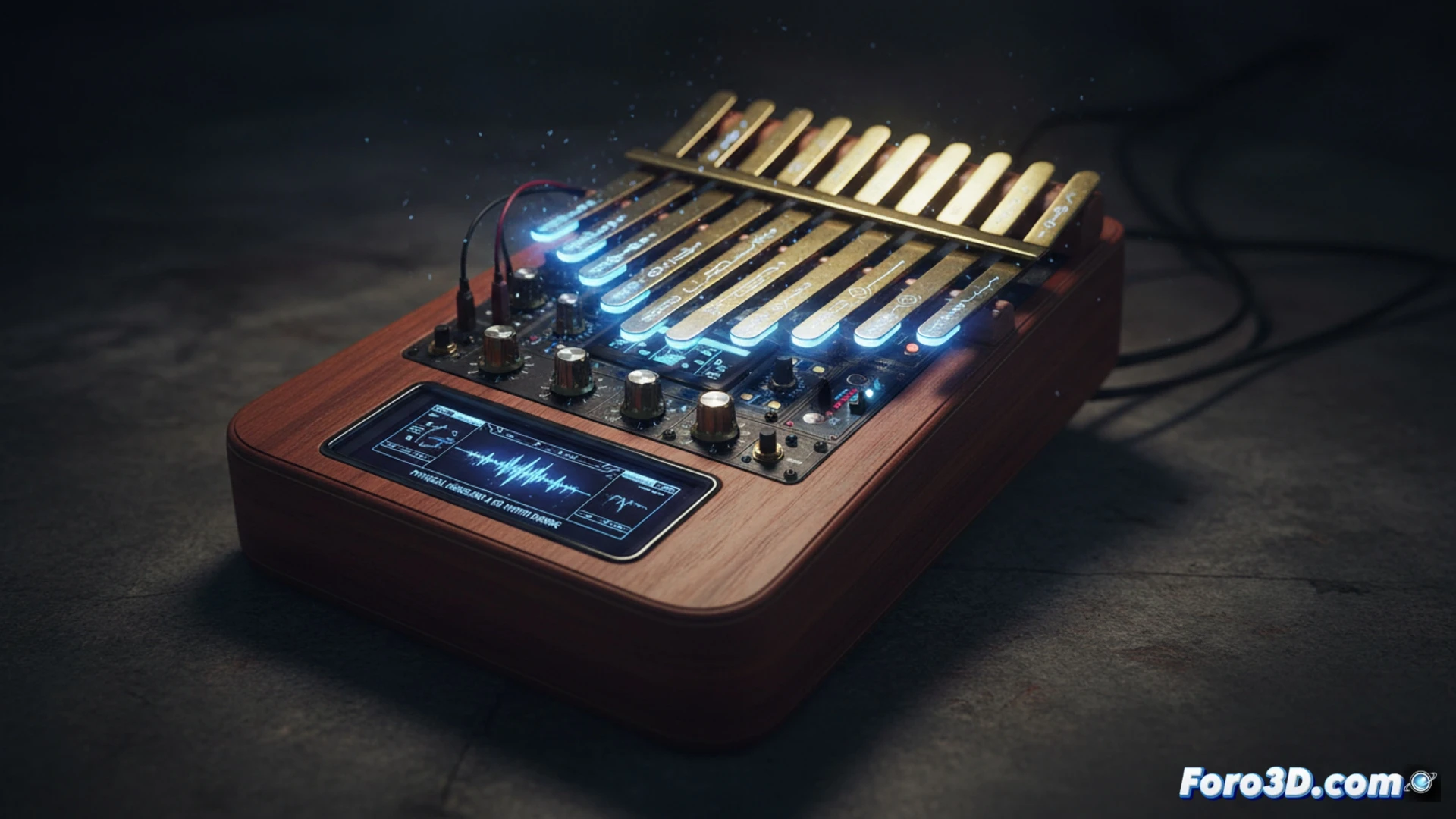
Hybrid synthesis and tactile tine control 🎛️
The triggering system is based on the vibration of each tine, which activates real-time synthesis algorithms. The engine combines physical modeling (simulating strings, tubes, or plates) with operator FM synthesis, offering a sonic spectrum that goes beyond the traditional kalimba. It includes built-in effects: delay, reverb, distortion, bit crushing, and tape emulation. Everything is controlled from the surface itself, without menus or touchscreens.
What if your kalimba sounded like mangled magnetic tape? 🤖
Yes, you can play a melody worthy of a zen temple and, with a flick of the wrist, turn it into an industrial noise that would make a robot cry. Bit crushing and distortion are there to remind you that inner peace also needs a little chaos. Of course, if your neighbor complains, you can always blame the traditional kalimba and say you're meditating.