The composition of varnish on antique instruments, such as Stradivarius violins, has been a mystery for centuries. Today, the conservation and restoration of these cultural assets relies on advanced 3D technologies. Raman spectroscopy, combined with high-resolution photogrammetry, allows the identification of resin and oil chemistry without extracting samples, preserving the instrument's integrity while documenting its state of degradation.
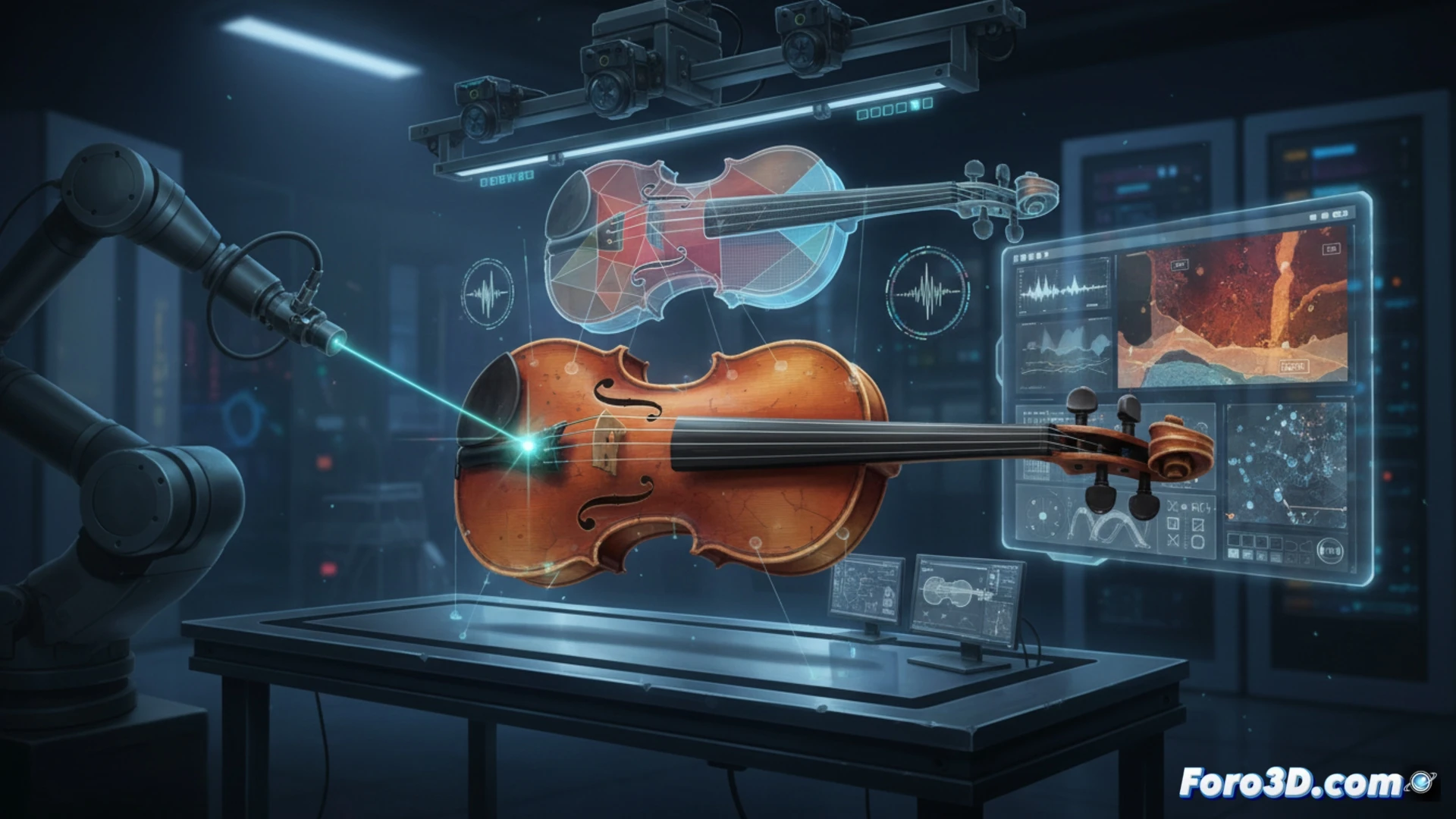
Non-invasive digitization for chemical analysis 🎻
The process begins with a 3D scan using structured light or photogrammetry, capturing the microtopography of the varnished surface. This digital model reveals textures, craquelure, and layers of overpainting invisible to the human eye. Subsequently, this data is cross-referenced with spectral maps obtained through infrared spectroscopy (FTIR) or X-ray fluorescence (XRF). The fusion of these datasets allows restorers to locate compounds such as rosin, shellac, or drying oils, guiding the choice of solvents and cleaning techniques to avoid damaging the original patina.
Towards predictive restoration and exact replicas 🔬
3D documentation is not only useful for restoration. By knowing the exact composition of the varnish and its layer distribution, conservators can create functional replicas using 3D printing and coatings with synthetic resins of similar properties. This allows testing cleaning or consolidation treatments on a digital twin before touching the original. 3D technology thus becomes a bridge between artisanal past and applied science, ensuring the instrument's sound and aesthetics endure.
How can 3D analysis differentiate between the original varnish layers of a Stradivarius and modern restoration interventions without damaging the instrument's surface?
(PS: Restoring virtually is like being a surgeon, but without blood stains.)