Summer arrives, you light the barbecue, and within ten minutes, your neighbors are coughing on their terraces while your steak remains raw inside and charred outside. This annual culinary drama has a technical explanation that goes beyond the brand of charcoal or one too many beers.
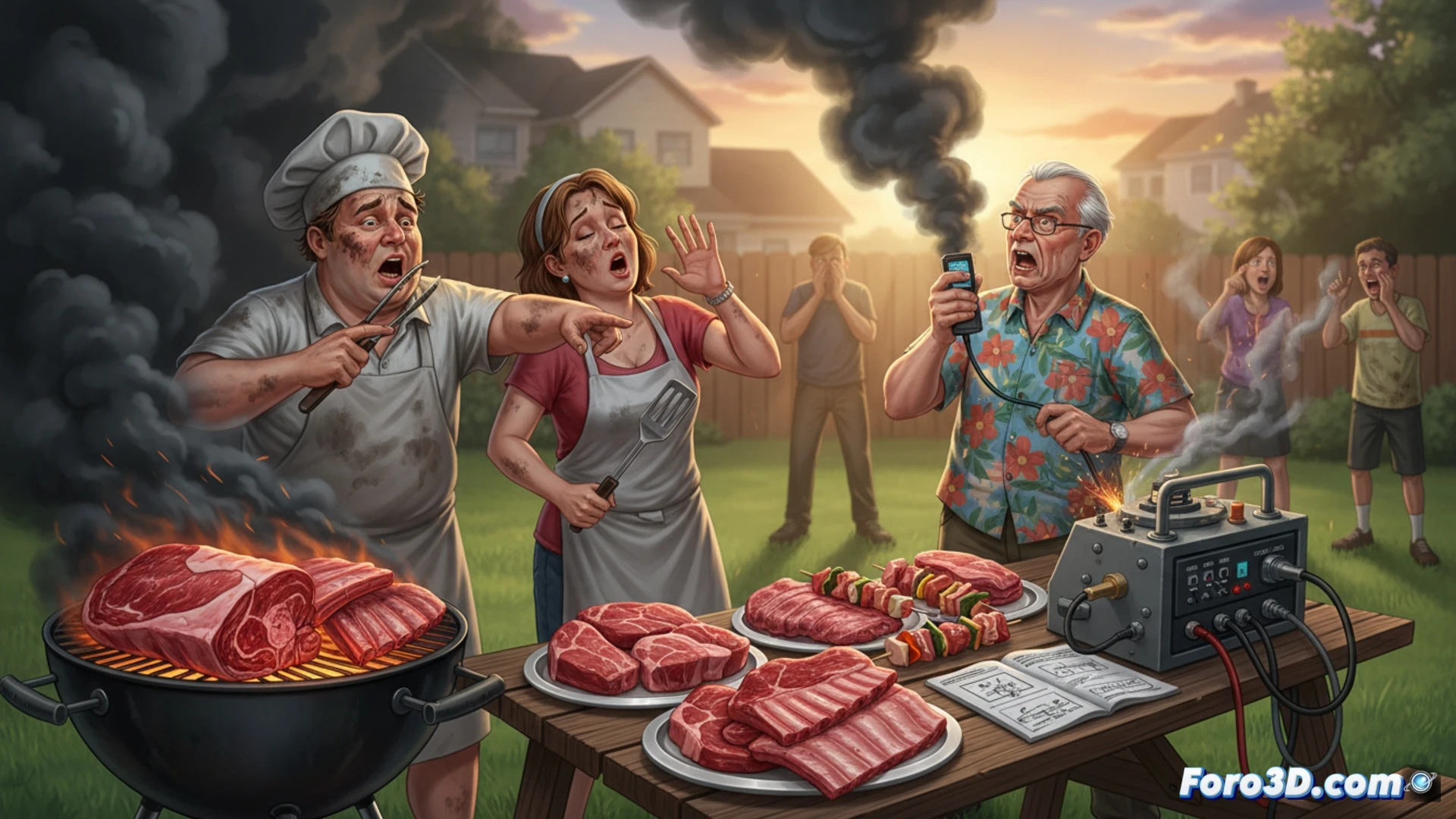
The Physics of Heat: Why Cooking Fails 🔥
The main problem is uneven heat distribution. Domestic grills generate temperature spikes near the charcoal but lose intensity as the smoke rises. For even cooking, an indirect heat zone is needed. Placing meat directly over the embers causes the outside to burn before the inside reaches 65 degrees. A probe thermometer is the tool that separates a decent roast from a trip to the emergency room.
Neighbor's Manual Volume 1: Smoke is Free 💨
Smoke is not just a byproduct; it's a direct passport to turning your terrace into the epicenter of neighbor complaints. Using green wood or lighting the fire with newspaper guarantees a dense, persistent cloud. The trick to avoiding social drama is to use dry charcoal and wait for the flames to die down before putting the meat on. Or invite the neighbors over, which is cheaper than a noise fine.