3D technology offers tools for dancers to analyze, correct, and improve their technique without relying solely on mirrors or video recordings. It enables motion capture, body modeling in space, and the design of custom stage elements. A concrete example is the use of 3D scanners to create exact replicas of the dancer's anatomy, facilitating the design of custom footwear or supports that prevent injuries.
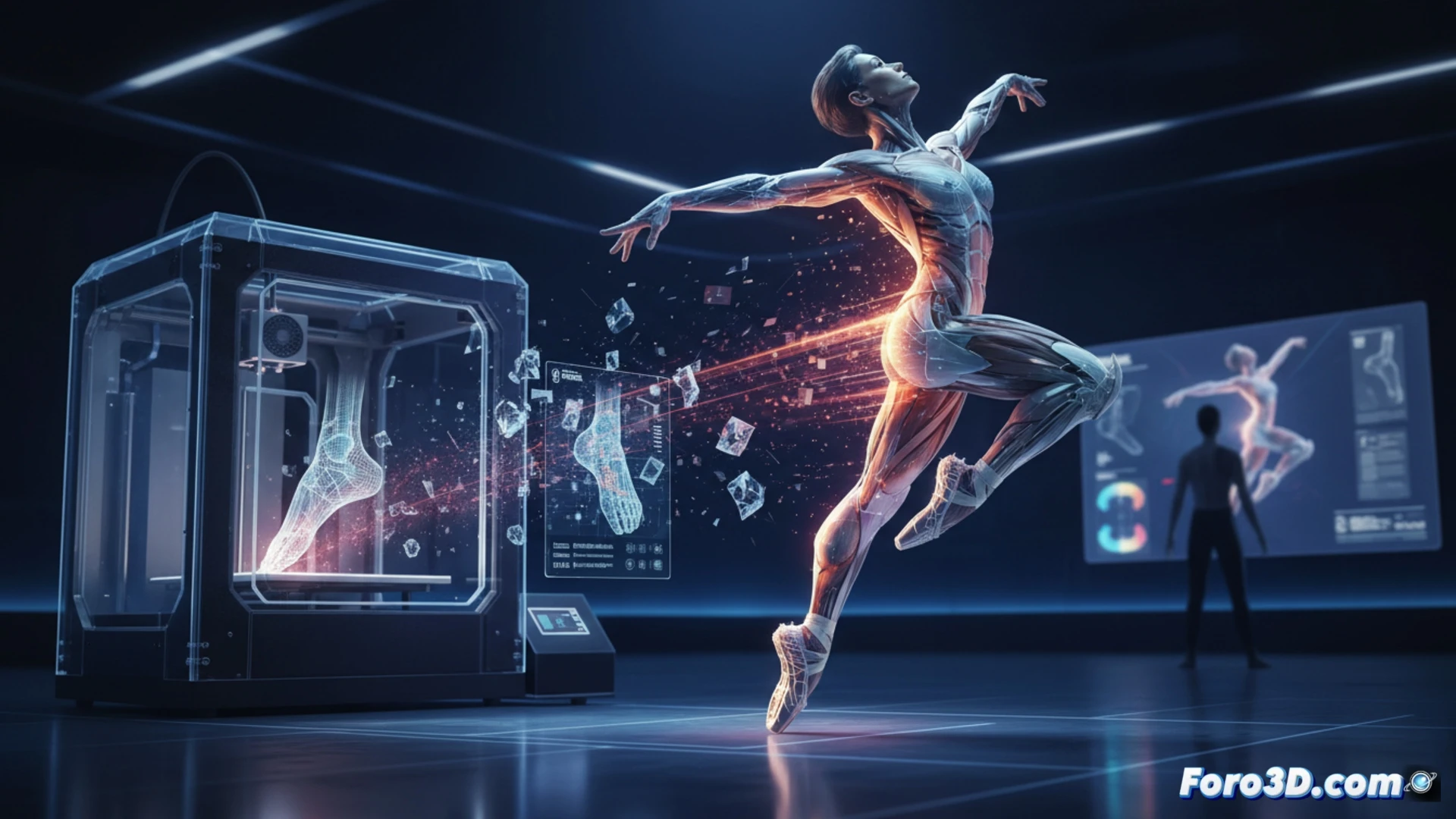
Motion capture and modeling for precise choreography 🩰
Programs like Blender or Autodesk Maya allow importing motion capture (MoCap) data and visualizing the trajectory of each joint in 3D. The dancer can rotate the scene, freeze key poses, and measure tilt or extension angles. Tools like Rokoko Studio or Perception Neuron facilitate capture with portable sensors. This analysis makes it possible to detect deviations in execution and adjust body alignment without needing to repeat the sequence to the point of physical exhaustion.
The day the 3D mannequin danced better than me 🤖
The fun part comes when the dancer's 3D model executes the perfect movement while the original stumbles on the tenth repetition. The software shows you with millimeter precision that your left arm is ten degrees lower than it should be. And you think: if even a polygon doll can do it right, maybe you should stop blaming the slippery floor. At least the 3D model doesn't sweat, doesn't complain, and never asks for a water break.