The success of Baba Is You demonstrates that a simple game engine like Multimedia Fusion 2 can harbor a revolutionary mechanic. Arvi Teikari, its creator, opted for a hand-drawn aesthetic that seems rough but reinforces the game's logical abstraction. Instead of polished graphics, he prioritized visual clarity so the player can focus on the rules. The lesson is clear: gameplay should govern over the artistic aspect.
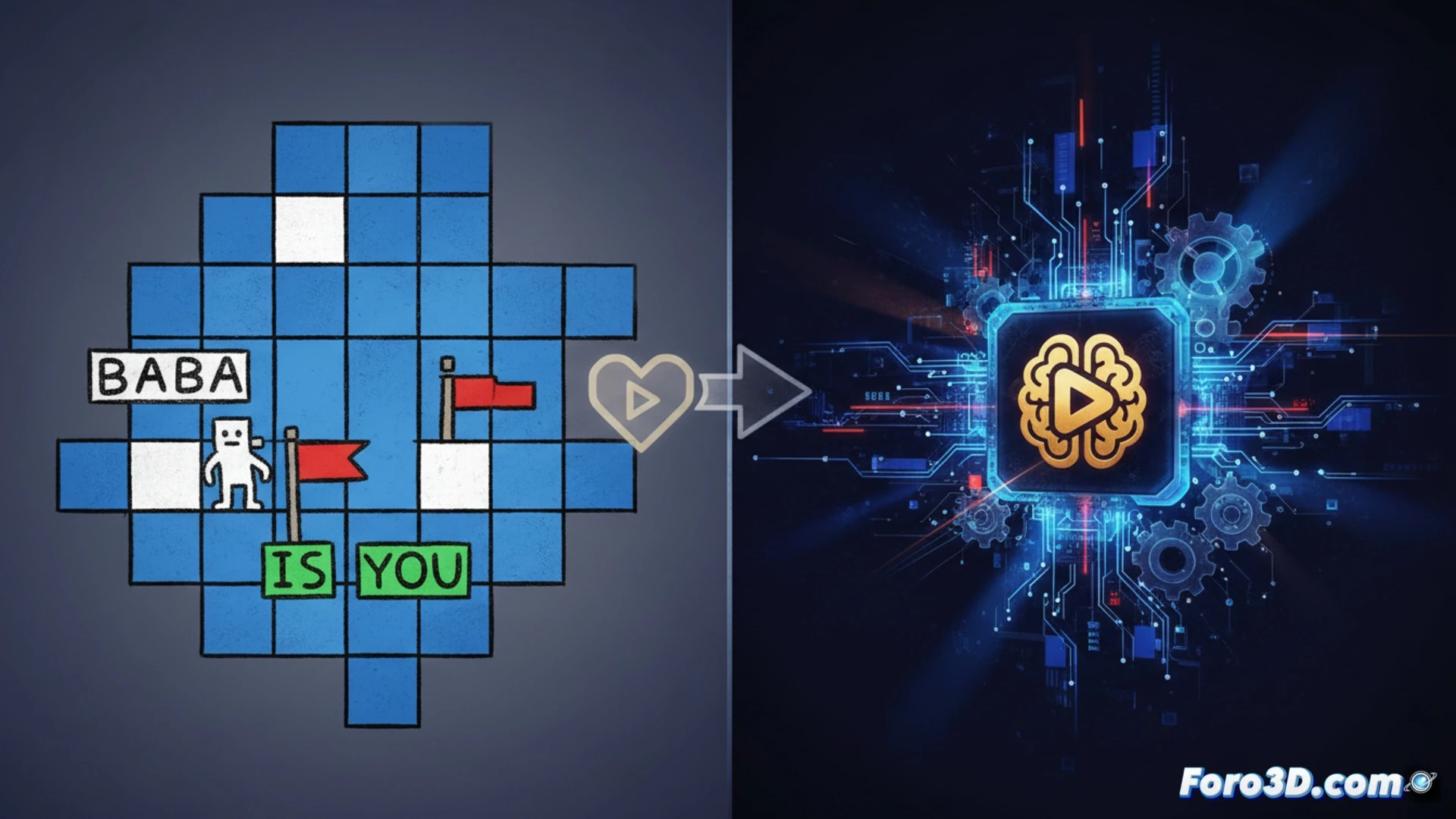
Rule programming as a core mechanic 🧩
Baba Is You uses MMF2's internal editor to create its dynamic rule system. Each level consists of text blocks that the player can push to alter the world's laws. For example, the phrase Wall Is Stop breaks if you separate the words, allowing you to pass through walls. This mechanic turns the player into a visual programmer, manipulating logical conditions in real time. From a technical standpoint, the game shows that you don't need a complex 3D engine to innovate; a well-designed event system and solid logic are enough.
The power of aesthetic limitations 🎨
The sprites and textures, created in Photoshop, maintain a simple, almost childlike line. This choice is not a flaw but a functional virtue. By eliminating visual noise, each puzzle element becomes instantly readable. For indie developers, this case is a reminder that limited resources can be an advantage. If your mechanic is strong, a minimalist style not only saves production time but also avoids distractions. Focus on interaction, not pixels.
Is it possible to replicate the emergent rule logic of Baba Is You in MMF2 without resorting to external extensions, and what limitations does the engine impose when designing a puzzle based on keyword manipulation?
(PS: shaders are like mayonnaise: if they break, you start all over again)