United States food aid to vulnerable countries hides a contradiction: products must be grown and processed on US soil. This increases shipping costs, delays deliveries, and, in the process, undermines local farmers who could sell their harvests at a fair price. Solidarity is invoked, but agricultural protectionism prevails.
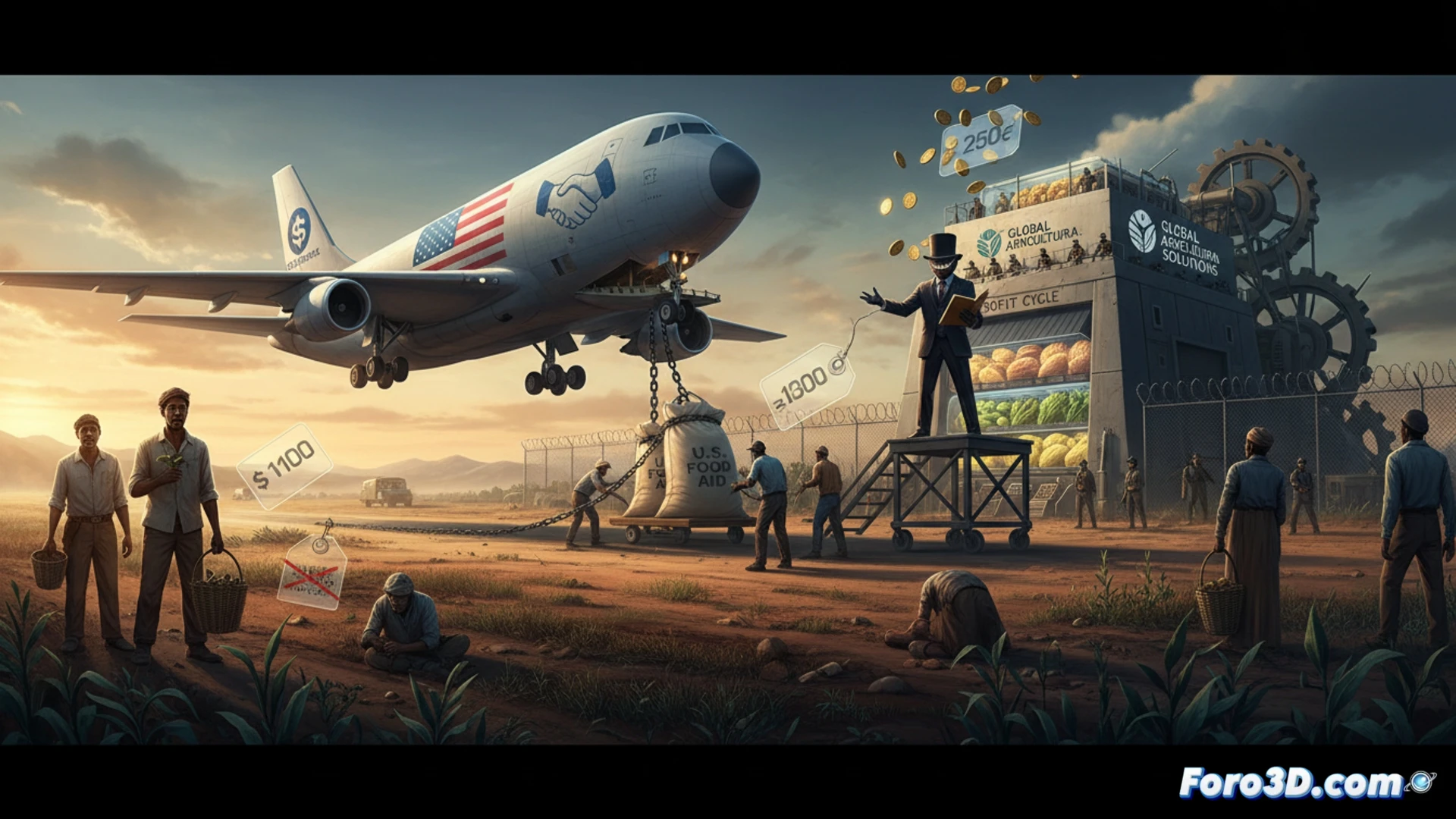
The Charity Algorithm: Efficiency vs. Bureaucracy 🤖
An optimized logistics system could use artificial intelligence to predict food crises and redirect funds to regional purchases. Blockchain traceability platforms could verify that grain bought in Kenya or Guatemala reaches those in need, without intermediaries or political flags. The problem is not technical; it is a matter of will: they prefer to support their farmers with public money labeled as aid.
The Menu of Hypocrisy: Idaho French Fries for Somalia 🍟
It is as if your neighbor lent you money for food but forced you to buy from his store at a premium price with a two-week delay. The hungry receive rice from Arkansas while the neighboring farmer watches his harvest rot. In the end, everyone is happy: the US politician boasts of generosity, the local farmer goes bankrupt, and the hungry... well, they remain hungry.