The forest of Príncipe Island, in Africa, has revealed an exceptional nocturnal inhabitant: the Príncipe Scops Owl (Otus bikegila). This tiny owl species was identified not by its cryptic plumage, but by its unique call, a sharp, metallic sound reminiscent of an insect's buzz. For the Scientific Visualization niche, this discovery represents a perfect case study for anatomical and acoustic 3D representation.
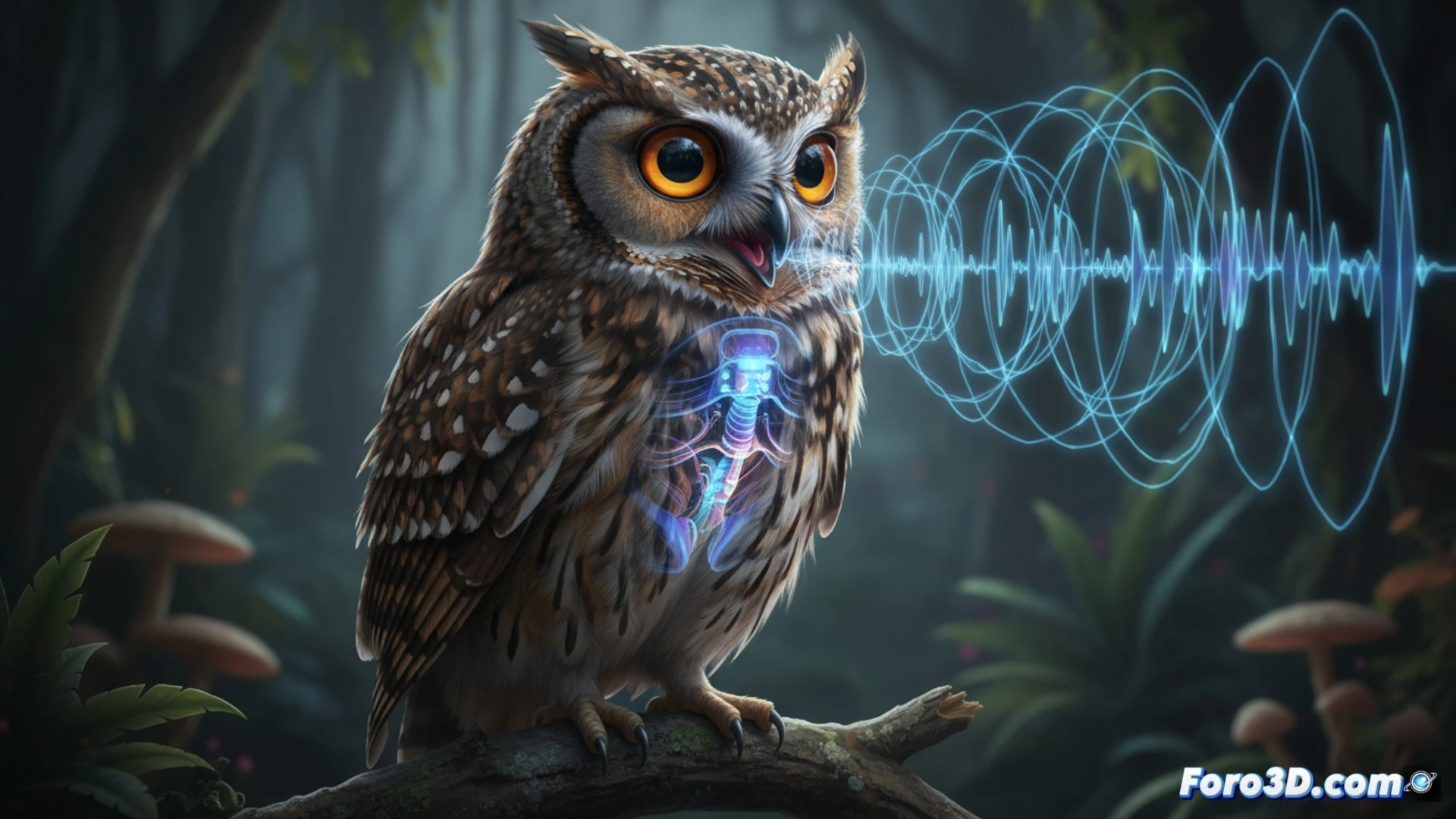
Anatomical Reconstruction and Bioacoustic Visualization 🦉
An interactive 3D model of the Príncipe Scops Owl would allow examination of its key adaptations: the asymmetrical facial disc for directional hearing and the soft feathers that facilitate silent flight. The most relevant feature for modeling would be the visual representation of its metallic call. Using spectrogram data, a volumetric mesh of 3D sound waves emanating from the owl's beak can be generated. This animation would not only show the unique frequency of the call but also explain how researchers were able to differentiate this species from others in the genus Otus within the island's dense vegetation.
The Ecosystem as a Stage for Discovery 🌿
Beyond the bird, recreating the habitat in the Príncipe forest is essential. The 3D model of the ecosystem must include the dense canopy layer and the trunks where this owl perches. By integrating the visualization of the metallic call within this virtual environment, the user can understand how sound travels and is distorted in the forest, facilitating the identification of a cryptic species. This educational approach demonstrates that, in nature, a unique acoustic signal can be the key to unlocking the door to a new biological discovery.
What was the main technical challenge in 3D modeling the cryptic plumage of the Príncipe Scops Owl to achieve a scientifically accurate representation of its camouflage in the island's understory?
(PS: at Foro3D we know that even manta rays have better social connections than our polygons)