The verification of historical seals is a cornerstone of political communication, where a false stamp can rewrite treaties or legitimize apocryphal decrees. 3D technology offers precise tools to scan and compare these elements, uncovering manipulations that alter power narratives. This technical analysis explores how photogrammetry and digital microscopy expose forgeries, protecting documentary heritage from political interests.
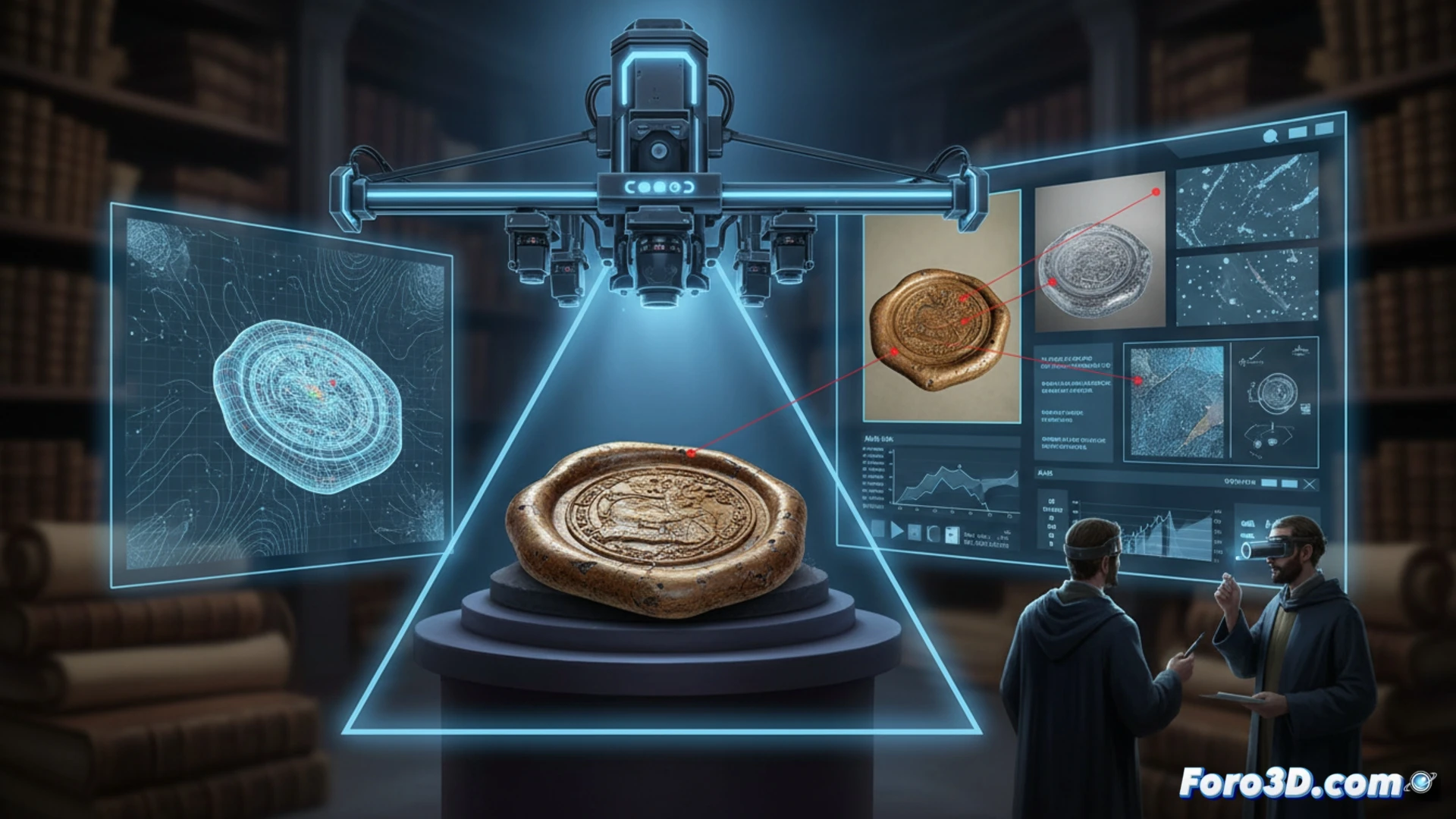
Photogrammetry and Microscopy in Forgery Detection 🔬
High-resolution photogrammetry captures three-dimensional models of seals, allowing measurement of micrometric variations in the texture of wax or lead. Combined with digital microscopy, air bubbles, mineral inclusions, and wear patterns unique to each authentic seal are analyzed. For example, in the verification of the Treaty of Tordesillas, discrepancies in the depth of matrix marks were detected, exposing a later copy. This process eliminates human visual bias, offering objective data to validate the integrity of seals on state documents.
Political Implications of the Authentic Seal 🏛️
The authenticity of a seal not only preserves history but defines the legitimacy of power. A royal decree with a forged seal can trigger diplomatic crises or invalidate territorial rights. 3D technology acts as a silent arbiter, revealing whether a document is a propaganda tool or a faithful witness to the past. In a world where political image is built on documents, technical verification becomes an act of heritage defense against historical disinformation.
How could the authentication of historical seals through 3D scanning transform the verification of ancient political documents and prevent the manipulation of treaties that alter the historical narrative?
(PS: analyzing political micro-expressions is like looking for inverted normals: everyone sees them, no one fixes them) 🤔