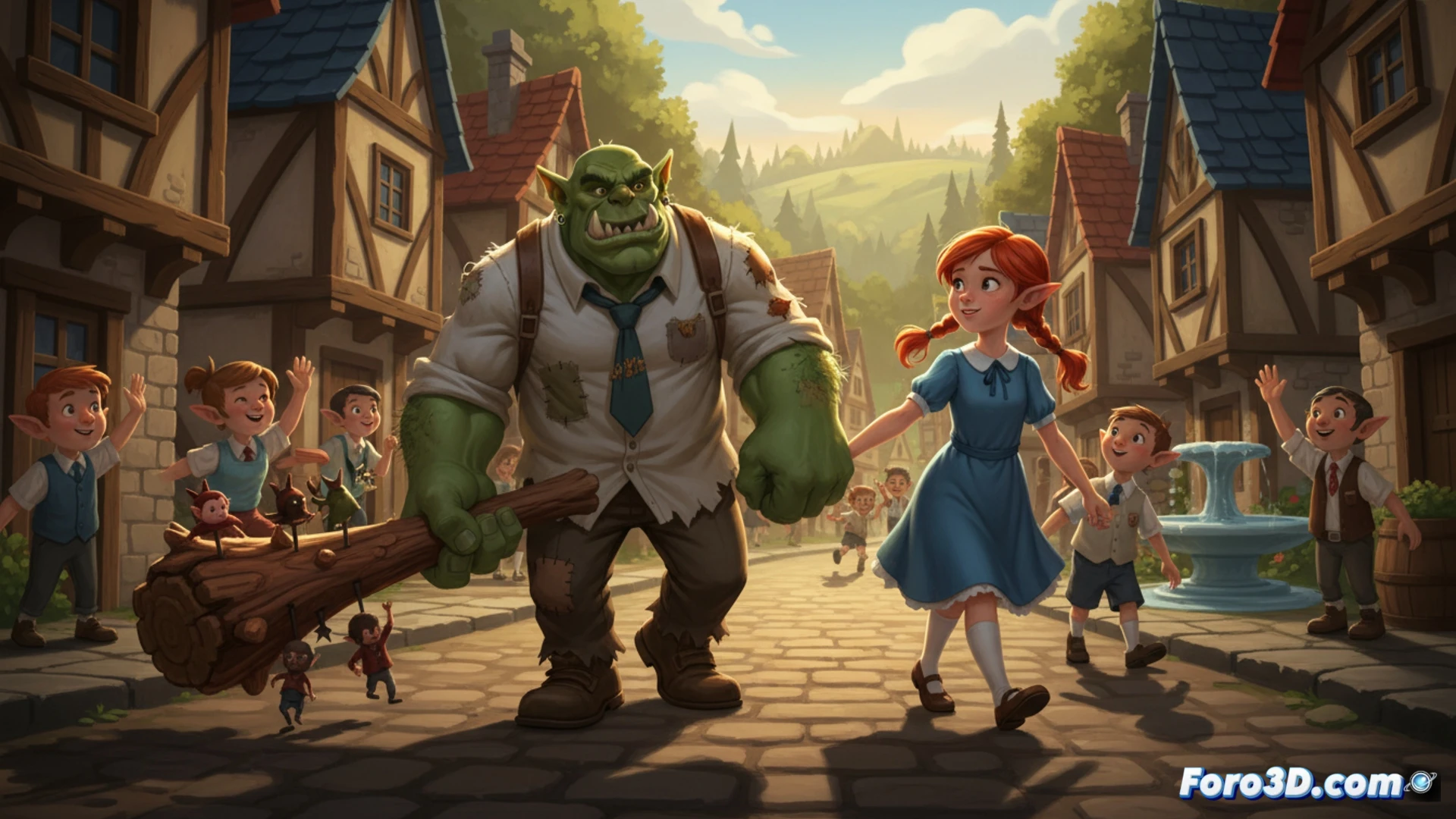
Lewis Trondheim surprises again with Aurora and the Orc, a graphic novel where a girl must deal with a green-skinned classmate, club in hand and a penchant for massacring elves. The most unsettling thing is not the orc, but that no one else at school seems to notice the problem. Aurora takes on the role of chaperone for this excessive creature, trying to teach it human manners while controlling its homicidal impulses.
The narrative engine: an orc in a world of humans 🎭
Trondheim builds the plot on a simple but effective contrast: the normalization of the absurd. The orc is not a generic monster, but a being with its own rules that clash with the school environment. Aurora acts as an interface between two systems: human social norms and the orc's basic instincts. The conflict arises from this constant translation, where each interaction is an improvised patch to avoid disasters. The drawing, with agile and expressive strokes, reinforces the feeling of a slightly off-kilter world.
Guide to coexistence for orcs (and other weirdos) 📖
If you've ever had to explain to a friend that they shouldn't use an axe in class, you'll understand Aurora. The novel is an unwritten manual on tolerance, but with more violence than usual. The orc doesn't understand why it can't kill elves, and humans don't understand why it would want to. In the end, everyone learns something: Aurora learns that controlling an orc is like trying to teach a cat to use the toilet. It might work, but you'll always end up with scratches.