Low-end active noise canceling (ANC) headphones promise absolute silence to isolate you from the world, but the technical reality is quite different. Instead of a clean acoustic environment, these devices often generate an annoying background hiss and distortion that degrades audio quality. For a 3D modeling or simulation professional, this parasitic noise is not a mere annoyance; it is a factor that breaks concentration and alters the perception of critical sound details in game engines or virtual reality environments.
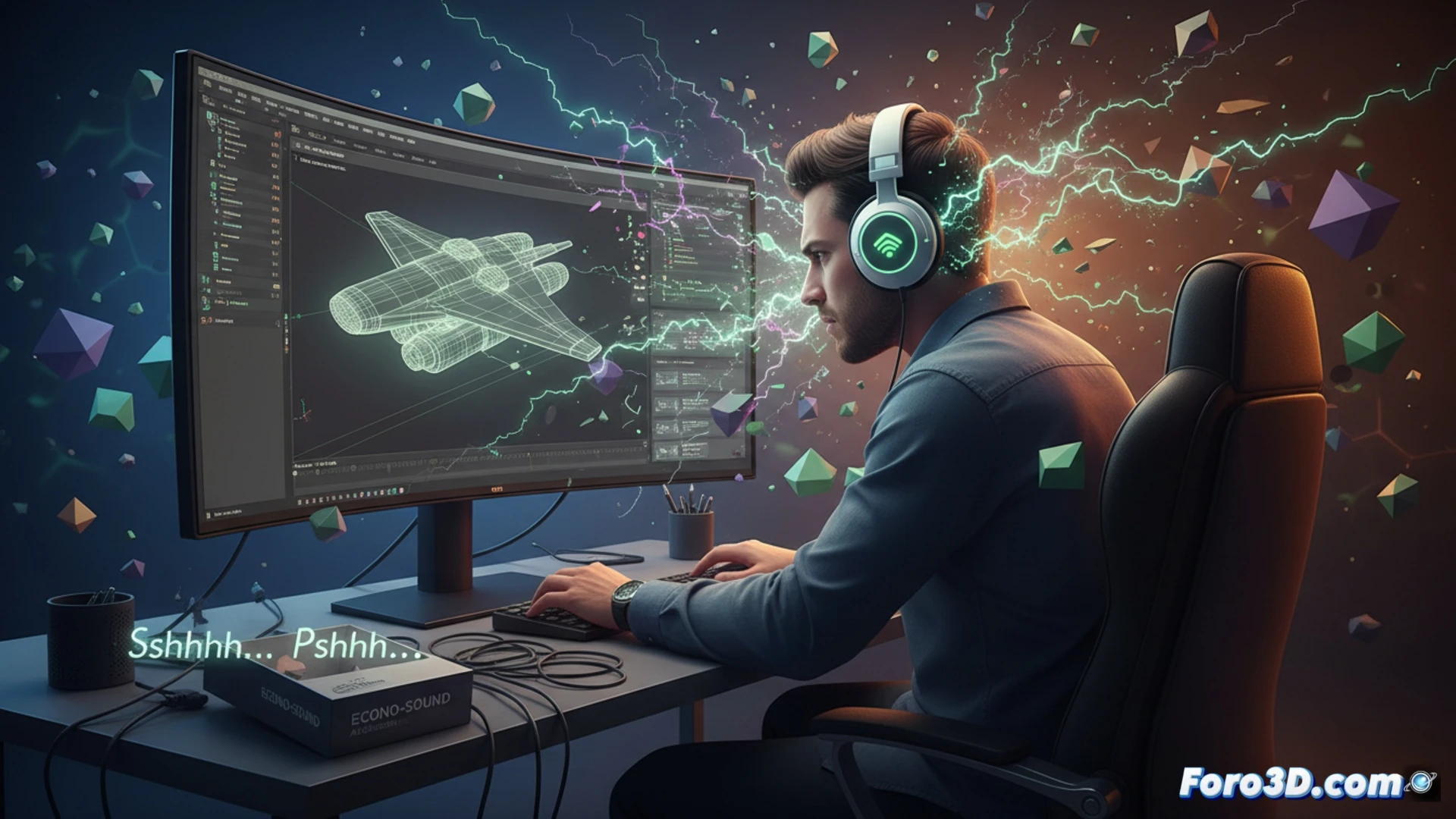
Technical analysis: the failure in active cancellation and the impact on workflow 🎧
Low-cost ANC technology uses low-precision microphones and inverted phase circuits. This causes them to generate an audible artifact (hiss) and dynamic compression that distorts mid and high frequencies, instead of canceling ambient noise. During a rendering session or spatial audio debugging in an engine like Unity or Unreal, this distortion can mask sound bugs or position variations in 3D space. The result is a workflow interrupted by the need to verify audio with other monitors, wasting time and precision in production.
Reliable alternatives for a 3D production environment 🛠️
For professional 3D environments, the priority is not absolute silence, but fidelity and the absence of artifacts. It is recommended to opt for passive circumaural headphones with good mechanical sound isolation, or mid-to-high-end ANC models with proven digital signal processing (DSP). Investing in a neutral monitoring pair, even if it lacks active cancellation, ensures that hiss and distortion do not contaminate your modeling, simulation, or spatial audio editing sessions.
Considering that cheap ANC headphones can introduce latency and artifacts into the audio, how does this specifically affect the precision of 3D modeling and synchronization in digital sculpting workflows like ZBrush or Blender?
(PS: remember that a powerful GPU won't make you a better modeler, but at least you'll render your mistakes faster)