Atsushi Takahashi, with experience at Ghibli and Madhouse, has built a career based on technical detail and intrigue. His approach prioritizes mechanical realism and multi-layered plots, where technology and science fiction are structural pillars. Works like Godzilla Singular Point and Rideback reflect his ability to fuse precise animation with complex narratives, creating worlds that invite meticulous analysis.
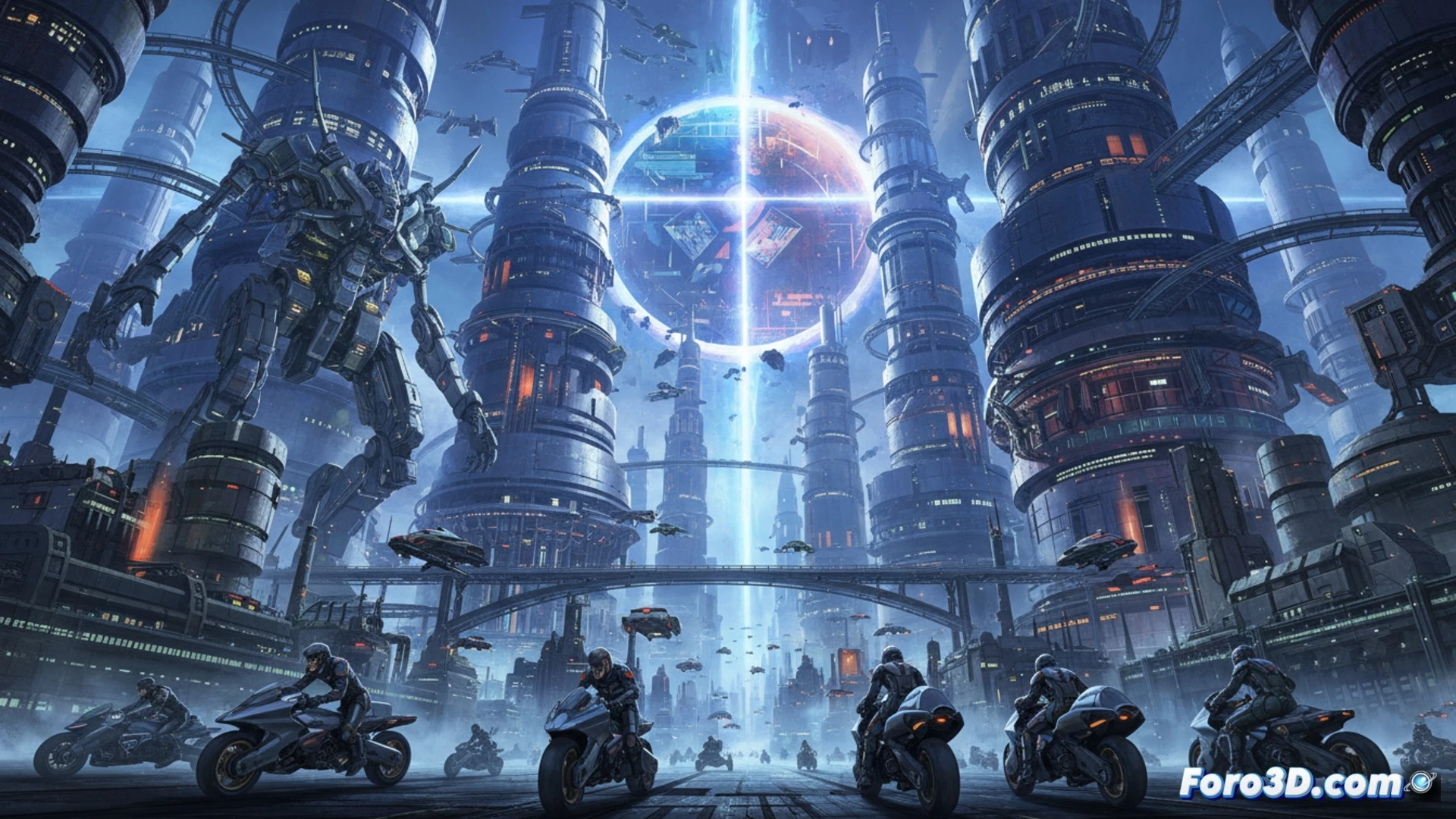
Takahashi's clinical eye: mechanics and narrative in balance 🔧
Takahashi develops each technological element with rigorous internal logic. In Godzilla Singular Point, the kaiju and machines are not mere decorations; they respond to physical and mathematical principles that the viewer can trace. His time at Madhouse taught him to dose information without overwhelming, while at Ghibli he absorbed the importance of space and silence. The result is sequences where a gear or a control panel tells as much as a dialogue, but without falling into forced exposition.
How not to go crazy drawing gears (and not fail in the attempt) 🤯
Takahashi must have the patience of a saint. While other directors relax by drawing bucolic landscapes, he spends hours calculating how a piece of a mecha would rotate at a 37-degree angle. In Rideback, the bikes transform with a precision that would make a mechanical engineer cry. And in Blue Exorcist: The Movie, he made an exorcism look more like an instruction manual than a ritual. His secret: if something fails, let it fail with logic.