On Sunday, Ukraine launched more than 60 drones at the oil port of Primorsk in northwestern Russia, sparking a fire at one of the Baltic's largest crude export terminals. Although Governor Alexander Drozdenko confirmed the fire was extinguished without spills, independent sources indicate damage to the terminal and a Pantsir air defense system. This attack is not an isolated incident; it is a direct blow to Russian energy logistics and global oil flows.
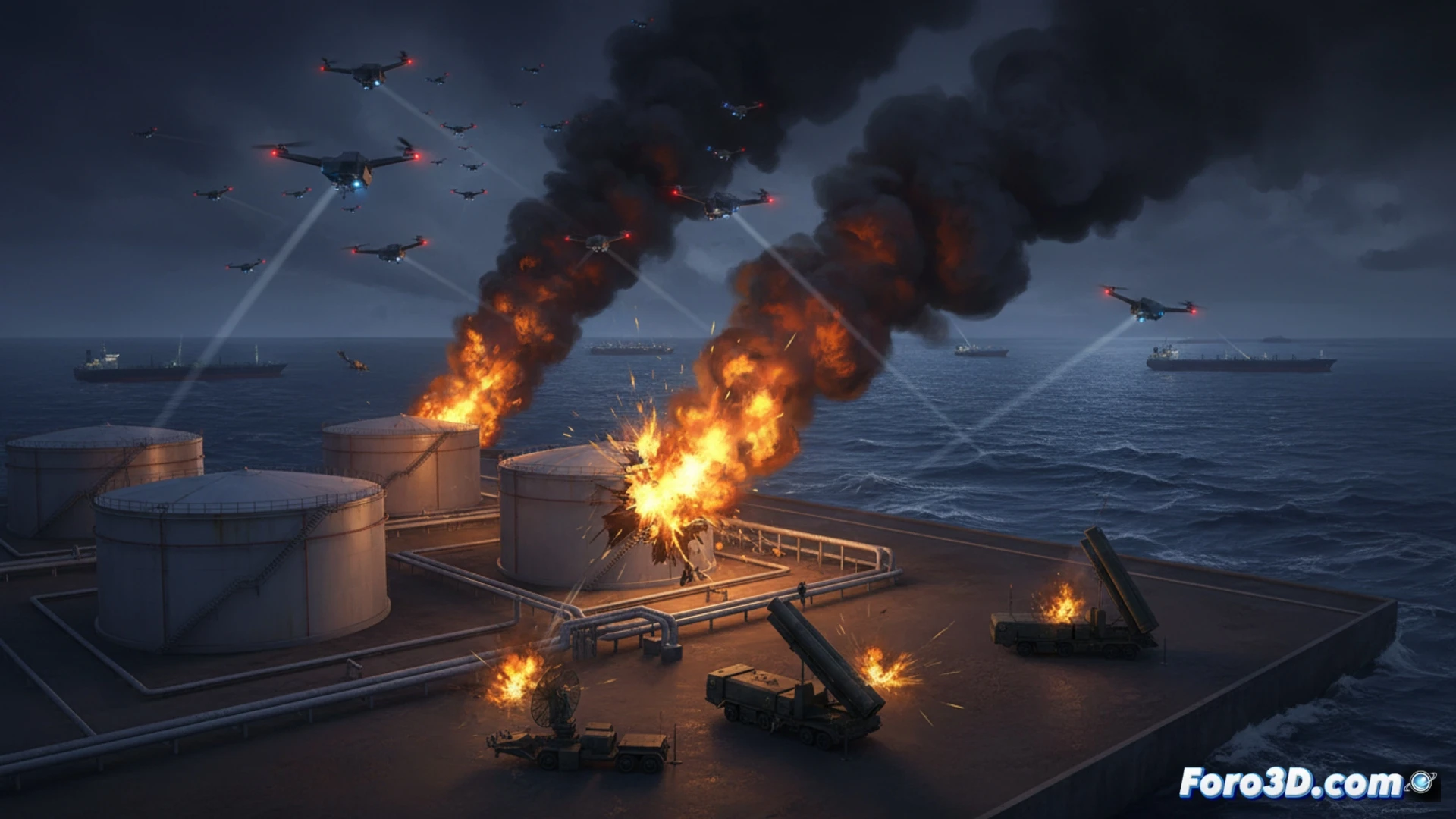
Technical analysis: Logistics disruption and alternative routes 🛢️
Primorsk handles up to one million barrels per day, serving as a critical node for Russian exports to Europe and international markets. The disruption of its operations forces a rethinking of the supply chain. Visualizing with 3D maps, alternative routes involve higher cost and risk: diversions to the port of Ust-Luga (also vulnerable), or the use of the Druzhba pipeline to Central Europe, whose capacity is limited by sanctions. A 3D model of the Baltic allows simulating how a partial blockade at Primorsk saturates storage capacities at exit ports, raising crude prices and forcing European refineries to seek Norwegian or Caspian crude, increasing transit times by 30%.
The geopolitical factor: Infrastructure as a war target 🌍
This attack confirms a growing trend: energy infrastructure is a legitimate target in a war of attrition. For supply analysts, the risk is not just physical damage, but the uncertainty it generates in futures contracts. If a scenario of recurrent attacks on Primorsk is simulated in a 3D model of the global supply chain, immediate volatility in Brent prices and pressure on European strategic reserves are observed. The lesson is clear: the security of energy routes no longer depends only on weather, but on armed geopolitics.
How can a drone attack on a logistics node like Primorsk reconfigure global crude flows and what alternatives do European refineries have to mitigate the risk of short-term supply shortages?
(PS: 3D geopolitics looks so good it makes you want to invade countries just to see it rendered)