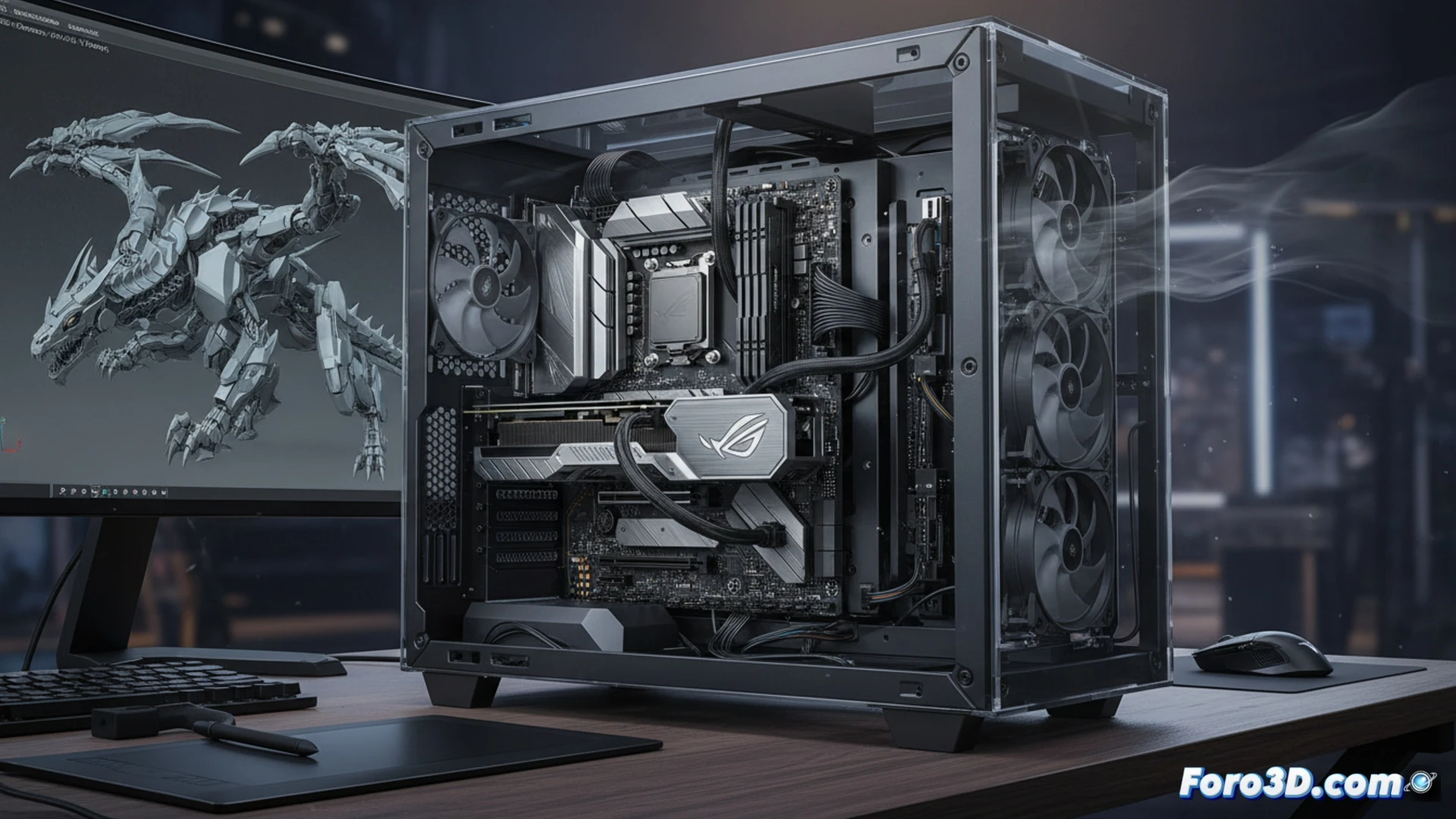
The ASUS ROG Maximus Z790 Hero BTF arrives to redefine the concept of a 3D workstation. Its main innovation is the BTF (Back to the Future) design, which moves all power and data connectors to the back of the motherboard. This, combined with a high-power PCIe slot that powers the GPU directly, completely eliminates front cabling. For a modeling and rendering professional, this translates to a clean interior that optimizes airflow and reduces dust buildup.
Thermal management and stability in prolonged rendering sessions 🔥
In a machine dedicated to 3D simulation or rendering with engines like V-Ray or Blender Cycles, temperature is enemy number one. By freeing up the front space from cables, the Hero BTF allows chassis fans, especially the front ones, to blow cold air directly onto the CPU heatsink and RAM modules. The high-power slot, called GC_HPWR, not only supplies up to 600W to the graphics card without the cumbersome 12VHPWR adapter but also prevents the bent cable from obstructing airflow over the chipset. In single high-end GPU configurations, this motherboard offers a measurable thermal advantage over traditional designs, reducing the likelihood of thermal throttling during 24-hour render runs.
The end of traditional multi-GPU setups? ⚙️
Although the high-power slot is a monumental advancement, this motherboard only includes one GC_HPWR connector. For professionals who still rely on multiple GPUs (for example, for physics simulations or distributed rendering), the Hero BTF limits clean power delivery to a single card. The other PCIe slots will require standard cables, breaking the clean aesthetic. In my opinion, this design is intended for the user who prioritizes a single monstrous GPU (like an RTX 4090 or future RTX 5090) over multi-card setups. It is a logical sacrifice to achieve superior cooling and easier assembly, something any 3D architect will appreciate on their desk.
As a 3D rendering professional, do you believe the BTF design of the ASUS Z790 Hero, by hiding power and data cables, offers a real improvement in thermal and electrical stability for prolonged rendering sessions, or is it merely an aesthetic benefit?
(PS: If the computer starts smoking when opening Blender, you might need more than just a fan and faith)