The ASUS ProArt Display PA32UCXR arrives on the market as a high-performance visual workstation. With 32 inches, 4K resolution, and an innovative 2304-zone Mini-LED backlight, this monitor is designed to meet the demands of colorists and HDR video editors. However, its impact on the 3D workflow is equally revolutionary, offering chromatic precision and dynamic range that transform the perception of modeling and digital composition.
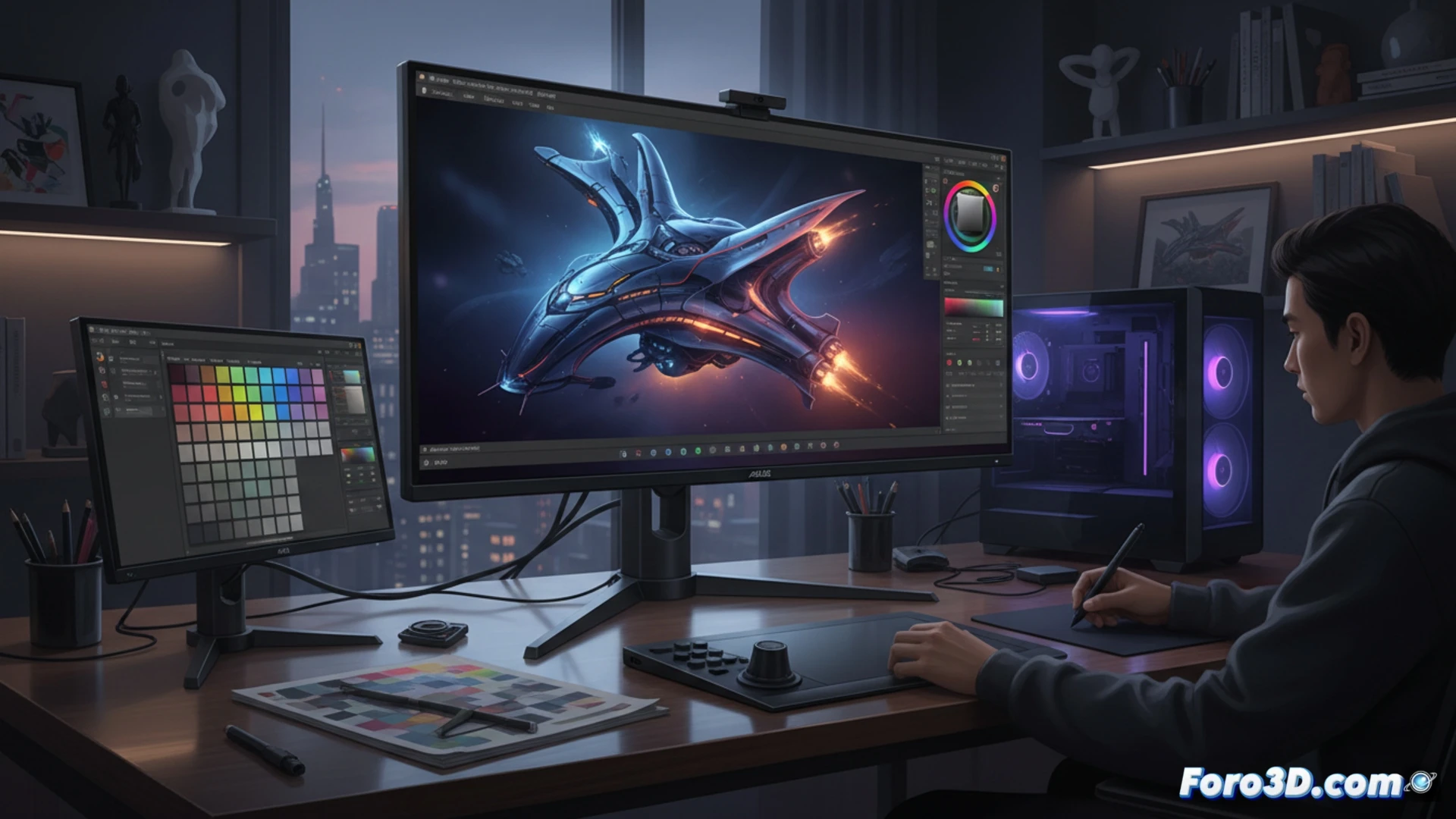
Spectral precision and HDR rendering performance 🎨
For the 3D artist, color fidelity is a non-negotiable requirement. The PA32UCXR covers 99.5% of the DCI-P3 color space and 99% of Adobe RGB, ensuring that gradients and textures are reproduced without posterization. The 2304 Mini-LED local dimming zones allow for exceptional dynamic contrast, reaching peak brightness of 1600 nits in HDR. This is critical for evaluating lighting in renders and working with high dynamic range environment maps. The 10-bit IPS panel and built-in internal calibrator ensure that what you see on screen is faithful to the final result, reducing iteration time in client reviews.
An investment in productivity for the modern studio 💼
In a market where professional 32-inch monitors with similar specifications often exceed 3000 euros, the PA32UCXR positions itself as a competitive option. Its ability to switch between sRGB, Adobe RGB, and DCI-P3 color spaces without losing calibration makes it a versatile tool for studios working on both web graphics and cinema. For the 3D professional, this monitor is not just a luxury: it is a tool that minimizes color interpretation errors and accelerates the creative process, justifying its price as a long-term investment in quality and efficiency.
Can the 1,152-zone Mini-LED panel of the ASUS ProArt PA32UCXR offer color accuracy and dynamic range high enough to avoid halos or blooming in complex shadows of 3D renders with high contrast between lights and darks?
(PS: Your CPU runs hotter than the Blender vs. Maya debate)